
Leviticus 12–15 (Tazria–Metzora) – Clean and unclean, leprosy and purification
Psalm 24:3–4 – Who may ascend the hill of Adonai?
Luke 17:11–19 – Yeshua cleanses the lepers and sends them to the priests
Luke 18:9–14 – The Pharisee and the tax collector
Acts 15 – The Jerusalem council and Gentile believers
James 4:6; 5:16 – God resists the proud; confess your sins and be healed
Isaiah 53 – The Suffering Servant bearing our iniquities
Abba, the psalmist says that Your words are sweet like honey. We taste and see that You are good. We welcome Your Ruach to come, to speak to our hearts, to open our ears so we can truly hear what Your Spirit is saying.
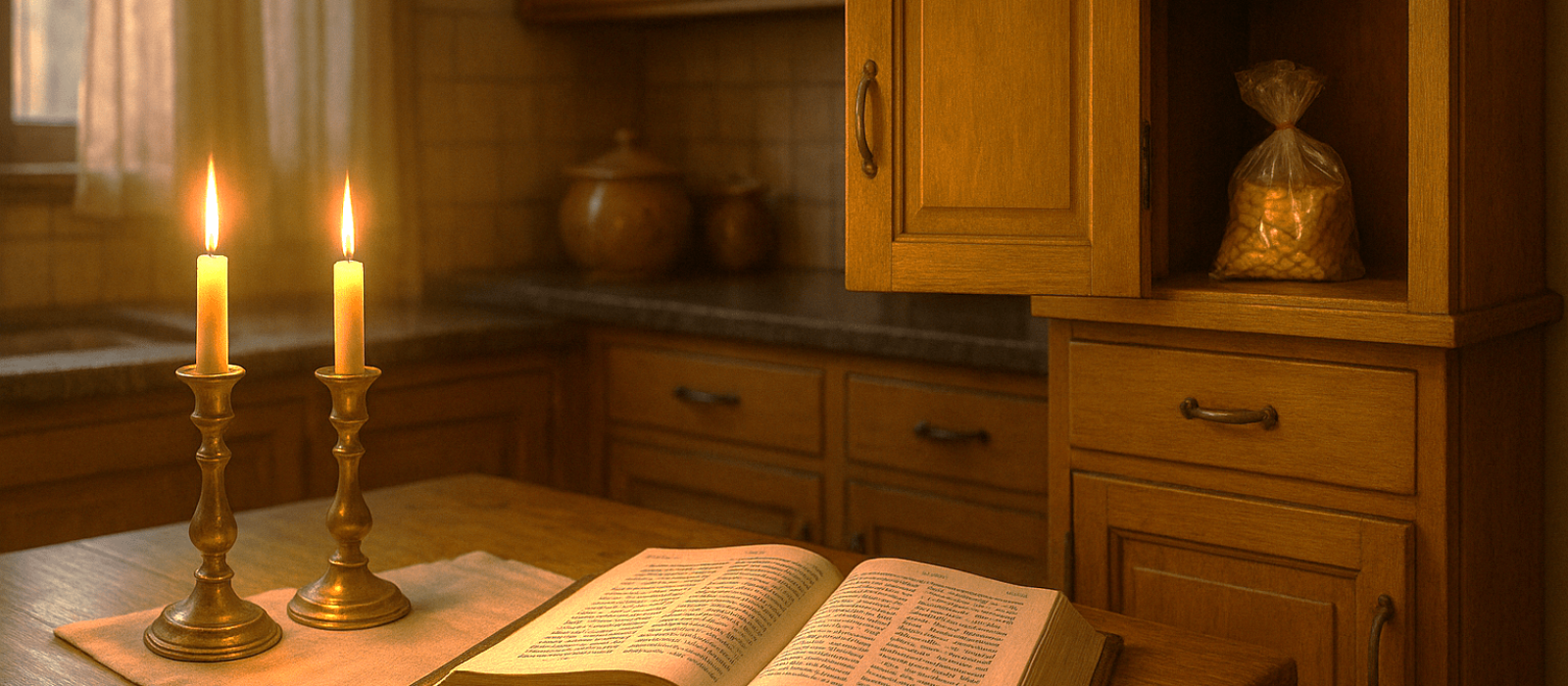
This year, during Passover, I thought I had done it. I had cleaned the leaven out of my house with a kind of holy determination. Every cupboard checked, every corner swept. I even took the dog food out because it had yeast in it. Poor dog had to fast from his favorite kibbles.
For almost three weeks after the seder, I walked around feeling pretty accomplished. In my heart, a quiet pride started to rise up: “This year I really did it. No leaven left. I nailed it.”
Then one day I opened a cupboard I rarely use.
There it was: an entire bag of crackers. A whole bag of chametz sitting there the whole time, untouched and unnoticed.
In that simple moment, I heard the gentle voice of the Lord: “See? You thought you were clean here.” And suddenly it wasn’t about crackers anymore. It was about my heart.
We’ve been studying the Torah portions of Tazria and Metzora in Leviticus, all about clean and unclean, about bodily flows, leprosy, tumah (impurity) and tahor (purity). It can feel so distant from our modern lives. No temple, no sacrifices, over two hundred ceremonial laws we can’t practically keep. How do we apply any of this now?
Yet, tucked into these chapters is a deep picture of the human heart. The Torah deals not only with visible uncleanness, but with what draws near to death—both physical and spiritual. A woman giving birth comes right to the edge of death to bring forth new life. The leper walks around as a living picture of spiritual decay, alienated and alone.
We might not be checking for skin lesions or bodily discharges today, but we still wrestle with spiritual leprosy—our inner uncleanness, the places where our hearts drift toward death instead of life.
The sages talk about the letters of the Hebrew text in this section—what some call the “belly button of the Torah,” the exact middle point of the first five books. There’s a vav drawn long, the same length as a final nun. Together they form the word beten, “belly.” It’s as if the text itself is pointing to the center of the body, the center of the ego.
Think about it: the very first sin in the garden involved eating. It was “about the belly” in more ways than one. Reaching for the forbidden fruit meant taking something that did not belong to them, believing the serpent’s lie instead of trusting God.
In these same passages another letter is enlarged: the gimel, often pictured as a camel. A camel stands higher than all the other animals; everyone else has to look up to it. That inflated gimel is like a little picture of pride—something rising up too high.
Hidden in the letters of the Torah, we see a quiet warning: beware the swollen belly of ego, beware the towering camel of pride. On the outside, everything can look kosher and in order. On the inside, a whole bag of crackers is hiding in the cupboard.
Leviticus also connects uncleanness to the tongue. The rabbis speak of lashon rah—the evil tongue. When Miriam spoke against Moses because of the Cushite woman he married, when jealousy and comparison spilled out of her mouth, she was struck with leprosy and became white as snow.
What causes us to gossip? What pushes us to say negative things, to gather people onto the bandwagon of suspicion or baseless hatred—what the sages call sinat chinam? Sometimes it’s jealousy, sometimes insecurity, sometimes a refusal to agree with what God says about others—or even about ourselves.
Yeshua didn’t just heal lepers; He went to them. He touched the unclean and said, “I am willing. Be cleansed.” He came to the parts of us we want to hide—the anger, the resentment, the envy, the self-hatred—and offered cleansing there too.
He also told a story about two men in the Temple (Luke 18:9–14). One was so proud of his religious record that he essentially prayed to himself: “I fast, I tithe, I’m glad I’m not like that sinner over there.” The other wouldn’t even lift his eyes to Heaven. He beat his chest and cried, “God, have mercy on me, a sinner.” Yeshua said it was the humble one who went home justified.
Leprosy in Leviticus is a picture of what pride does to the soul: it isolates, numbs, and slowly eats away our capacity for intimacy with God and people. And sometimes, like my hidden crackers, pride hides in cupboards we haven’t opened yet.
The hardest part is that we can often see “leprosy” in others long before we see it in ourselves. We notice the parent melting down in the grocery store, the person whose sin is public and obvious, the one whose weakness is impossible to hide. That kind of impurity we recognize instantly.
But our own blind spots? Those are trickier.
We all have areas we’d rather keep covered: the temper that flares at home, the quiet jealousy, the hidden addictions, the bitterness buried under “I’m fine.” In America we are experts at smiling and saying, “I’m great, I’m doing good,” when our hearts are anything but.
In Israel, people step into your space and ask, “Mashlomech? Mash simcha?”—How is your peace? They’re not just asking how your day is going; they’re asking, “How is your peace with God? How is your peace with others?” They poke at the heart.
For us as a kingdom of priests, this kind of honest questioning matters. Priests in Leviticus weren’t just butchers and ritual technicians; they were doctors, inspectors, counselors, teachers. In Messiah, we share a priestly calling to care for one another’s souls, to ask gentle but real questions: “How is your walk? What’s troubling your heart? Where are you struggling with uncleanness?”
Personally, one of my deepest struggles right now is anger and resentment in caregiving. I love my mom. I wouldn’t even be here if she hadn’t given me life. And yet, as her needs increase, I often feel like I’ve lost my freedom. I can’t fix the situation. Ms. Fix-It has reached the end of her tools.
Some days, that turns into resentment I don’t want to admit. I find myself short-tempered, impatient, grieving the life I used to have. Then I despise myself for those feelings, and the spiritual leprosy feels even worse. It’s like staring at my own metzora, my own uncleanness, and wanting to hide it from everyone—including Yeshua.
But He already knows. And hiding never heals.
Leviticus gives us this strange ritual for cleansing: living water, a wooden beam, scarlet thread, hyssop, the shedding of blood, and the release of a living bird. It all points us forward to the cross—the wooden stake, the scarlet thread of redemption running through Scripture, the hyssop that lifted the sour wine to Yeshua’s lips, His blood poured out for our healing.
James tells us, “If you will humble yourselves, confess your sins one to another, and pray for one another, you will be healed” (James 5:16). That healing is not always instant or physical, but it always begins with humility and honesty.
So I bring my hidden crackers—my pride, my resentment, my impatience—into the light of His presence. I confess them out loud. I ask trusted brothers and sisters to pray with me. I ask Yeshua, the One who bore all our tazria and metzora, all our uncleanness, to cleanse me again.
Maybe you, too, have a cupboard you haven’t dared to open. Maybe it’s a pattern of gossip, a secret addiction, a simmering anger, or a quiet sense of superiority. Maybe you’re the “good one” who keeps the commandments, goes to services, tithes, and yet finds yourself thinking, “Thank God I’m not like them.”
Beloved, that is spiritual leprosy as surely as any outward sin.
The good news is that Yeshua still walks among the lepers. He still stretches out His hand to the places we’re most ashamed of and says, “I am willing. Be cleansed.” He still invites us to die daily to our flesh, so that His life can be revealed in us.
So let me encourage you:
Open the cupboard. Bring the hidden crackers into the light. Ask the Ruach to search your heart for pride, for baseless hatred, for the quiet leprosy of the soul. Be honest with a trusted friend or leader. Confess your struggles instead of hiding them. Let the blood and the living water of Messiah wash over those places.
We were never meant to carry our impurities alone. We were meant to bring them to the High Priest who has already carried them for us, and to walk together as a kingdom of priests—real, humble, and being cleansed day by day.
May He give us clean hands and pure hearts, that we might ascend His holy hill, stand in His presence, and shine with His humility instead of our own pride.
Adapted from a Shabbat teaching by Gerrie Lou Gill, May 2, 2025. :contentReference[oaicite:0]{index=0}