
Parashat Tazria — “She Conceives” (Leviticus 12:1–13:59)
Note: all quotations are taken from the Complete Jewish Bible (CJB), translated by David H. Stern, Jewish New Testament Publications, unless otherwise noted.
Blessing Before the Torah
“Baruch atah YHVH, Eloheynu, Melech ha-‘Olam,
asher bachar banu m’kol ha-amim,
v’natan lanu eht Torah-to.
Baruch atah YHVH, noteyn ha-Torah.
Ameyn.”
(Blessed are You, LORD our God, King of the universe, who has chosen us from among all peoples and given us His Torah. Blessed are You, LORD, Giver of the Torah. Amen.)
Overview
This is Parashat Tazria. In regular years Tazria is often read together with the upcoming parashah of M’tzora. Due to the nature of these chapters, we will lean on the wisdom of the Chazal (our sages of blessed memory). For context, “Chazal” (Hebrew: חז״ל), an acronym for Ḥakhameinu Zikhronam Liv’rakha—“Our Sages, may their memory be blessed”—refers to the sages of the Mishna, Tosefta, and Talmud eras (c. 250 BCE–c. 625 CE). See also reference here.
Childbirth, Purification, and the Eighth Day
“When a woman at childbirth bears a male, she shall be unclean seven days… On the eighth day the flesh of his foreskin shall be circumcised… She shall remain in a state of blood purification for thirty-three days; she shall not touch any consecrated thing.”
Why is the command to circumcise on the eighth day placed in the middle of laws about a mother’s impurity and purification? Targum Pseudo-Jonathan (Yerushalmi) paraphrases that on the eighth day the mother is permitted to her husband, and the son is circumcised—linking the start of her days of purity with the child’s covenant sign.
In Niddah 31b, the disciples asked R. Shimon bar Yochai why circumcision is on the eighth day. He replied: so that not everyone rejoices while the parents are sad; Rashi notes that after seven days the mother may resume marital relations, so the eighth day aligns family joy with the covenant.
R. Samson Raphael Hirsch adds a symbolic layer: “seven” marks the natural order; “eight” rises beyond nature. The mother’s seven days of impurity highlight the constraints of nature, while the eighth-day circumcision signifies covenantal liberty and holiness—human life lifted by divine command.
Circumcision as Refinement
The Sages saw brit milah as partnering with God to refine creation. In Midrash Tanchuma (Tazria), the Roman official Tinneius Rufus asks R. Akiva whose deeds are finer—God’s or man’s. R. Akiva answers: those of flesh and blood, because the commandments were given “to refine” us through observance. A baby is not born circumcised because God invites Israel into a covenantal act that shapes both person and people.
Mikveh, Menstruation, and Purity in the Second Temple Era
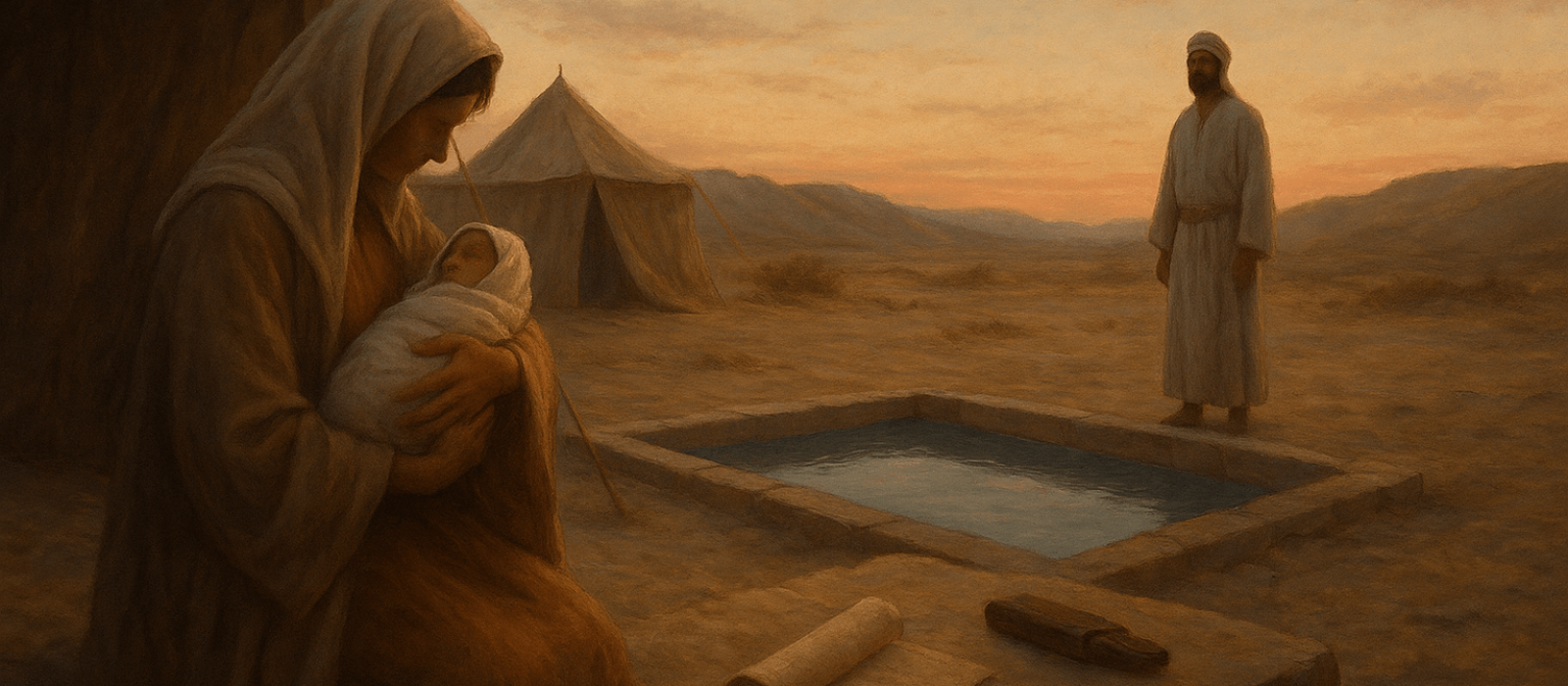
By the time of Yeshua, immersion in a mikveh was a well-established part of post-menstrual and postpartum purification, with Mishnah Mikvaot detailing the standards. Leviticus 12 sets periods of impurity and subsequent days of “blood purification,” concluding with required offerings. These rhythms of tum’ah and taharah oriented Israel’s daily life toward holiness.
Tazria, the Woman with the Issue of Blood, and Yeshua’s Touch
Regulations concerning prolonged discharges that render a woman ritually unclean and prescribe offerings upon cessation.
The Synoptic Gospels (Matthew 9:20–22; Mark 5:25–34; Luke 8:43–48) recount a woman suffering twelve years of bleeding. Under Levitical norms, her condition rendered her and whatever she touched unclean. Yet when she touched the fringe of Yeshua’s garment, she was healed—defilement did not flow to Him; rather healing and holiness flowed from Him.
Tzara’at: Diagnosis, Exile, and Return
Leviticus 13–14 addresses tzara’at—often translated “leprosy,” though broader in scope—detailing priestly examination, quarantine, and (when needed) removal from the camp. Contact with the afflicted rendered others ritually unclean, highlighting the gravity of holiness in Israel’s midst.
The affected person is to dwell outside the camp, crying “Tamei! Tamei!” (“Unclean! Unclean!”).
In the Prophets, Na’aman is healed (2 Kings 5), and in the Gospels, Yeshua heals those with tzara’at without becoming defiled Himself (e.g., Matthew 8:1–4). He sends the healed to the priest “as a testimony,” both upholding Moses’ Torah and authenticating the sign of Messiah in Israel: the unclean are made clean; the outcast returns home.
Messiah and the Flow of Holiness
In every encounter with disease or death, Yeshua’s holiness is not diminished. Rather, disease and death yield to Him. The Torah’s patterns—childbirth purification, mikveh, circumcision, and the priestly handling of tzara’at—become signposts pointing to the greater High Priest who brings ultimate cleansing.
Thanks be to our Heavenly Abba: as spiritually afflicted people, we no longer remain outside the camp. When our uncleanness meets the holiness of the Prophet from Natzeret, our defilement flees. We no longer cry, “Tamei! Tamei!” but “Tahor! Tahor!”
Blessing After the Torah
“Baruch atah YHVH, Eloheynu, Melech ha-‘Olam,
asher natan lanu Toraht-emet,
v’chay-yeh o’lam nata-b’tochenu.
Baruch atah YHVH, noteyn ha-Torah.
Ameyn.”
(Blessed are You, LORD our God, King of the universe, who has given us the Torah of truth and planted everlasting life within us. Blessed are You, LORD, Giver of the Torah. Amen.)