
Jeremiah 31 (vineyards on the hills of Samaria)
Ezekiel 36 (mountains of Israel tilled and sown)
Isaiah 52; Romans 10 (beautiful feet on the mountains)
Romans 11 (salvation to the Gentiles to provoke Israel to jealousy)
Isaiah 2; Micah 4 (swords into plowshares)
Amos 9 (restored tabernacle and vineyards in the land)
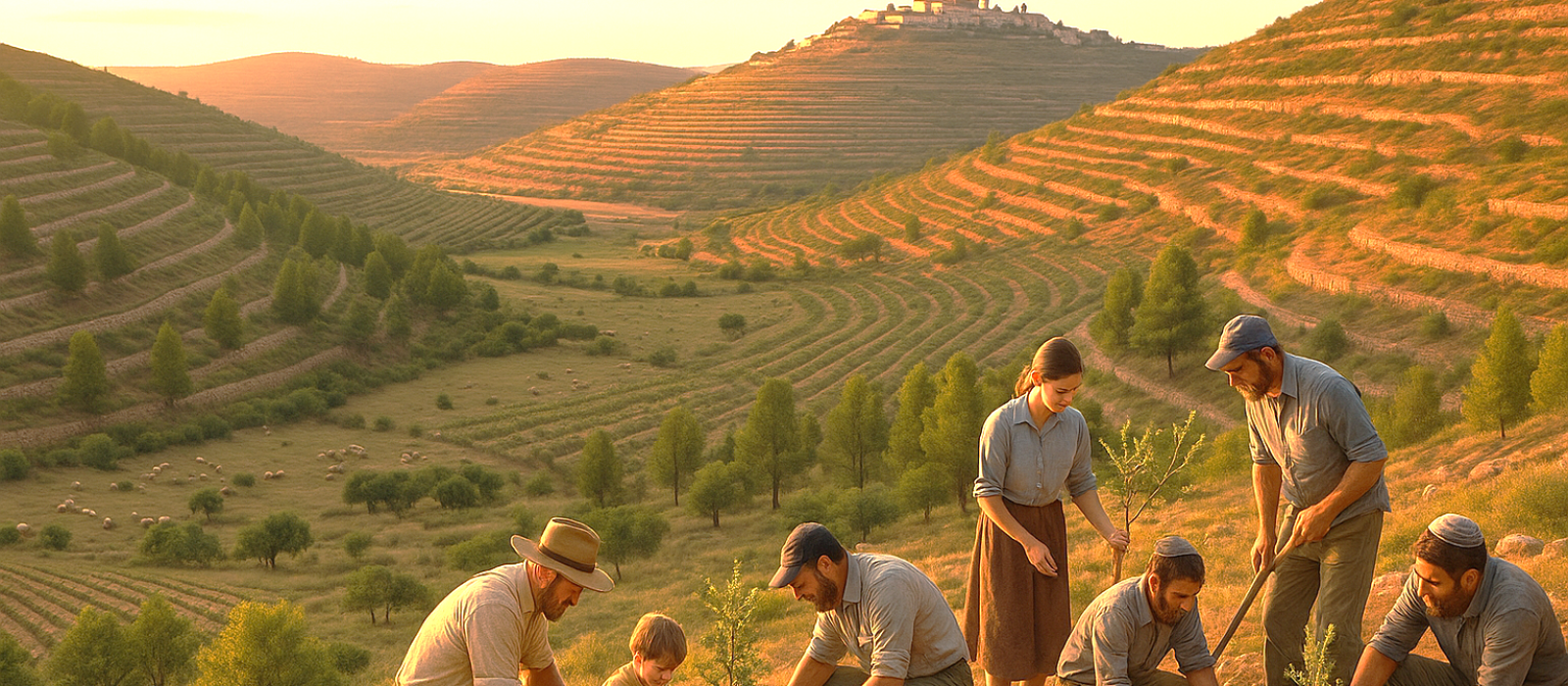
From a distance, the hills of Samaria look ancient and quiet—tiered with old stone terraces that hint at the hands that once carved them into the rock. For nearly 2,000 years, many of those terraces lay empty. Now, for the first time since the days of the Samaritans and early Jewish communities, those mountains are being terraced and planted again because the population has returned and the land is needed for agriculture once more.
Into that story, God wrote a Gentile family.
They did what most of us only talk about. They sold everything, bought a farm, and stepped into a life with no debt, but also no guaranteed salary – just a thousand small unknowns and a very big “yes” to the Lord. They moved into a world of sheep, cattle, vineyards, orchards, and rocky hillsides, and discovered that plows and fence posts could become tools of intercession.
Touching the Word in a Vineyard
About twenty years ago, one of them came down to a young vineyard in Samaria. The vines were only six or seven years old. There, for the first time, he sat with an Orthodox Jewish farmer and watched him open his Tanakh. The farmer read from Jeremiah 31 – the chapter where God promises that vineyards will once again be planted on the hills of Samaria and that the people will enjoy their fruit.
“I realized,” he later shared, “that I was literally standing in that verse. I was touching the Word.” He had grown up around churches and sermons, but had never quite connected the pages of Scripture with the soil under his feet. The vineyard made the prophecy tangible. The Word was no longer just theology; it was rows of vines, calloused hands, and Jewish families coming home.
Jeremiah 31 also carries the promise of the New Covenant. For many believers, it has been read mostly in spiritual terms. But here, the chapter begins with something stubbornly physical: real land, real vineyards, real Jewish lives rooted again in the mountains of Israel. The family realized that Christianity’s long flirtation with replacement thinking had often ignored these physical promises and the people to whom they were first given.
Strategic Agriculture – “Agricultural Warfare”
In Judea and Samaria, land is contested not only by politics but by what actually happens on the ground. Old Ottoman-era deeds, modern military law, and squatter’s rights collide with tractors, flocks, and newly planted groves. If land sits unused long enough, it can be claimed. If it is planted and cultivated, it can be secured.
This Gentile family stepped into that reality with a bucket of seedlings and a lot of faith. By planting trees in empty valleys and on unused hillsides, they help prove that the land is being worked and stewarded. In some places, they have planted thousands of trees in a single valley, changing the legal status of the land and ensuring it becomes part of the State of Israel instead of being lost by default.
Their goal is not to claim the land for themselves. It is to bless Israel, to support Jewish communities, and to push back against well-funded campaigns designed to create a de facto anti-Bible state in the very heart of the land God promised. As farms, forests, and vineyards take root, they create a “different reality on the ground” – one in which Jewish farmers graze sheep, raise cattle, and tend vines across vast stretches of Judea and Samaria.
Some have jokingly called what they do “strategic agriculture” or even “agricultural warfare,” because their tractors and fence lines stand in direct opposition to spiritual and political agendas that seek to uproot Jewish life from these mountains. Yet this warfare looks nothing like the world’s version. It looks like building chicken houses, planting vineyards, starting sheep and cattle farms, and quietly establishing a continuous Jewish presence from Samaria all the way to the Jordan Valley.
In many ways, it is a “swords into plowshares” story. Isaiah and Micah both prophesy about a day when nations will beat their swords into plowshares and their spears into pruning hooks, and learn war no more. On these hills, that looks like believers helping to turn conflict zones into fields, orchards, and grazing land – not by ignoring the battle, but by answering it with obedience and cultivation.
Beautiful Feet on the Mountains of Israel
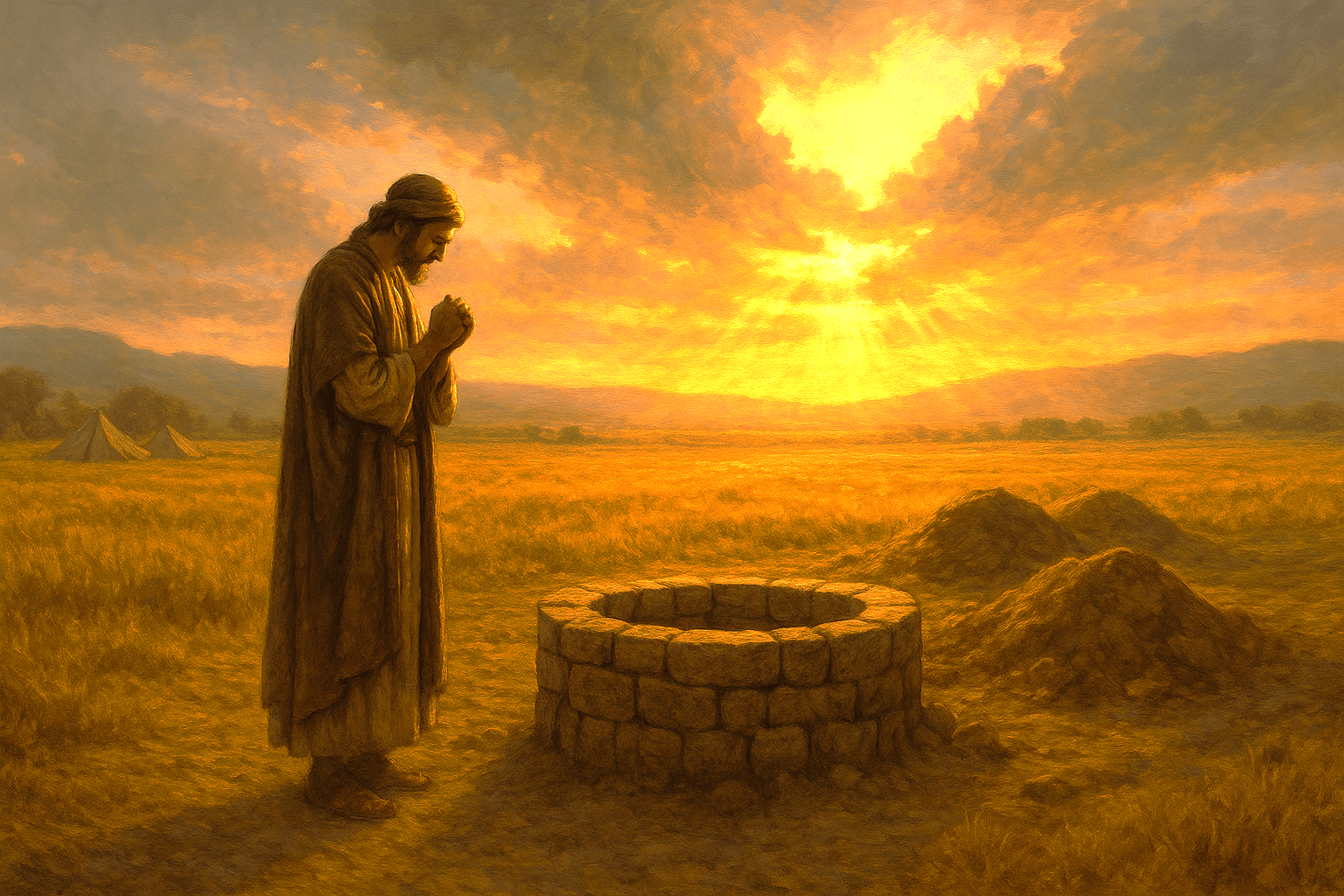
The prophets spoke of “beautiful feet” on the mountains: “How beautiful upon the mountains are the feet of him who brings good news, who proclaims peace, who brings glad tidings, who proclaims salvation, who says to Zion, ‘Your God reigns.’” (Isaiah 52:7; echoed in Romans 10:15). One of the local leaders reminded the visiting believers: “Your feet are on the mountains of Israel right now. Whatever your feet look like, they’re beautiful now.”
For centuries, much of the Jewish world has not experienced Christianity as “good news.” One regional council leader even admitted that when he looked up the word “gospel” and saw that it means “good news,” he wasn’t sure he had ever actually experienced that from Christians at all. When the Gentile believers shared that they had come to plant hundreds of trees in a nearby community, he smiled and said, “That is good news.”
Sometimes the gospel arrives not first in a sermon but in the form of a shovel, a sapling, and a willingness to stand alongside Jewish neighbors in hard, contested places. The “good news” this family brings is not a program or a pressure campaign; it is presence. They stand on the mountains of Israel and say to Zion, “Your God reigns,” not merely with words but with practical acts of support.
Salvation to the Gentiles, Jealousy for Israel
Paul asks in Romans 11 whether Israel’s stumbling is final, and answers with a resounding “Certainly not!” Through their stumbling, salvation has come to the Gentiles, he says, “to provoke them to jealousy.” The Gentile believers who serve on these farms take that calling seriously. They do not come to replace Israel but to provoke a holy curiosity: Why would people from another nation sell everything, move into a simple farm life, and pour their strength into defending Jewish communities?
They come as living proof that Yeshua has indeed come to the Gentiles—and that instead of hoarding Him, they are bringing that blessing back to the land and people from whom the gospel first went out. They are, in Paul’s language, branches of a wild olive that have been grafted into Israel’s cultivated tree, now strengthening the roots by serving them.
A Family on the Altar
Their story did not start with a strategic plan. It started with brokenness, hunger, and a simple cry: “We just want to go home.” They left the comfort and predictability of their former life, stepped onto a farm with no safety net except the Lord Himself, and discovered that even their weakness could become a testimony.
They raised their children on these hills. One of the kids turned two in Israel. What began as a “once in a lifetime” trip has become a lifetime of obedience. Over the years, their farm has become part of a larger “tribe” – a growing family of Jewish neighbors, visiting believers, and volunteers from many nations who worship, work, and pray together among the vines.
Worship nights echo through the vineyard. Drums, guitars, and spontaneous songs rise into the evening air. Local Jewish families often pause to watch and listen. Far from being offended, many are encouraged to see Gentiles loving the God of Israel, honoring His Word, and blessing His people in practical ways.
Re-reading the Scriptures with “Touchable Reality”
One of the constant themes in their story is the need to re-read the Scriptures with what they call “touchable reality.” Amos 9 speaks of a restored tabernacle and vineyards planting and flourishing in the land. Ezekiel 36 speaks of mountains once desolate becoming cultivated again, the cities being inhabited, and the nations watching as God proves His faithfulness. These are not just spiritual metaphors; they are geographical, agricultural, and historical promises that you can literally walk on.
When Gentile believers come as volunteers to pick grapes, plant trees, clear stones, or help with sheep and cattle, they are stepping inside those promises. They are saying, with their bodies and their time, “We believe what God has spoken about this land and this people.” And as they do, they also learn what the gospel is meant to be – not detached from Israel, but deeply rooted in Israel’s Story.
What This Means for Us
Most of us will not sell our homes, move to Samaria, and start a farm. But all of us are invited into the heart posture this family carries. We can choose to bless what God is doing in Israel, to stand against narratives that distort His promises, and to let Scripture shape our politics rather than the other way around. We can pray for Jewish communities in Judea and Samaria, support ministries that serve them, and consider coming as volunteers when the Lord opens the door.
Above all, we can ask the Lord to make our own “feet” beautiful—wherever He has placed us. Whether we are on the mountains of Israel, in a small town in America, or somewhere else in the nations, we are called to bring good news, proclaim peace, and say with our lives, “Your God reigns.”
For one Gentile family, that call looks like strategic agriculture, “agricultural warfare,” and a farm on a hill. For each of us, it will look different. But the same God who is restoring vineyards in Samaria is also writing our stories, inviting us to step into His Word in ways we can touch, taste, and walk on.