

Parashah Vayeshev Comments
(Originally prepared 11/22/2013; Shabbat date 11/23/2013)
Three Purposes of Torah
The Torah aims to: (1) instruct us to walk in God’s ways for a blessed, abundant life; (2) guard us from the folly of sin and self-destruction; and (3) point us to the Messiah. In this spirit, Parashah Vayeshev (“And He settled”) opens Joseph’s story—from beloved son to prisoner—and offers a profound foreshadowing of Messiah.
Vayeshev and the Messianic Pattern
Jews and Christians share more that unites than divides: both await the Messianic reign of peace. Traditional Judaism anticipates the first coming; Christians and Messianic believers confess the second coming of Y’shua (Jesus). Vayeshev weaves these hopes through Joseph’s life.
John 2:18–21 — “Destroy this temple, and in three days I will raise it up… he meant his body.”
Mark 8:27–31 — “The Son of Man must suffer… be killed… and after three days rise again.”
Romans 1:3–4 — Declared Son of God “by the resurrection from the dead.”
In Scripture, “life from death” and the number three flag Messianic instruction. Joseph’s arc pulses with both.
Joseph and Y’shua: Mirrored Themes
Shepherds: Joseph “tended the flock” (Genesis 37:2). Y’shua: “I am the good shepherd” (John 10:11).
Hated by brothers: Genesis 37:4, 8. Y’shua: “They… still hate me and my Father” (John 15:24).
Royal robe removed: Joseph’s ketonet passim is stripped (Genesis 37:3, 23). Y’shua’s garment is taken (John 19:23).
Beloved Son: “Jacob loved Joseph” (Genesis 37:3). The Father sends His “one and only Son” (1 John 4:9).
Rejected then reconciled: Joseph later reveals himself to his brothers; so too Y’shua will reveal Himself to Israel and the nations at His return.
Prophetic dreams and signs: Joseph’s dreams foretell rule (Genesis 37:6–8). Messianic kingship is promised (Isaiah 9:6–7).
Sent by the Father: Joseph seeks his brothers at Shechem; Y’shua is sent to the lost sheep (cf. Mark 12; Matthew 15:24).
Conspiracy and handover: Joseph is sold to Ishmaelites; Y’shua is handed to Rome.
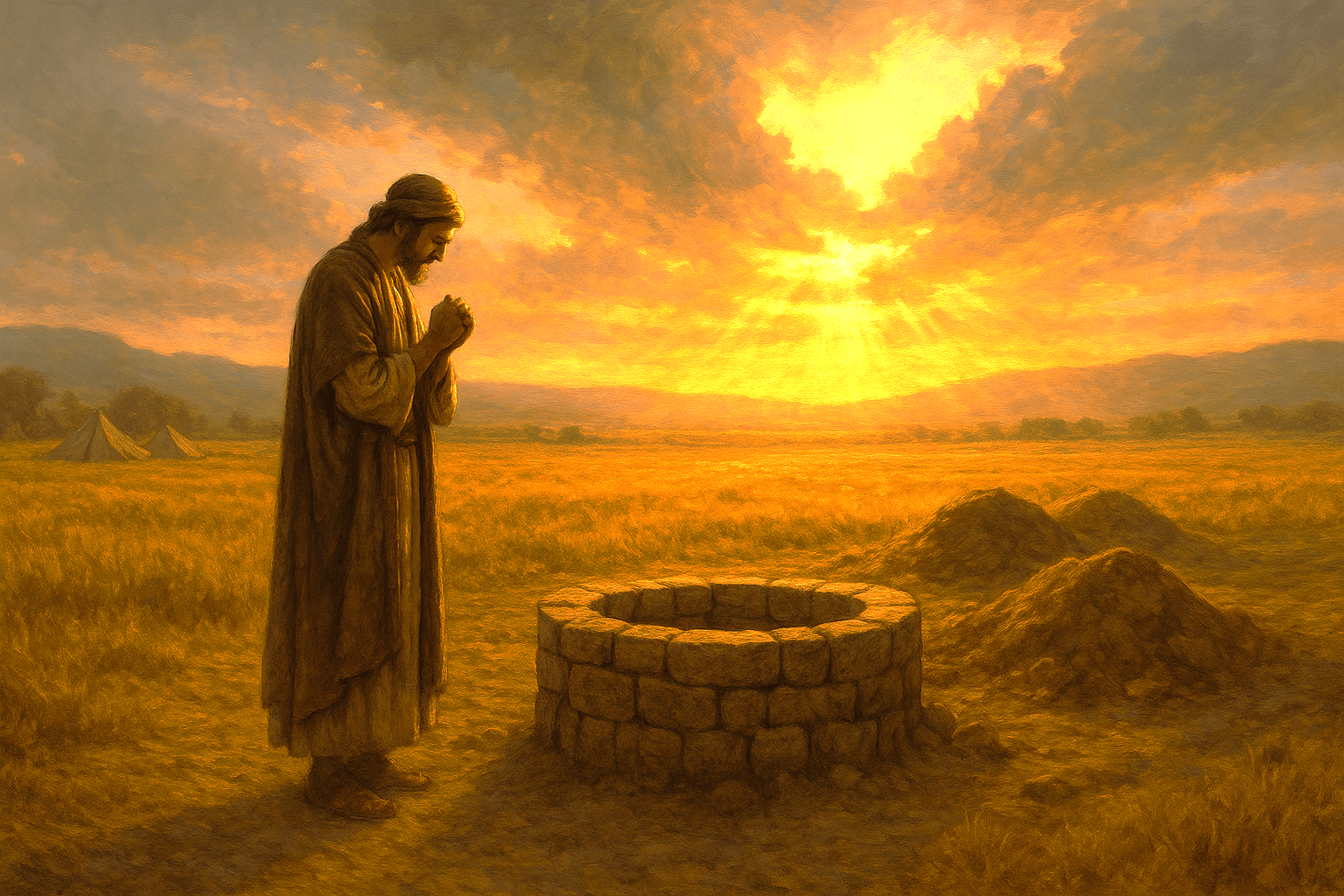
Pit and tomb: Joseph is cast into a cistern; Y’shua laid in a hewn tomb—both “down into the earth,” both later found empty by the one who returns to rescue (Reuben; the women/disciples).
Silver price: Joseph: twenty; Y’shua: thirty.
Blood and robe: Joseph’s robe is blood-stained; Y’shua appears with a robe dipped in blood at His coming (Revelation 19:11–16).
Torn garments and veil: Jacob rends garments for Joseph; the Temple veil is torn at Y’shua’s death—an image of grief and opened access.
False Accusations and the Prison Visions
Joseph is falsely accused by Potifar’s wife and imprisoned; Y’shua is condemned by false witnesses.
Matthew 26:59–61 — False testimony sought; the charge about “destroying the Temple and rebuilding in three days.”
In prison, the cupbearer and the baker dream; “three” recurs: three branches, three baskets, Pharaoh’s birthday on the third day. One is restored to life; one is executed (impaled). Two beside Joseph; two beside Y’shua—one turns to life, one to judgment. Bread and wine echo covenant and communion.
Joseph, Israel… and Y’shua
Some see Joseph primarily as Israel’s image: honored, then unjustly afflicted in Egypt, then raised to preserve life for the nations. Others see Joseph as a type of Messiah. The Scriptures sustain both lines.
Genesis 40:8; 41:16, 25, 28 — “Interpretations belong to God… God has shown Pharaoh what He is about to do.”
Joseph is God’s instrument to reveal His will; likewise, Israel is chosen to mediate God’s light to the world.
John 4:22 — “Salvation is from the Jews.”
Isaiah 53 and the Suffering Servant
Isaiah 53 has long stirred debate: is the Servant Israel, Messiah, or both? The text bears the weight of dual fulfillment—national and personal—culminating in redemptive suffering that heals.
Isaiah 53:4–5 — “He has borne our pains… by his bruises we are healed.”
History shows Jewish and Christian readers approaching the same mountain—truth at the summit—by different paths, yet toward the One God.
Humility, Knowledge, and the Father’s Heart
God desires a broken and contrite spirit, that we might receive Him—not merely propositions about Him, but Him.
Psalm 51:17 (Eng. v.17) — “A broken spirit; a broken and contrite heart… you will not despise.”
Jeremiah 31:34 — “They will all know Me… for I will forgive their iniquity.”
Older and Newer Testaments in Concert
The Tenach is prophetic and living; its patterns echo into the Newer Testament and beyond. For Jewish readers, the Newer Testament may confirm long-awaited Messianic identity; for Christians, the Older Testament enriches covenant roots; for seekers, Torah points to truth, peace, and love in the One God.
Matthew 7:7–8 — “Ask… seek… knock… the door will be opened.”
Closing Prayer
Father in Heaven, turn our eyes to Your light. May we behold You and love one another. Thank You for sending Your beloved Son as a sacrifice, that through Him we may come to You. Amen.