
Genesis 2:4; 6:9; 25:19–26; 26:12–33; 27:1–40;
Romans 8:26–27; John 15:16; Matthew 25:31–40; Psalm 23:4
The Torah portion that begins with the words Eleh Toledot Yitzchak ben Avraham — “These are the generations of Isaac, son of Abraham” — sounds like it should launch into a long family tree. When we hear “these are the generations,” we expect a list of children, grandchildren, and branches of a family line.
But that is not what happens.
Instead, the text simply says, “Abraham fathered Isaac,” and then moves quickly to Isaac’s life with Rivkah, the famine in the land, the re-digging of wells, and the drama with Esau and Ya’aqov. The usual genealogical details are strikingly absent. It’s as if the Torah is quietly asking: What really counts as a “generation” in God’s eyes?
This phrase, Eleh Toledot, appears earlier in Genesis as well. We first hear it, not about a person, but about creation itself: “These are the generations of the heavens and the earth” (Genesis 2:4). The heavens and the earth are not people, yet they somehow “produce” something — all the life and history that flows out of God’s creative word. Later we read, “These are the generations of Noach” (Genesis 6:9), and again the focus is less on a list of children and more on character: “Noach was a righteous man… he walked with God.”
In each case, Eleh Toledot is not just about biology. It is about what a life produces — the spiritual fruit, the atmosphere, and the legacy that flows out of a person walking with God in their generation.
That brings us back to Isaac.
Most of us know Abraham well: the man who left everything, believed God for a son in his old age, and walked up Moriah in obedience with that son. We also know Ya’aqov and Esau: the stew, the birthright, the disguise, the stolen blessing. In that swirl of drama, Isaac can feel like the quiet one in the middle — the son of promise, but often skipped over in our teaching and imagination.
What, then, is Isaac’s legacy? What do his “generations” look like?
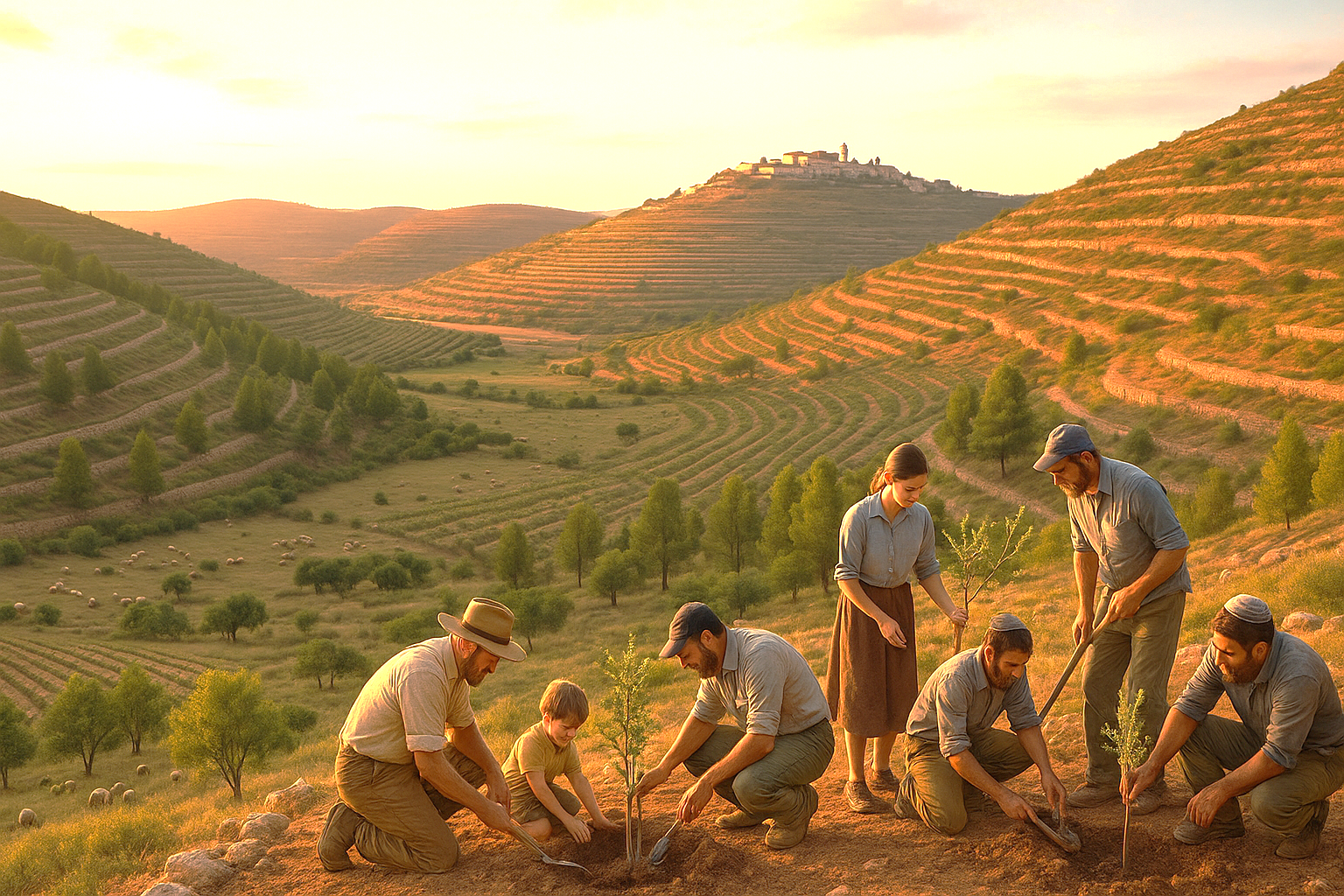
We are told that Isaac was blessed and became very wealthy. He sowed in the land and reaped a hundredfold. Yet much of that wealth was inherited. Abraham “gave all he had to Isaac” and sent the others away. Isaac is not presented as a self-made hero like Noach, building an ark against the tide of his generation. His greatness lies somewhere else.
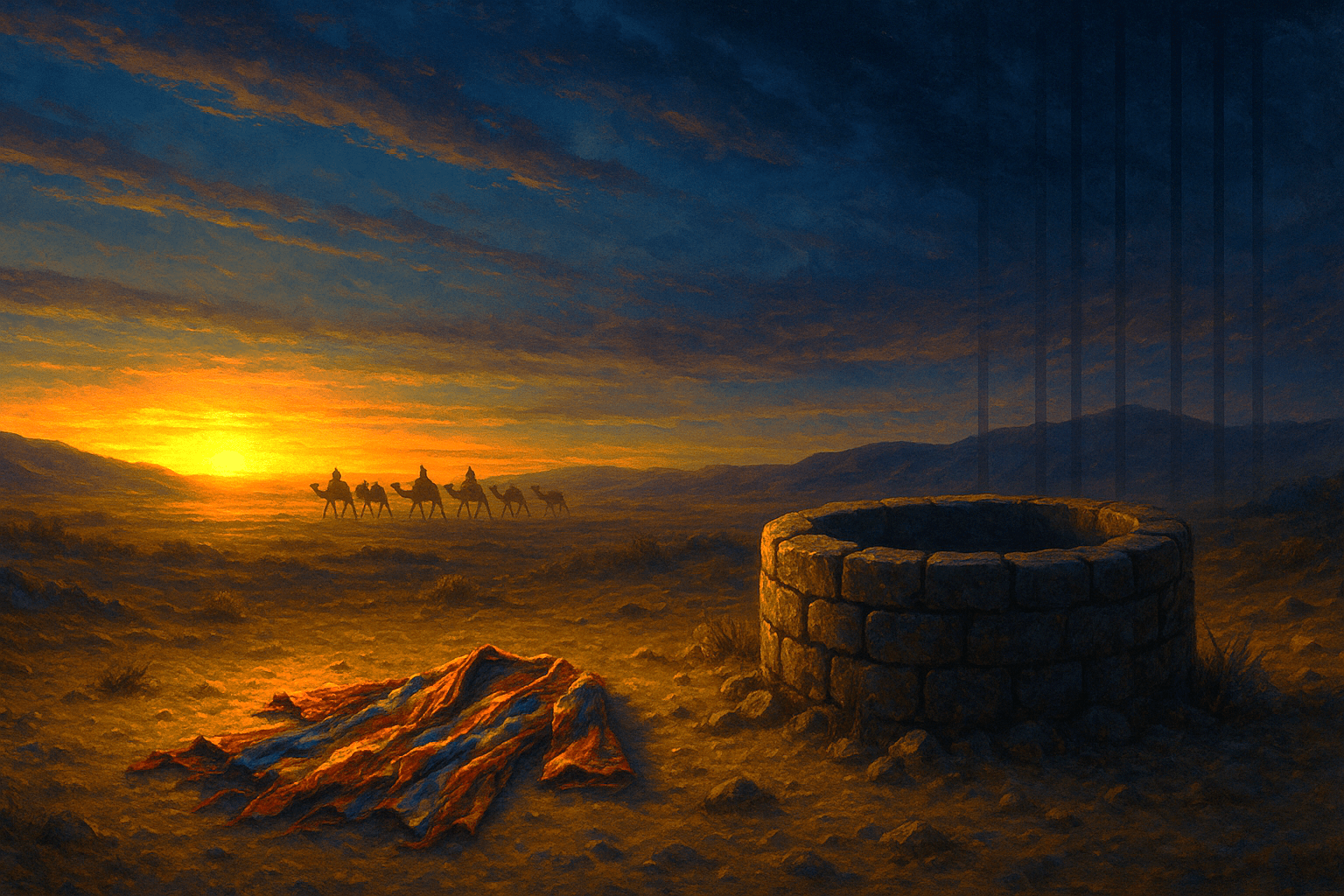
One detail the Torah repeats is that Isaac re-dug the wells of his father Abraham. The Philistines had stopped them up, and Isaac patiently opened them again, honoring his father’s work and seeking water for his household. Each time he found water, the local shepherds quarreled with him. Finally, at a well he names Rechovot — “room” or “broad places” — he says, “Now the Lord has made room for us.”
Isaac’s life, both physically and spiritually, is about digging.
We see this most clearly in his response to Rivkah’s barrenness. “These are the generations of Isaac”… yet his wife cannot conceive. There is no heir. No “generations” in sight. The promise is hanging in the balance.
Isaac’s response is simple and profound: “Isaac prayed to the Lord on behalf of his wife, because she was barren; and the Lord granted his prayer, and Rivkah his wife conceived” (Genesis 25:21).
The Hebrew word used there for his praying is atar — a word that pictures digging and turning over the soil, like working with a pitchfork. It is not a casual, one-time prayer. It is the hard work of pressing in, going over the same ground again and again, until the hardened earth breaks and the well finally opens.
Isaac re-dug his father’s wells in the natural, and he dug just as persistently in the place of prayer.
For twenty years Rivkah remained barren. For twenty years they waited. Yet Isaac kept interceding. He went between his wife and God, standing in the gap until the breakthrough came. And when the answer finally broke through, it was not just a single child, but a double blessing — twins struggling in her womb, two nations in her body.
This is Isaac’s hidden legacy: he was a man of intercession.
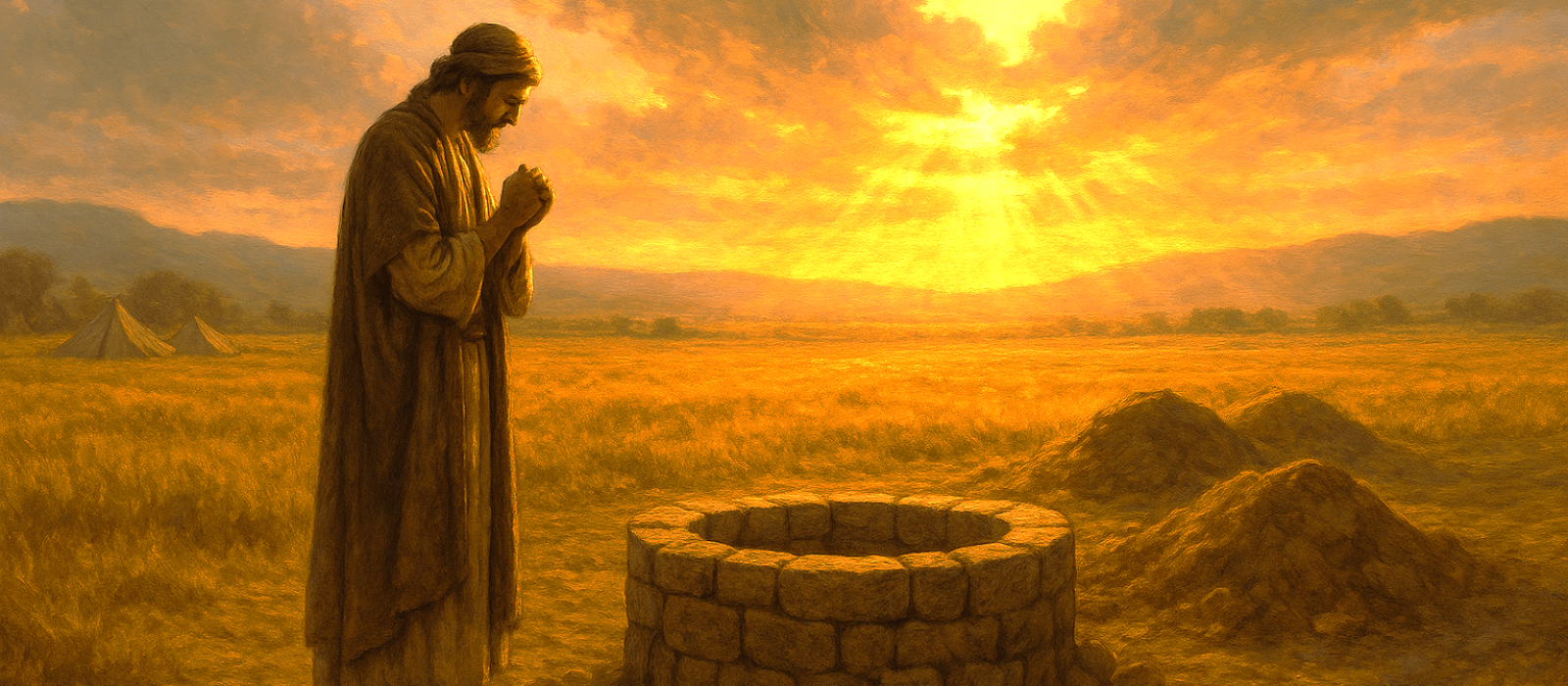
We are given another glimpse when Rivkah first sees him. He is out in the field, meditating, lifting his heart before God as the sun goes down and the day quiets. This is not the picture of a passive, half-asleep patriarch. Isaac is a man whose inner life has been trained toward God — listening, waiting, praying.
The New Testament gives us language for this kind of prayer in Romans 8. Paul writes that the Spirit helps us in our weakness, “for we do not know what we ought to pray for, but the Spirit Himself intercedes for us with groanings too deep for words.” The Greek word Paul uses is long and unwieldy: synantilambanomai.
It breaks down like this:
Syn – together with.
Anti – against, in opposition to.
Lambano – to take hold of, to seize.
Put together, it paints a picture: the Holy Spirit comes alongside to take hold of a burden together with you, against whatever stands in the way of God’s will. He does not pray instead of you; He prays with you. Your weakness is not a disqualification. It is the very place where He loves to lay hold.
Isaac, praying for Rivkah’s womb, is a living picture of this word. He cannot fix the problem. He cannot manufacture life. He can only dig. He can only stay before God, again and again, until heaven and earth agree and a new generation is conceived.
Many of us know something of this kind of prayer. There are seasons where you wake up praying and fall asleep praying, where a burden sits on your chest for days, weeks, or months. Then, suddenly, something shifts. The weight lifts. The light in the room feels different. Nothing may have changed outwardly — yet inside, you know that God has heard, and that the answer has been released.
Other times the Spirit’s intercession is urgent and mysterious. You sense a sudden prompting to pray in the Spirit, with no clear reason. Only later do you realize that God was steering you around danger, or preparing the ground for something you had not even imagined. The same Spirit who hovered over the waters at creation is still brooding over situations, inviting us to partner with Him in prayer.
This kind of intercession is not glamorous. It often feels hidden, like digging in hard ground when no one else is watching. It can be exhausting. As we grow older, our flesh becomes more demanding, more eager to sleep in than to rise early and pray. Yet this is precisely where our legacy is forged.
Isaac’s story also reminds us that being chosen stirs up jealousy. Abimelech and his men envied Isaac’s blessing and kept claiming his wells. God told the patriarchs to live in tents, to be pilgrims and not empire-builders, yet even in humility their favor provoked opposition.
Israel as a nation has carried that dynamic through history: chosen to bear God’s covenant and thus resented by the nations. Likewise, Yeshua warns His disciples, “If the world hates you, know that it has hated Me before it hated you.” To be chosen is not to be pampered; it is to carry a responsibility — to bear fruit that remains, to serve “the least of these,” to visit the sick and the prisoner, to feed the hungry and clothe the naked.
And all of that flows out of one place: the prayer closet.
Our true “generations” are not just our biological descendants or the things we build. Our generations are the lives touched, the atmospheres changed, the hidden breakthroughs birthed in prayer. Every time we say “yes” to the Spirit’s prompting — to speak, to serve, to intercede, to obey — another unseen well is opened.
So what is your legacy?
For Isaac, it was surrender and persistent prayer. He allowed God to empty him of the illusion of control, to dig deep places in his heart, and to use his intercession to bring forth a double portion in the next generation.
The same invitation stands before us. Let the Holy Spirit take hold of the pitchfork with you. Let Him dig where the ground has grown hard. Stay with Him until the burden lifts, until living water breaks through. Yield when He nudges you to speak, to bless, to cast out darkness, to step into uncomfortable obedience. Less of you, more of Him.
“These are the generations of Isaac…” When your story is told, may heaven be able to say: these are the generations of a man or woman who surrendered, who prayed, who let the Spirit take hold together with them — and through whom God opened many wells.