
2849 AM (911 BCE) – From Revival to Reproof: King Asa’s Rise and Fall
“Understanding,” little ten-year-old Asa answered his tutor, “with understanding comes insight, and with insight comes wisdom. At least, that is what Solomon had once written.”
“Yes,” the tutor responded, “but before you can have understanding, what do you need and how do you get it?”
“Oh, that’s easy! Solomon talked about that as well, at least in his earlier writings. He kind of stopped writing toward the end there, except for maybe the capstone of his life—Qohelet—‘Vanity, vanity, everything is vanity!’ It was a reflection of his whole life, and his conclusion is that he should have stayed with the wife of his youth, who I personally hold to be Abishag the Shulamite. I mean, he killed Adonijah over her.”
“Even though it is difficult to sort through 300 wives and 700 concubines, I am convinced she was his first, and she was the wife of his youth that he lost and could not get back. I mean, would you not be jealous and scornful if you and your spouse married each other, and you were each other’s first, and then he marries 300 other women? I think that would play some serious games with your mind. And speaking of firsts, I also think Solomon’s Song of Songs was his reflection of his personal experience with his first love, which I am still contending is Abishag.”
“Oh, well, that’s very unconventional, but it certainly makes some sense … uh, but, dear prince, you did not actually answer the question…”
Asa looked at the tutor, as if for the first time that day, and thought back to the question at hand. Finally, his eyes lit up, “Oh, right, where does understanding come from? That’s easy: it comes from knowledge. We first have to know, and to know we have to learn. To learn, we must experience and study and read and play.”
“Play?” the tutor interrupted.
“Well, yes. Certainly, at my age, play is critical to developing my body and coordination, but it is also critical to seeing and understanding nature. Solomon was all about studying nature—the animals, flowers, and trees—even the soil and the bugs in the soil. Plus, it gets my energy out, so that I can come in and read the Hebrew and study through the palace records, as exciting as they are not. But the acquisition of knowledge has to be active and tenacious. That knowledge will lead to understanding, and then, when properly applied, leads to wisdom. And, well, that can ultimately lead to goodness or, if misapplied, evil. So, to that end, I think it would behoove me to facilitate the rapid acquisition of knowledge through some experiential … um … play.”
The tutor, who was listening and making notes, finally looked up: “Huh? Oh. Oh, sure. Yeah, sure, you can go outside and play. Lunch is the usual time, and then be back for afternoon studies after music.”
Asa was halfway out the door, slowing politely only enough to allow the tutor to finish his sentence before disappearing into the underexplored wilderness of outside.
☼ ☼ ☼
Asa grew up fast. He had a wonderful childhood, the oldest son of Abijah ben Jeroboam. He was a prince, a spoiled prince, but weren’t they all? But he was an introspective prince, and a grateful prince. He enjoyed playing and learning, and sometimes he would just have to keep his observations to himself, as most of the kids/princes he played with did not share his interest in thinking and analysis.
But that thinking and analysis had served him well. He always surpassed the expectations, and often the abilities, of his various tutors. Physically, he fought with the best of them, and he excelled in his swordplay, sling, javelin, and shield use. In fact, in everything he did, he excelled. He was, after all, next to be king, and he knew he had to prepare to be effective.
But as he matured, something always bothered him. On the one hand, he did not like his grandfather Rehoboam, nor his father Abijah. Mainly because they turned their backs on Adonai. Did they not know what made Moses great? It was Moses’ faith in Adonai and the words of Adonai. That is why Asa would spend hours each day, when he had spare time—whatever that was—reading the Torah in Hebrew.
It was during these sessions that Asa realized that something was not right. He knew, as a king, that he should make his own copy of the Torah—or so the Torah said. But when he asked his father where his copy of the Torah was, his father scoffed and actually slapped him hard in the face. It was the only time his father ever laid a hand on him. And what was odd was that Abijah was generally a kind father, and after the slap and rebuke, Abijah never apologized for it, which was odd because Abijah was the kind of person who apologized if he was sorry about something he did. Asa could only assume that his father was simply not sorry.
Asa pondered that conundrum as he spent time reading through the Torah. He also had opportunities to read about the exploits of Joshua and some of the things that happened during the time of the Judges. Again and again, he would be frustrated with how simple following Adonai was, yet how difficult not following Adonai was, and, yet again, how people would rather wrestle with Adonai than obey him. Then Asa thought about Jacob—rather, Israel.
“And how?” Asa said out loud to nobody.
☼ ☼ ☼
As Asa grew up, his love of Adonai and his passion for truth grew as well. It galvanized, early on, how he would lead. But he would have to wait until his father passed him the baton, which happened when Asa was in his early thirties.
By then, he had married Azubah, and they were raising their first son, Jehoshaphat. Unlike his father and grandfather, Asa was not interested in other wives, a lesson he learned from studying the failures of Solomon. Besides, Asa loved Azubah. Not only did she love Adonai alone and not consume her time with idolatry, but she understood the need to pass that passion on to their child and teach him to teach his child as well.
From the very beginning, she helped Asa have the confidence to begin removing the sacred places not authorized by Adonai. It seemed like an endless task. As King, he demanded that Judah only follow Adonai. It was also an arduous task. There were many in Judah who were happy to comply because their minds were like reeds blowing in the wind. Others supported the effort because they loved Adonai just as passionately as the King.
However, there were, maybe, a quarter of everyone who were stalwart and stubborn and even violent about the King removing their places of worship. They would continue their evil, but often secretly and underground. There was little the King could do about people’s ultimate choices. That would be an issue for Adonai to solve, but he could make it illegal, he could make it socially unacceptable, and he could close the public places.
Asa demanded that the Torah be taught, and that the commandments of Adonai be taught and followed. Asa would often say, “Listen and obey, O Israel and Judah: Adonai alone is not just our singular God, but the Creator of the heavens and the earth and everything that is. Put away the idols. Put away the idolatry.”
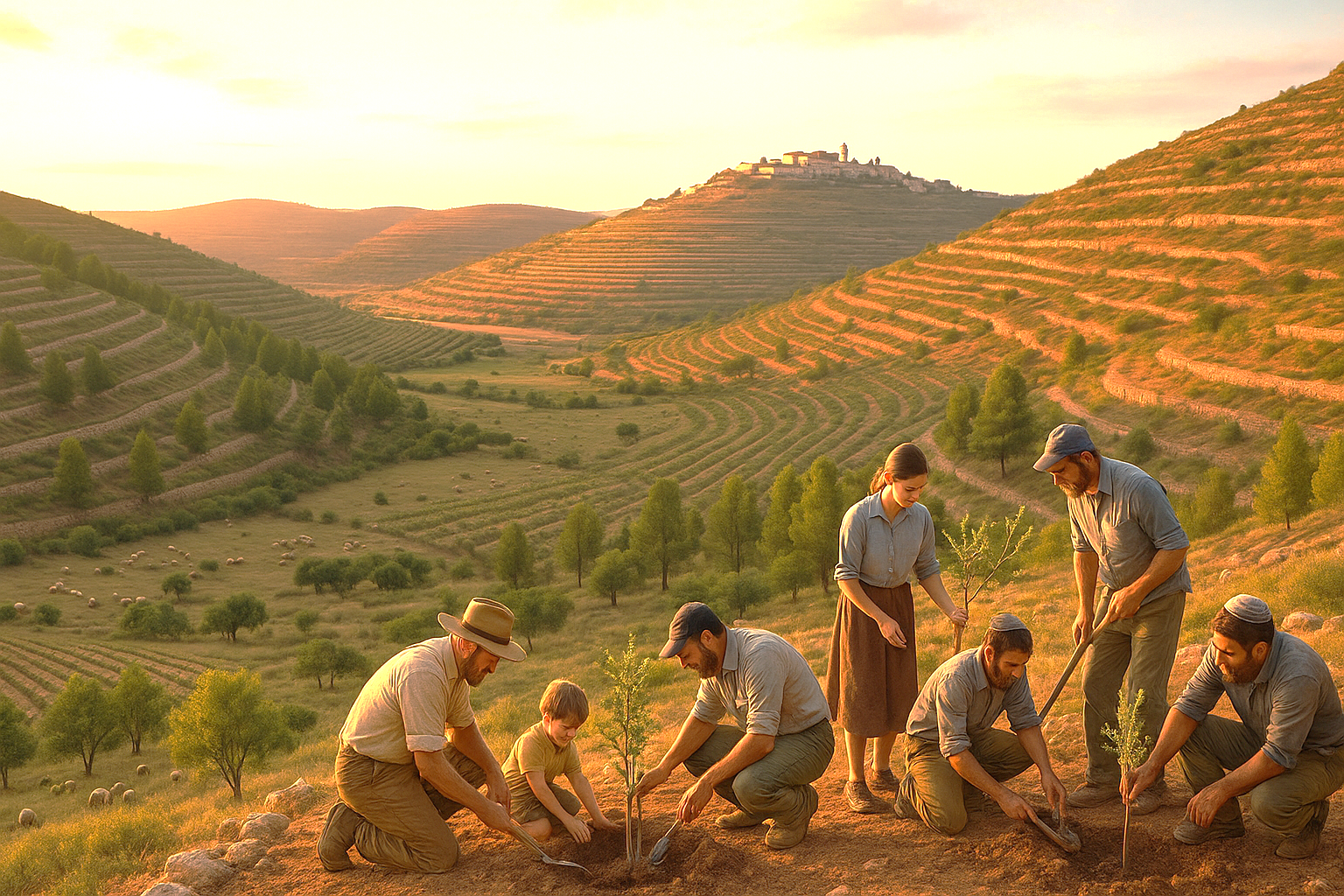
As a result of Asa’s zealousness, Adonai gave the land peace for many years. During that time, they were able to fortify their cities and, in many ways, prospered because of the King’s faithfulness to Adonai and his leadership in bringing Judah into faithful obedience to Adonai.
As part of that prosperity, people started multiplying and filling Judah with children, as many began to once again obey the mitzvot related to sexual relations, marriage, and children. As a result of that fruitful multiplication, many strong, masculine men were created, and they had an overwhelmingly strong sense of defending and protecting the women they loved—not just their wives, but their mothers and grandmothers, daughters and sisters. And so, the armies grew in strength, and the men of the armies were endlessly brave, unbelievably fit, and sacrificially courageous. Judah had an elite army of three hundred thousand, and Benjamin had nearly that many ultra-elite soldiers.
☼ ☼ ☼
After a time of peace and prosperity, in the tenth year of Asa’s reign, Adonai sent Zerah the Ethiopian to test Asa. Zerah noticed the sudden prosperity of Judah and could not stand to see “those people” prosperous or happy. As a result, he marshaled ten armies of a hundred thousand, which included three hundred chariots. When scouts of Asa reported on the vast multitude coming across the desert from the south and organizing in the Valley of Zephathah at Mareshah, Asa cried out to Adonai. Despite his own armies of elite men and fortified cities, Asa recognized that victory—especially this one—would come from Adonai alone.
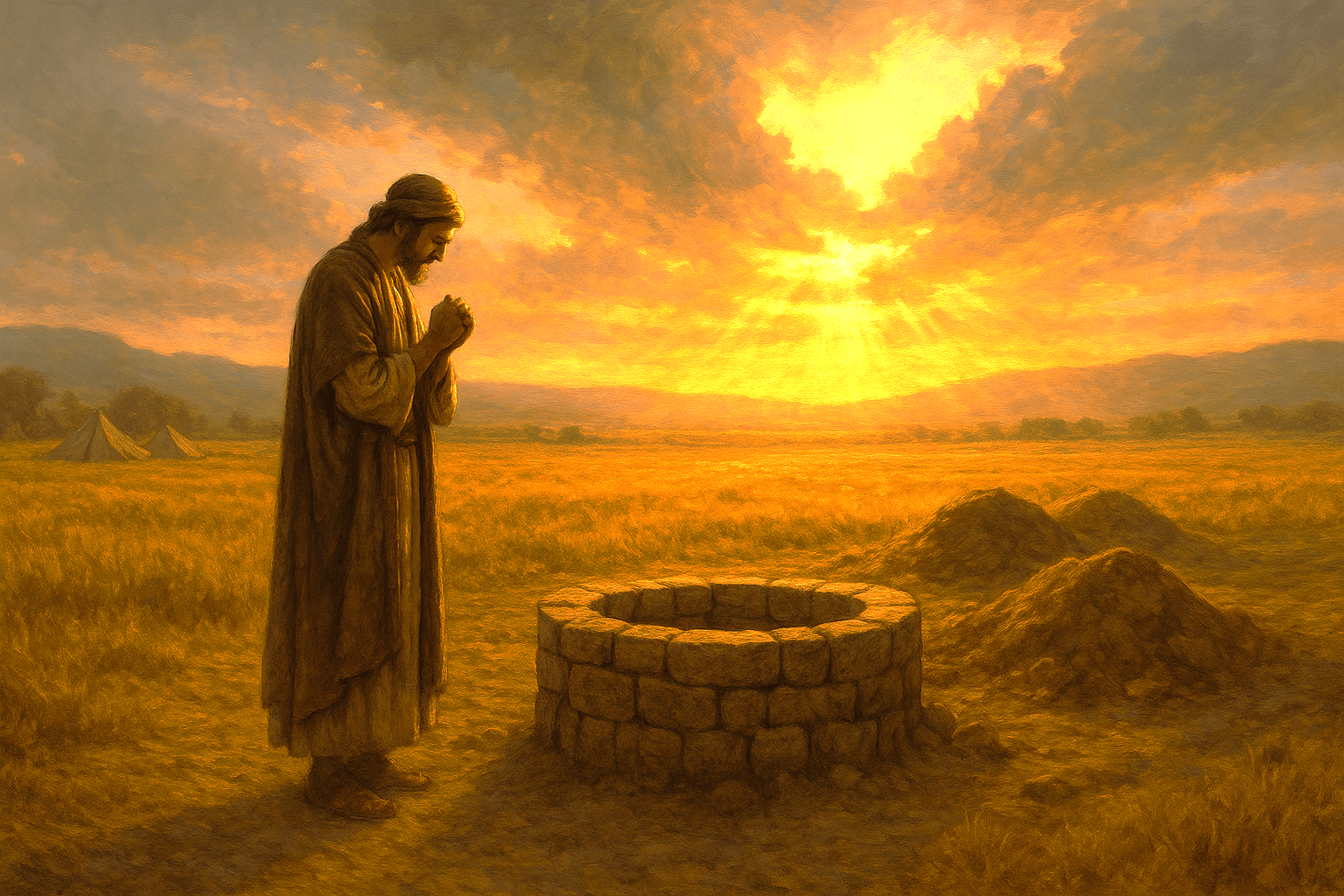
Asa wailed, “Adonai, who is like you? Who can protect us better than you? Compared to you, we have no strength. Compared to Adonai, we are weak. Strengthen us, O Adonai, help us, our Creator, for our faith and strength and trust must be in you alone. In your name we will go against Zerah; in your name alone will we engage in battle, for your glory, not ours—to lift up your name, not ours. Do not let this man prevail against you, O great Adonai; do not let this unprovoked attack go unpunished.”
Words often flow when people are in fear. But in Asa’s case, those words were backed up with a lifetime of faithful living and leadership that demonstrated his absolute trust in Adonai. So, Adonai listened, and the armies of Judah and Benjamin routed the Ethiopians. They shattered the army and pursued them as far as Gerar, and Asa’s armies pillaged the cities to which their enemies fled, and plundered the cities, and brought back much plunder for their efforts, including livestock.
Afterward, Adonai spoke to the prophet Azariah ben Oded, who requested an audience with Asa. Asa gathered the leaders of Judah and Benjamin.
Then the prophet Azariah addressed everyone, speaking for Adonai: “King Asa, leaders of Judah and Benjamin, people of Adonai, listen to what your God has to say. Because of your obedience to him, Adonai is with you, and he has blessed you and blessed the work of your hands. He has blessed your families and your nation. If you continue to seek him, he will allow you to find him. But if you abandon Adonai, he will abandon you, and you will be far worse off than you could possibly imagine.”
“Now look at your neighbor Israel, who has never turned to me. They have fled to foreign gods from the very beginning. They hate my statutes, and they hate me. I have stirred up all the armies against them, as I did with Rehoboam and Abijah. They, too, went without the Torah and teachings from the priests, seeking false gods, and it was only in distress that they would come looking for me.”
“And for Judah, for the longest time, there was no peace when you went out or when you came in. And now, it has only recently been that King Asa led Judah to be fully devoted. So, I stirred up the Ethiopians to test you, to see if you would rely on your own strength or seek the counsel of other gods. But you didn’t, so be strong and do not lose courage, for I will reward you for your work and your faithfulness.”
☼ ☼ ☼
After Azariah spoke to the nation, King Asa purged every abominable idol and high place he could find from the lands of Judah and Benjamin, and even in the outskirts of Ephraim, in the cities that had been captured from northern Israel. As King Asa restored righteousness to the land, many from the outlying tribes of Ephraim, Manasseh, and Simeon deserted their family inheritance to dwell as foreigners in a land that stood righteous before Adonai.
On the fifteenth day of the third month of Asa’s reign, there was a massive sacrifice offered to Adonai, with hundreds of oxen and sheep. And they renewed their covenant with Adonai, that they would seek him with all their heart, soul, mind, and strength. And whoever would not seek Adonai should be put to death. With shouts and the blowing of many shofars, they rejoiced in the oath they had made with Adonai, and Adonai gave them rest on every side.
☼ ☼ ☼
In time, King Baasha, king of idolatrous Israel, heard of the rededication of Judah to Adonai. He wanted to vomit. It was so disgusting that, one, they still believed in that fantasy, and two, they believed they were blessed by him. The king paced. His thoughts, as of late, had become obsessed with the supposed goodness of King Asa.
“Nobody is that good,” the king would shout. “We just have to find out what he is hiding. He is a pompous liar. I do not know what he did to get King Zerah to halt, but it wasn’t some divine intervention.”
King Baasha brought the wisest of his advisors and military men.
“King Asa is just too successful. Judah is becoming as strong as Israel. What can we do to wreck it? It needs to be wrecked. All of it. If Judah is not worshiping our gods, what does that say about our faith and our choices? That we are somehow wrong! That our gods are not good enough? What snobs! What bigots!”
“Oh, great King, may you live forever,” one of his generals said, “if I may be permitted to speak. King Asa has become wealthy, and he has certainly become strong. His population has grown tremendously over a very short period of time. So they import a good deal of supplies, including food…”
The general knew that he did not need to go on. He could tell just by looking at King Baasha that he was not only following but was already way ahead of him.
“Very good. Very, very good, General,” the king emoted. “So we create a blockade. We stop the supplies. We never gave them permission to trespass through Israel, did we? Why do they think they have a right? A 100 percent tariff. Confiscate it all. Then we will see how prosperous they are! Good General, how would you recommend we accomplish this, from a military perspective?”
The general spoke up again, “We close off the Jordan and then blockade all the trade routes along the whole border of Benjamin, and then we take one of our cities on the main trade route—let’s say Ramah—and we fortify it, thus preventing any trade from moving at all to Benjamin or Judah. Though they could still trade through King Ben-Hadad in Aram.”
“Good! Good!” King Baasha purred. “Do exactly what you said and make haste! I cannot stand that King Asa. I will work out a peace treaty with Ben-Hadad. You just get the physical blockade in place.”
☼ ☼ ☼
The general effected the requested blockade. It wasn’t difficult, nor did it require much time. The trade routes were well established through Israel; it was the gateway to pretty much anywhere you wanted to go—whether to Jordan, Egypt, or Lebanon. The vast desert and the extremely rocky terrain made alternative routes impossible, if not highly impractical. Thus, it wasn’t long before King Baasha requested to see the general, if only to congratulate him on his expeditious efforts.
The general reported as requested and briefed the situation to the king: “And our spies say that King Asa is being pressured by the people of Judah to find relief. We have Judah pinned in on all sides, and their supplies are getting critical. And with Ramah fortified, and continuing to be fortified, their army does not have a very good way to attack. We have also begun fortifying Dan, Abel-maim, Ijon, and other storage cities in Naphtali, in case they try to simply steal what they need.”
“Good thinking,” the king mused, “good thinking.”
☼ ☼ ☼
The blockade was virtually impenetrable, and Judah was suffering greatly. But then, suddenly, unexpectedly, the unthinkable happened. Word came back to King Baasha that the treaty he had created was overturned by Asa, and Aram was now attacking Israel.
“How?” the king demanded.
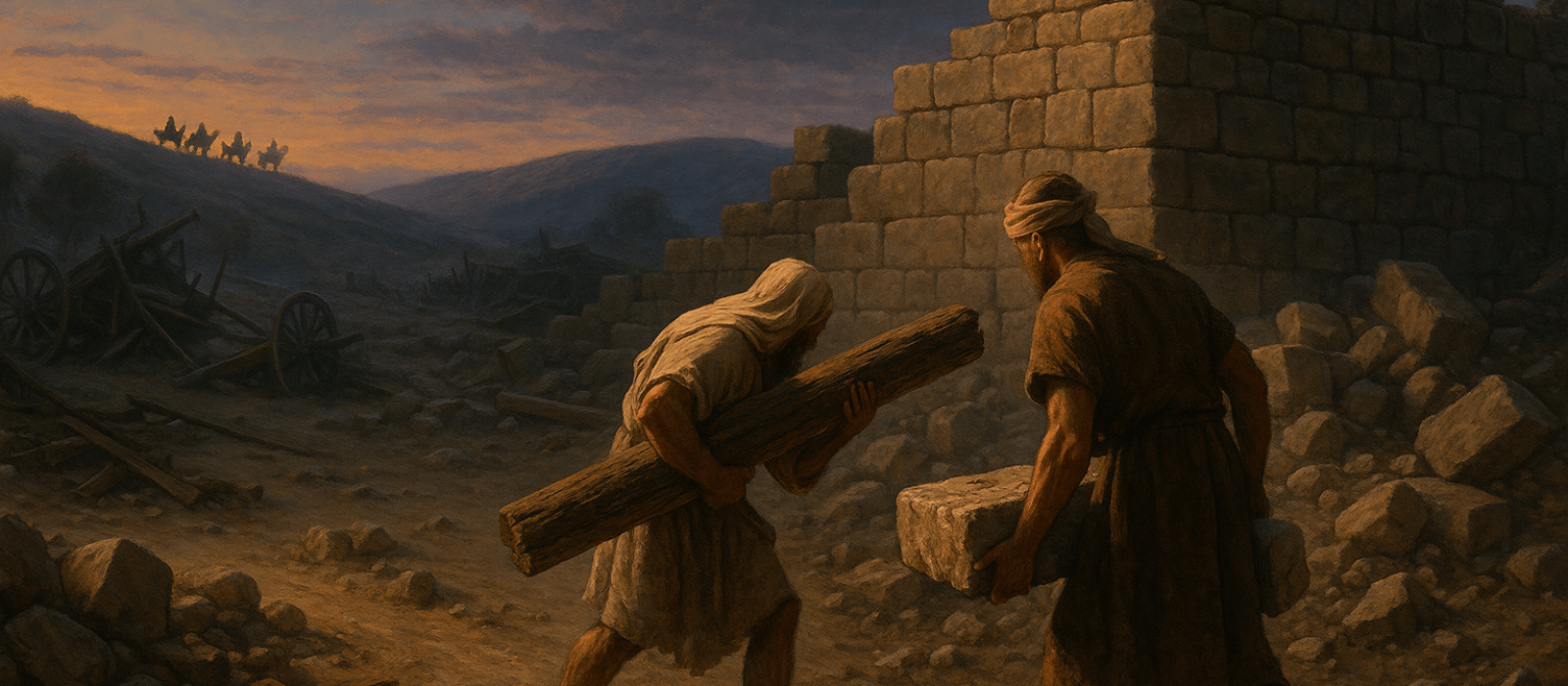
The official bringing the news said simply, “He bribed them with gold and silver. So,” he said as he shrugged, “Aram attacked us. They have already destroyed our storage cities in Naphtali, and Judah has defeated our army in Ramah. They are carrying the fortifications from Ramah back to their own cities—Geba and Mizpah, I think—and we can do nothing to stop them.”
“Where is the general?” the king demanded.
With a sad shake of the head, the official simply stated, “They are all dead.”
The king slumped on his throne, not sure what to do next. For sure, he would immediately call for a cease-fire. At least he could then regroup and figure out the damage. But the damage was cataclysmic devastation.
☼ ☼ ☼
It turned out Judah was not unscathed either.
Hanani the Seer came to visit Asa with a message of rebuke from Adonai, “Why have you relied on Aram for your salvation instead of Adonai? Did you not learn from your experience with the Ethiopian’s immense army that there is nothing too tough for me? Adonai supports all those whose hearts are completely his. You speak out of both sides of your mouth, and you have acted foolishly, indeed. Because of your lack of faith, you will only know war for the rest of your reign.”
Asa was stunned. It was like a slap in the face. He went to speak, to reason, but instead he got angry, frustrated, confused. But then rage poured out of Asa toward the prophet Hanani.
“How dare you?” Asa accused. “After all I have done for Adonai, how dare you both?! I removed the idolatry. I enforced Adonai’s decrees. That was me! Where is my credit! Where are my just deserts? Guards! Throw Hanani into prison until he learns some respect. Until Adonai learns some respect!”
The guards looked at each other, stunned as well, and then moved to fulfill the wishes of the king. But that did not satiate his potent fury. Perhaps it was because of his father, Abijah, but Asa became hurtful to many people who he felt had shown him disrespect, likening it to being slapped in the face.
Jehoshaphat pleaded with his father to relent, but Asa would not. Adonai finally struck Asa with a foot disease, so that he would stop running around like a decapitated chicken. But instead of seeking Adonai, repenting, and relying on Adonai’s wisdom and mercy, Asa chose to rely on the wisdom of human physicians and his own wisdom.
Asa died just five short years later.
Used with permission by the author. Find the author’s complete works online: Complete Works of Mack Samuels