
Scripture References (primary): 2 Chronicles 17:7–13; 2 Chronicles 18; 1 Kings 22; 2 Chronicles 21:1–20; 2 Kings 8:16–24; 2 Chronicles 21:6; 22:2
2895 AM (865 BCE) – WOMEN MAKE OR BREAK THE MAN
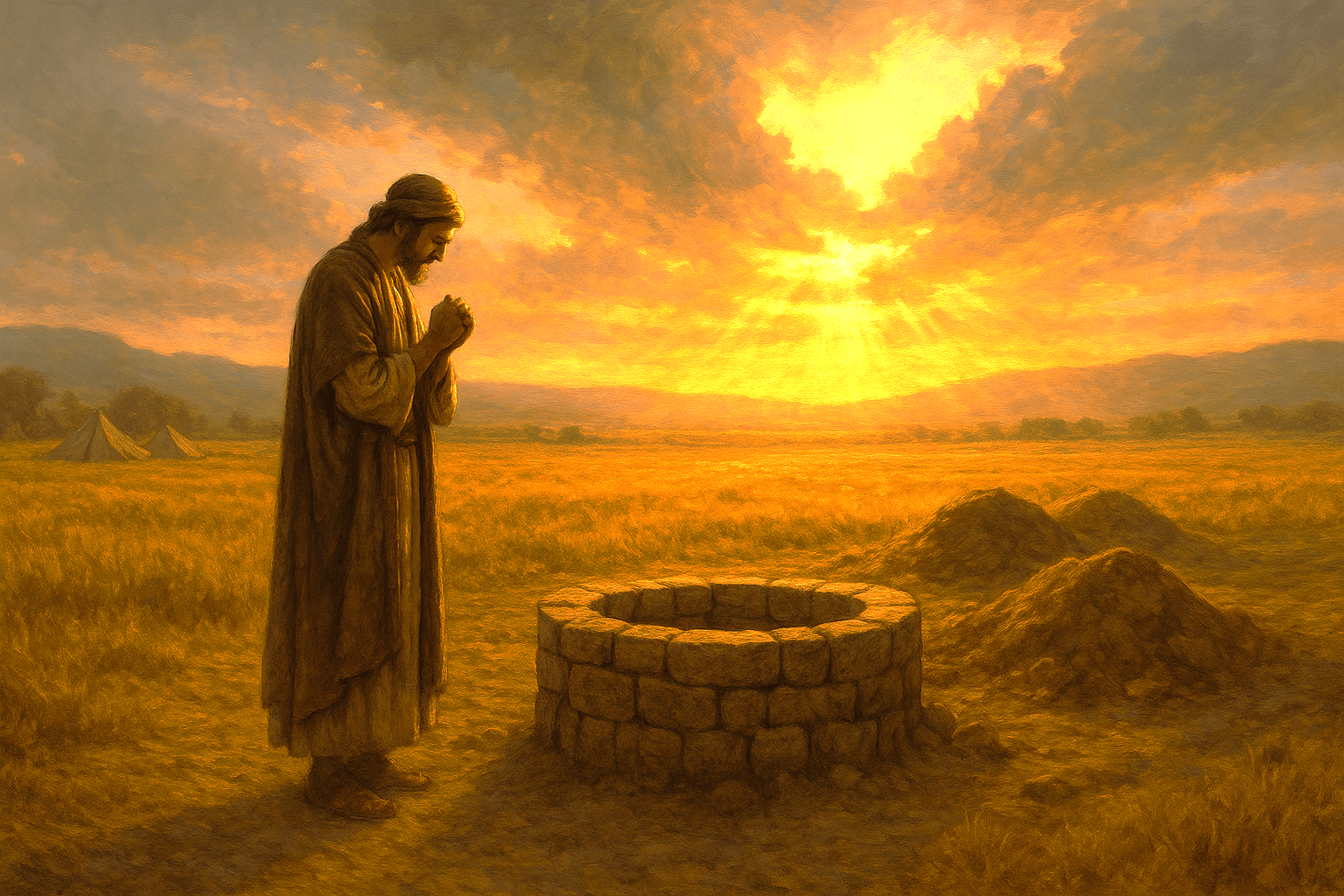
Jehoshaphat stood solemnly, as his late father’s embalmed body was set gently into the cave. His body would stay there for a year, and then all that would be left would be his bones. The bones would then be collected and put in the royal tomb. It was so perplexing—not so much the death of Asa, but how Asa got so angry with Adonai after a lifetime of serving Him.
He thought about the treachery of Baasha, and he realized that he would have to keep his guard up, always seeking Adonai in everything he did. But he would continue to take down the idols and high places as they were discovered, with prejudice.
Jehoshaphat was not angry with his father Asa; he was not disappointed and certainly not disillusioned. If anything, he was more committed to Adonai and remembered with relish the massive sacrifice and oath the whole nation of Judah had participated in when he was just a kid.
Jehoshaphat remembered his father spending time with him, teaching him Torah. Asa had helped him make a handwritten copy of the text, saying, “You will be King one day. By making this copy, it means you have fulfilled one of the greatest commandments of Adonai regarding kings.”
They would spend hours copying Torah, with a kohen observing their efforts to ensure the same fidelity and practices as the scribes so that, when done, this would be a bona fide Torah scroll that was kosher and could even be used in the Temple.
Then a thought came to Jehoshaphat: could he share that wonderful experience with others in Judah?
Quickly, Jehoshaphat brought in his advisors, who, in turn, brought in some of the priests. Under the guidance of the priests, five officials were sent to teach Torah in the cities of Judah, along with nearly a dozen Levites. They taught the Torah from the available Torah copies in their possession, two of which came from Jehoshaphat and his father Asa.
This pleased Adonai.
The dread of Adonai was in all the surrounding lands, from Israel and Moab to the Philistines and Egypt. This brought peace to the land, which allowed Jehoshaphat to worry more about studying Torah and worry less about defending Judah.
Moreover, tribute was often brought to Jehoshaphat, whether of animals or silver, and Jehoshaphat grew greater and wiser, like his father Asa. He fortified cities and trained valiant men, and his army was every bit as strong and fierce as Asa’s was.
☼ ☼ ☼
It came to pass (always a dark harbinger, that phrase is) that, as kings were reaching out to congratulate Jehoshaphat and try to ally with him, Ahab, the King of Israel, also came to Jehoshaphat and, with lips dripping flattery, wondered if Jehoshaphat would be willing to personally tutor Athaliah, his daughter, in the Torah and in the ways of Adonai. Jehoshaphat was truly flattered and honored. And like a lamb to the slaughter, he accepted the proposal.
For a whole year, week by week, Jehoshaphat taught and explained each Torah portion to both his son Jehoram and Athaliah, including much of the oral traditions he learned from the priests and the Levites. After a year of intense and intimate study of the words of Adonai, Jehoram and Athaliah were madly in love.
Both nations, Judah and Israel, celebrated their union. Could this be a reunification of the kingdoms? So much hope. So much promise.
Later, Ahab had requested that Jehoshaphat bring his son-in-law, Jehoram, down for a visit so that he could also see his little girl. When they went down to visit Ahab, they announced that Athaliah was pregnant.
“Oh, what joy!” Ahab genuinely announced. He ordered the slaughter of many sheep and oxen, and they celebrated Jehoshaphat, the man of the hour.
During the feast, Ahab happened to mention in passing that he was considering advancing against Ramoth-Gilead, as they had been a thorn to him and Jezebel. And hey, would Jehoshaphat be willing to bring his huge army to assist him in the effort?
“We are now one people,” Jehoshaphat said magnanimously. “Of course! But we should not repeat the mistake of Asa. Let’s inquire of Adonai.”
Ahab looked at Jehoshaphat with a smile that hid the contempt boiling just under his skin. “Of course, great King. After this feast, we will assemble the prophets.”
☼ ☼ ☼
True to his word, Ahab assembled the four hundred prophets who served the vast religious system of Israel. In the splendid hall of the throne room, and with great pomp and circumstance, Ahab broadcast his request loudly to the four hundred men.
“Welcome, great prophets, seers of seers, prognosticators of prognosticators!”
Ahab lifted his arms in a grand gesture, and the prophets went wild. With enthusiastic cheering and applause, it was just so darn festive.
As the attending prophets quieted down, Ahab continued, “Jehoshaphat and I shall attack the most villainous Ramoth-Gilead, whose men have ravaged our borders, our livestock, and our women. What say you? Should we go to battle against Ramoth-Gilead? Will it be handed over to me, your king?”
The crowd erupted in affirmations, “Take them! Take them! Victory has been handed to you! Kill them all! Kill them all!”
Jehoshaphat looked out into the crowd of four hundred. He observed their dress. They were not appareled in a manner familiar to him; their clothing was exotic and mysterious, covered in symbols he was not entirely familiar with. Something did not feel right. Were these prophets of Adonai?
Ahab turned to Jehoshaphat and asked, “What are you thinking?”
“Well,” Jehoshaphat said as he stroked his beard, “are these not prophets of Adonai?”
“Ah, uh,” Ahab stuttered, “well, there is a prophet of Adonai, but he never tells me what I want to hear. I think it is a personal vendetta, you understand,” Ahab admitted.
“I understand. I remember my father Asa having a similar issue with a prophet. Who is it?” Jehoshaphat wondered aloud.
“It’s Micaiah ben Imlah,” Ahab said, and then he spat on the ground. “Shall I fetch this dog for you?”
“Uh, yes, please,” Jehoshaphat replied. “I would like to see this person. Sounds like he is… different.”
“You’ve got that right,” Ahab said with a snap of his fingers. Immediately, the attendants appeared. “Fetch me Micaiah,” Ahab ordered.
☼ ☼ ☼
Both kings sat in thrones and waited for the attendant to present Micaiah. As they waited, the four hundred prophets continued to prophesy and claim victory, which they tried to accomplish by mystically speaking into existence the reality of victory. It was an ear-numbing symphonic cacophony of sycophantic synchrony.
Jehoshaphat had never seen such a display. It was disgusting. If that weren’t enough, the Spirit of Adonai pressed deeply upon Jehoshaphat as to the inappropriate nature of their behavior, and the King of Judah became unbearably uncomfortable.
Finally, Micaiah was brought in. His dress was the typical, simply drab dress of a prophet of Adonai that Jehoshaphat was accustomed to seeing in Judah, and his heart leapt with joy at the sight of Micaiah, despite his vagabond appearance.
The attendant whispered something into Micaiah’s ear and then shoved him forward.
Ahab looked at Micaiah with contempt and loathing. “So, Micaiah,” he said with a faux alacrity, “what do you say? Should we go defend our women and children against the evil empire of Ramoth-Gilead, who has attacked our sovereignty unprovoked?”
Micaiah looked at Ahab, and then he looked at Jehoshaphat. He studied Jehoshaphat. Micaiah had never seen the King of Judah in person before. He had heard good things about Jehoshaphat, of course, but then why was he here with Ahab and the four hundred abominations?
“Well?” Ahab insisted.
Micaiah turned back to Ahab. His stony exterior suddenly came alive in the same charismatic obsequiousness that the other prophets were showing. “Oh, great King Ahab, may you live forever! Of course, go up! Dagon and Ashtoreth and Chemosh have already delivered them into the hands of you and your armies. You just need to accept their surrender.”
Ahab turned furiously to Jehoshaphat. “You see! You see! He’s a turd! I can’t stand him!” Turning back to Micaiah, Ahab barked, “How many times have I told you to tell me nothing but what Adonai tells you?”
The attendant took a step toward Micaiah, and Micaiah noticed, stiffening a little.
“Okay… okay…” Micaiah said to Ahab. “You want to know the truth? Both of you?” he said, looking at Jehoshaphat. “I saw the bodies of Israel’s armies scattered along the many mountain trails, struck down by their enemy as they cowardly sought refuge in the hills. Then Adonai said that these people have no master, and they should return to their house in peace.”
Again, Ahab’s head snapped to Jehoshaphat. “Didn’t I tell you he never prophesies anything good?” Turning to Micaiah, Ahab all but screamed, “No master, you say? No master? Is that a threat? Do you dare threaten the king?”
“Not I,” said Micaiah with a benevolent bow. “I would never…”
Ahab’s fury flared. “Then who?” he spat.
Micaiah responded calmly, “I saw Adonai sitting on His throne, and the messengers of that realm attended to His right and left. And Adonai asked, ‘Who will entice Ahab of Israel to go and fall at the hands of Ramoth-Gilead?’ And one spirit—a dark spirit, possibly the darkest of them all, if not the Bearer of darkness himself—said, ‘I will entice him.’ Then Adonai inquired, ‘How do you plan to do this?’ The dark spirit snarled and said, ‘I will go out and be a deceiving spirit in the mouths of all his prophets.’ Oh, King Ahab, Adonai has poisoned your prophets, and the words they say are meant to betray you to Ramoth-Gilead. Now heed this warning: Adonai has declared a disaster against you if you go.”
Then one of the false prophets struck Micaiah on the cheek and said, “What? Are you suggesting that the divine essence has left me and has entered you? How is that possible, you blasphemer!”
Micaiah turned to him. “You coward, you fake. The Spirit of Adonai has never dwelled in any of you. You false prophets of the false gods. A time will come when you, too, will run to the hills in fear, only to perish.”
“Enough!” shouted Ahab. “Take this man back to holding. Only give him enough bread and water to keep him alive until I return safely.”
As they led Micaiah out, he shouted over his shoulder, “If you come back at all, then Adonai has not spoken through me.”
Ahab was furious, and he looked at Jehoshaphat. “Well, what do you think? Should we go?”
Jehoshaphat was utterly dumbfounded. He just stared in disbelief.
“Don’t you see? We have to go now. Micaiah might have been right if I had gone alone. But you are with me! He didn’t know you are going with me! You can help! We can find a way to hide me, and not even Adonai Himself could pick me out of the crowd.”
Jehoshaphat hesitated. “I don’t know. You are family, and I know for certain that Athaliah could not bear to lose you. She would be devastated. I would be devastated. I don’t think we should put Adonai to the test.”
“Trust me,” Ahab said with a smile, “I’ve got this.”
☼ ☼ ☼
The battle was fierce. Jehoshaphat returned home safely to his wife and son, Jehoram, and, of course, their daughter-in-law, Athaliah, but Ahab did not. When Athaliah held her beautiful new son, Ahaziah, in her arms, it just reminded Athaliah how deeply crushed she still was about the death of Ahab, and she blamed Adonai for the death of her father.
“But you can’t, I mean, it’s not Adonai’s fault that—”
But Jehoshaphat stopped himself mid-sentence as he spoke to Athaliah. Wasn’t it, indeed, Adonai who ended Ahab?
As it turned out, even though they had switched robes, and Ahab had worn common armor, Adonai sent a random arrow that happened to land in the chink of his armor. Jehoshaphat guessed that Adonai could pick him out of a crowd.
Still, Athaliah wanted them to turn their backs on Adonai, but Jehoshaphat was appalled at the very notion. “You can’t!” he adamantly insisted, but all Jehoshaphat could do was watch the light go out of the eyes of his beloved Athaliah, and his anxieties turned to how Athaliah would raise his grandson, and how she would affect his own son, while Jehoshaphat was busy running the kingdom of Judah for Adonai.
He felt trapped, like he had allied himself with evil and had his son marry its offspring. Now all he could do was weather the inevitable consequences that were destined to be a constant thorn in his side, despite his future best efforts.
☼ ☼ ☼
Jehoram? What can be said? From the beautiful bonds of a luscious fig tree and a thorn bush came a noxious thistle that knew neither compassion nor Adonai. It wasn’t that Jehoshaphat didn’t try to teach Jehoram as his father Asa once taught him, but that the poison dripping constantly from Athaliah’s mouth killed that sprout of life that yearned for the truth of Adonai.
“All the gods are pretty much the same,” she would lie, and “all kings are pretty much the same,” she would lie more, and “all religions are pretty much the same.”
She hated Adonai for ruthlessly, brutally ambushing and killing her father without warning or care, which is how she would tell it to Jehoram. Jehoshaphat was impotent to counter her constant dripping of venomous words. The good news was that when Jehoshaphat went to sleep with his fathers, he never knew just how black the soul of Jehoram had actually become.
Before Jehoshaphat died, he bequeathed much wealth to his many sons, giving them gold, silver, and even fortified cities. And although Jehoshaphat handed the kingdom of Judah over to Jehoram peacefully, without any consternation or issues of any kind, the kind of insidious evil that inhabited Jehoram caused him to see enemies around every corner.
Clearly, to Jehoram, everyone wanted to steal the kingdom from him, and clearly, anyone could be conspiring against the new king. Though it was true that the brothers of Jehoshaphat could see how hostile Jehoram was against Adonai, and many of the advisors and leaders of Judah certainly did not agree with turning their backs on Adonai, nobody spoke about it.
Even so, he was infected with that great paranoia that comes with great evil, which leads to great megalomania. And, to the surprise of everyone—though not Adonai—Jehoram chose to walk in the way of his father-in-law Ahab, and he chose to hate Adonai, and he chose to kill all of his brothers and even some of the wise advisors of Judah.
It was Athaliah’s idea.
☼ ☼ ☼
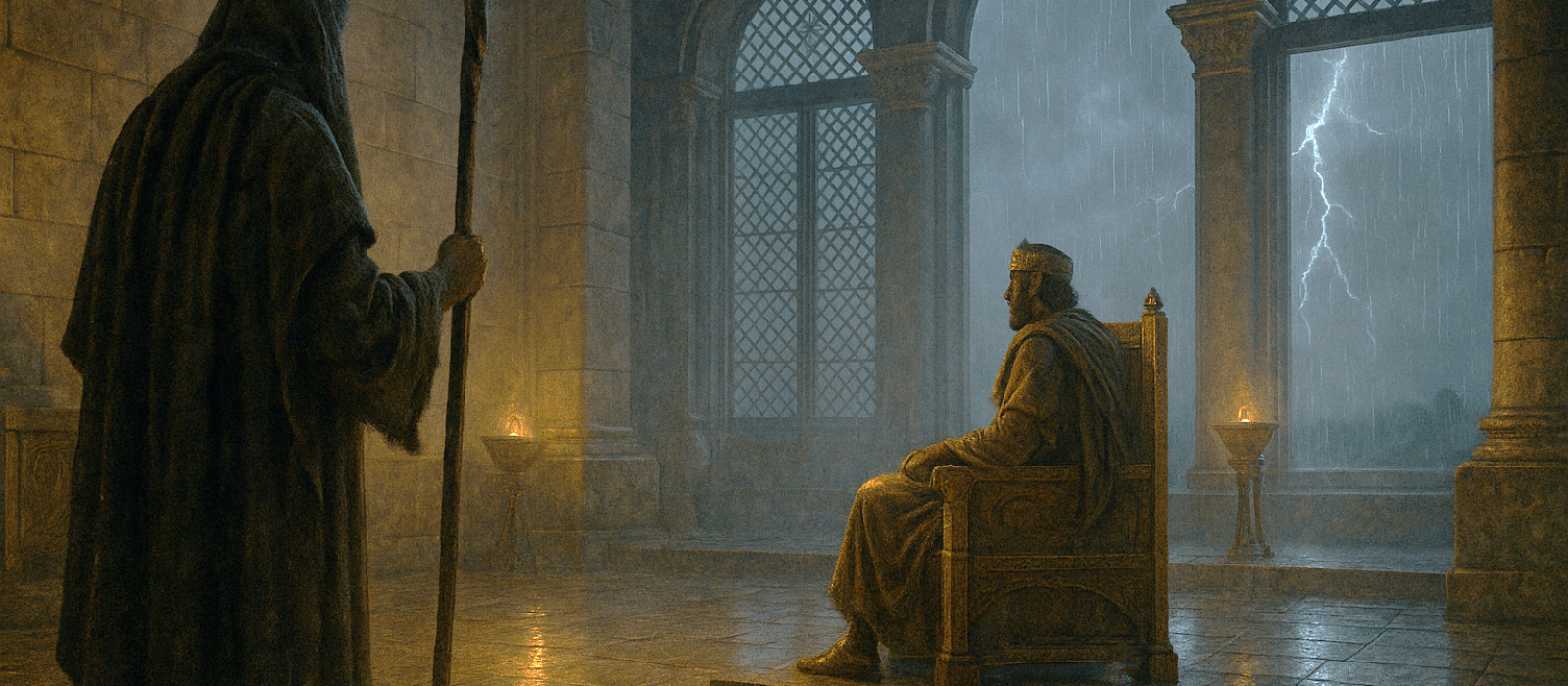
A late summer storm was brewing on the horizon, and with it came fresh winds and cool relief to the steely heat common to the region. It would be among the first of the storms of the rainy season. Jehoram sat on his throne and enjoyed the fresh air blowing through the throne room. He sat refreshed with the confidence of a man who could make things happen—make his own future happen—with some help from Athaliah, of course.
The recent blood on his hands from slaying his “enemies” did not bother his conscience. Jehoram was joyful. Content. He pondered what it was that he should do next with his newfound freedom. He was king. He was wealthy. Health was on his side. He had many sons and daughters. His life was literally perfect.
He continued to ponder his own greatness, as a strong knock occurred on the throne room doors. As the doors were suddenly thrown open, Jehoram looked up and saw his advisor. Next to his advisor was Elijah the Tishbite.
Jehoram smiled, “So, what good news do you bring, oh great prophet?”
Elijah walked forward toward the king, his face without expression, save that of great disapproval. Jehoram shifted in his throne uncomfortably as Elijah approached, but Elijah said nothing. The advisor put his hand on Elijah’s shoulder, indicating to him that he should stop, that this was far enough. Elijah stopped and looked at the advisor, who removed his hand.
Addressing the king, Elijah spoke with a loud voice that echoed throughout the chamber as much as it was intended to echo through Jehoram.
“Jehoram ben Ahab,” he started, “Why have you not walked in the way of your father David? Or your father Asa? Or your father Jehoshaphat? You sit as king with the false security of the belief that you are the son of David. But you are not. You have chosen to be the son of Ahab.”
Ominous booms of thunder echoed in the distant hills. Jehoram did not like what he was hearing and stood suddenly to confront his accuser, but Elijah held up a hand. After a moment, Jehoram sat back down, and Elijah continued, “You lead Judah like your father Ahab led Israel—away from Adonai and toward wickedness and lewdness and idolatry. What is worse is that you very much know better.”
Light rain started to splash aimlessly at the edges of the windows.
“You sit there joyful and content at the blood on your hands from killing your brothers in cold contempt. You believe that you have achieved the perfect kingdom, the perfect life for a king. Adonai will take your wealth, your family, your health, your security. You will endure great agony as the rot that is inside your heart will consume you from the inside out, such that your insides will come out of you in the most painful way.”
“You will long for death, but death will elude you until you see your wives ravaged and murdered, along with your children, before your eyes, and not before you see the wealth and security of Judah plundered before your eyes as well. Only then will Adonai allow you to rest with your fathers.”
With that, Elijah turned around abruptly and walked out. The attendant stood stunned, waiting for orders from Jehoram.
Suddenly, Jehoram’s face snapped up and said, “Get him. Don’t let him leave!”
The attendant ran out to arrest Elijah, but Elijah was nowhere to be found in the palace. All that Elijah said came true within the next two years. The people did not honor Jehoram’s passing. Nobody regretted his passing. They buried his bones in the City of David, but not in the tombs of the kings.
Used with permission by the author. Find the author’s complete works online: Complete Works of Mack Samuels