
Scripture References: Deuteronomy 30; Judges 7; Numbers 24; Isaiah 10; Romans 11
3836 AM (76 CE) – THE QUIET REBELLION
“Has it already been three years?” Shira pondered gratefully to herself.
Shira watched her husband, Benaya, as he worked their small plot of land just outside their humble home, but their home it certainly was. For three years they had been safe from Rome, hiding and farming. It was enough land for them, just barely. Benaya worked so hard, and she admired his sweat gleaming in the sun, a sign of his devotion to her and to Hashem, as well as to their firstborn, Ezra.
The Sun.
Shira let out a long, loud sigh at the word Sun, which had forcibly crept into their language, subtly, slowly, but quite insistently. How she hated that term – Sun – a pagan word for the greater light coined by a pagan people after their pagan gods. Is this what Ben Yair meant? That the insipid culture would eat away at the fabric of the Jewish people like the slow weathering of even the hardest material?
The sun was already high in the sky, and Shira had just finished preparing the midday meal. She was about to go out to him, but first, her little Ezra, just barely three years old, also had to be fed. She gazed at the life, full of growth and energy, running around, brimming with potential. So much life, so much joy.
She shuddered at how they could have ever contemplated such a horror. They had escaped with their lives, but just. After only a few hours in the cave, they both knew they had to disappear into one of the many dangerous, random veins streaming down the steep sides of the cliff, either to freedom or to the presence of Hashem.
Tears forced themselves from her eyes. They were free, but at what cost? All of their Sicarii friends had perished, and Rome was still in power, and every bit as punitive as possible. Shira was tormented by many uncertainties. What could be done? How will they survive? Whatever happened to the promised Mashiach?
Shira’s thoughts were brought back to the immediacy of the demands of the present, her life and her family, and she realized lunch was getting cold.
☼ ☼ ☼
Sometime later, a knock brought Shira to the door. It was Leah, the wife of Kosiba. She had brought their son, Shimon, to play with her son Ezra. A year older, Shimon would become like a brother and a mentor to Ezra, playing with and caring for his dear friend. In the same way, Leah had already become close to Shira – she had become like a sister.
They shared chores and responsibilities, and Leah gave Shira hope that they would persevere and, despite the many terrible setbacks, the Jews would be liberated from Rome. So what? Yeshua did not liberate the Jews from Rome, but Hashem will send a Mashiach who will one day liberate not just Judah, but all of Israel from those who would try to destroy even the remnant from the land.
“For Hashem is faithful to always preserve a remnant in Israel,” Leah had said to Shira.
“But we are so few,” Shira would reply.
Leah looked at her with that look that said, “Yes, but you already know my answer – I have said it a million times.”
And Shira responded to the look by answering her own objection, “Yes, and Gideon and his army was small. David’s fighting men only numbered 500, for if Hashem is behind it, numbers don’t matter.”
“Exactly,” Leah affirmed to Shira. “Numbers don’t matter. Hashem just needs a few who study Torah and pray and listen, and then the rest is on Him. We just need to listen and not be deceived.”
☼ ☼ ☼
“Prepare yourself!” Shimon called out as he thrust his sword at Ezra. Ezra was not prepared, and the mighty sword of Shimon struck Ezra painfully in his heart. Ezra clutched his chest in pain, “Ouch! I’m gonna tell!”
Shimon’s cheeks flushed at the accusation, “Tell on me? Man up!” the eight-year-old Shimon said to his seven-year-old protégé, “You cannot go running to mommy every time you stub your toe. We are the future of Israel! Now, on guard!”
Ezra raised his sword, and the two clashed with dull, woody thwacks. Shimon was a natural swordsman, but Ezra was not. Still, over the years, as wood turned to steel, Ezra came into his own as a fighter and as someone zealous for the future of Israel.
Their families were tightly knit like David and Jonathan. They shared Shabbat together and attended synagogue. And their community grew in size and cohesion under the spiritual leadership of Rabbi Akiva.
☼ ☼ ☼
“Kol mah de’avid Rachmana l’tav avid,” Rabbi Akiva began, “Everything Hashem does is for the best.”
The families of the community crowded in around where Rabbi Akiva had just sat down to teach. He had led everyone in the beginning of the Shacharit morning Shabbat service, and then turned to his invocation.
“Why has Adonai allowed so many Jews to perish and allowed Rome to stay in power? It’s because something is coming, something big. The Mashiach, perhaps? But so many false Mashiachim have come and gone. How will we know? We must listen for the still small voice of Hashem, when we read Torah or recite our prayers, or even when we perform the many daily mitzvot.”
“But until that something or someone comes, until Adonai sets up His Kingdom once again on earth, the chaos of the oceans will continue to violently crash against the foundations of the rock of ages, the Torah, and all that is moral and good. Many have died al kiddush Hashem, and we ask why? The many lives lost in sanctifying His name is a testament to the world. We are a light in the darkness. What you see as chaos and pain are but the birth pangs of something great to come.”
“Baruch atah Adonai Eloheinu, Melech ha’olam, asher kidishanu b’mitzvotav, vitsivanu l’hiyot or la’goyim. Blessed are you, Hashem, King of the universe, who sanctifies us by His commandments, and commands us to be a light to the nations.”
“We have just begun to seed the morality of Hashem to the nations. But our approach must be systematic. Even now, we try to make the Oral Torah as structured, rigorous, accessible and dynamic as Adonai has made the Torah. The morality that lives in both the Torah and the Oral Torah is the foundation of civilization for the world. We have an obligation to be the best light unto the nations that we can be, even as they hate us.”
“And yet, we must still defend our families and our communities. It’s a very fine line, as thin as the blade of the sharpest of swords. And we must wait at least until the Mashiach comes to lead us. I hope that time will be very soon. For the Mashiach will be sent by Hashem and it will no longer matter the size of the remnant. Remember Gideon!”
The whole congregation repeated, “Remember Gideon!”
“Remember Gideon,” Rabbi Akiva repeated quietly, “for I believe that the Mashiach could very well be among us even now. But we will only know when we have earned the right to know. We must have a zeal for Torah. We must have autonomy from Rome. In fact, only when Jerusalem is reoccupied and under the sovereign rule of the Jews will the Mashiach make His presence known.”
☼ ☼ ☼
The community was ablaze with gossip.
“What could he mean? The Mashiach among us?” Shira asked her friend Leah, as they prepared the Shabbat meal.
Many families had gathered for Shabbat, and the men, including Rabbi Akiva, were quietly discussing matters of Torah, while the ladies were discussing matters of the community. The children of all ages mostly sat listening to both conversations.
Leah responded to Shira softly, so as not to disrupt the men, “Well, is it so unbelievable?”
Shira responded, “Well, I mean, nobody here was born in Bethlehem, nor lived in Nazareth. What about prophecies? What about Daniel and the week of weeks? Four hundred and ninety years after the founding of the second temple?”
Leah barked back a little louder than she intended, “What? Are you a believer in Ha-Derech?”
“No!” Shira said most defensively, “but I am a reader of Torah. And I don’t know how to sidestep the very obvious facts that the window for the Mashiach’s arrival is closing, if it’s not already closed. I mean, it’s been …”
Shira trailed off, as she looked up and noticed the men staring at them and their conversations.
Shira blushed.
It was Rabbi Akiva, who broke the awkward silence and spoke first, “Shira, you bring up a good point. The prophetic window is closing, but it is not yet closed. You see, I cannot tell you exactly how I know, or even who yet, but the Mashiach is among us. We just must be patient. Many of the prophecies you speak of are in some cases quite vague and dependent on much interpretation. But I assure you, once Jerusalem is retaken, he will be revealed to us.”
☼ ☼ ☼
The weeks and months that followed did so in a similar manner. Who was the Mashiach? Was he already among us? Must we retake Jerusalem? But how?
Within a few short years, Ezra and Shimon had grown to become strong men with a passion for Torah. Shimon was already acknowledged as one of the most skillful warriors, both intelligent and cunning. Ezra, while never quite as skilled, had a special place due to his close history with Shimon.
Still, as zealous as Ezra was, Shimon would not allow him to go with them on their raids, saying, “Ezra, you must understand, if I were to die or you were to die, that would be a hardship on our mothers. But if we both were to die, they would have nothing to live for!”
Nevertheless, Shimon promised Ezra that it would not be too long before he would be allowed to go along with them on one of their raids. Leah was proud of the boys, but Shira was always nervous.
☼ ☼ ☼
Shira and Benaya lay quietly in bed, attempting to drift away. Neither knew what to say or to do. The oppression of the Romans seemed to—they didn’t know how to describe what they were enduring. Their community could fend off the Romans, and Shimon, now in command of the local army, did that with amazing precision. Seldom did they suffer a casualty; never had they lost anyone.
Still, Shira and Benaya worried that the Romans were finding ever more creative ways to torment and oppress the remnant of Jews living—mostly struggling to survive—in the many surrounding areas. And Shimon would find even more creative ways to retaliate, plunder, and otherwise frustrate the Romans, often citing, “What their gods have given them, our God takes away.”
But the violence was unsettling to Shira and Benaya. And now, Shimon wanted to bring Ezra with him on their next mission. Ezra had been patient, and Shimon believed it was time. Ezra had continued his training, and he had become as capable as any soldier, and more capable than most. But it was unsettling.
Shira turned to Benaya in the dark and looked at him, “Benaya,” she asked softly, “are you awake?”
Benaya sighed. It was a sigh pregnant with annoyance and frustration, but not at Shira. “Yes, my sweet, I am.”
“I just don’t want anything to happen to him,” she continued.
“Me neither,” Benaya agreed.
“All this time,” she said further, “and all we have done to survive. I mean, to lose him now, to lose our legacy…”
She trailed off, and the silence resumed.
Finally, Benaya spoke, “Yeah, what would be the point of it all? All this time… what has it been? Twenty years? Twenty-five? I have always second-guessed my decision—”
“Eh-hem,” Shira interrupted, already knowing what he was going to say, what they had spoken about countless times.
“Right, our decision, to leave the Masada stronghold and abandon the Sicarii, to abandon our friends and family. But it was right to choose life. It’s always right to choose life. When in doubt, we must always choose life. Right? I mean, right?”
It was Shira who sighed deeply this time. These were words that she had heard her beloved say many times over the years, but today, they had a deeper, richer meaning.
“Yes. We must choose to live. We must choose for our son to live. We must—”
Shira started weeping, though she tried mightily to keep the tears pushed down. It was terribly difficult, and she could hardly breathe.
Benaya reached over and took her hand in his. She felt the rough calluses of years of labor, with fingers as thick as carrots. Then she smiled, and then she could breathe again.
“Okay,” she said, “Okay.”
☼ ☼ ☼
The next morning, Benaya was up before dawn as usual, but Shira was already preparing him his morning meal.
“You are up early. Did you sleep okay?” Benaya asked Shira in a mildly concerned tone.
“Uh,” she started, as she was kneading the morning loaf, “kinda,” she muttered as she liberated the dough from a board, added some flour and threw it back down hard, continuing the kneading process.
“Oh, sorry to hear that. Was I snoring again?” Benaya said with some humor in his voice.
Shira looked up with only her eyes, studied Benaya, and resumed watching her hands work. Just as Benaya was about to leave, Shira finally spoke up, “It was a dream.”
This caught Benaya’s attention. “A dream?” he asked her. “What kind of dream?”
“It was … disturbing. I could not get back to sleep. I, uh … it’s hard to describe. But I saw what looked like Mount Moriah – tall and dark, dark clouds gathered at the top and darkness was everywhere. But then there was this intense light, brighter than the Sun itself, dancing about from behind the mountain. And then there was a man, or the silhouette of a man, standing at the foot of the mountain, in front of the light.”
“Like Moses?” Benaya interrupted.
“Um … yes. I guess. Like Moses, but it wasn’t Moses. He wore a tunic like the high priest used to, though I could only just make out the silhouette of the garment, but then he also had a crown. I am sure Moses wore neither.”
“Fair. So, it wasn’t David or Josiah. Sounds more like one of the Hasmoneans.”
“I, uh, I don’t know. That is not the feeling I got. He wasn’t dressed like them. It was more modern, like how we dress now. Simple. Basic,” she replied.
“But you said he was dressed like a high priest with a crown,” Benaya interrupted.
“Sure, but it’s a dream. Images change and, I don’t know. I think the crown and ephod was to indicate that he was a king and high priest, but also simple, humble – maybe more humble than Moses even. But—” she stopped and looked at Benaya. “It’s what he said that struck me. And his eyes…”
“You could see his eyes? I thought … I mean, what did he say?” Benaya said, trying not to antagonize his bride.
“His eyes were full of compassion and dignity and love, and He only said two words: L’Chaim.”
Benaya and Shira just stood and stared at each other for what seemed like hours. Their minds reeled at the imagery. What could it mean? Benaya just shook his head to indicate that he was at a total loss. Shira continued kneading.
☼ ☼ ☼
It was the sound of horses that roused them the next day. Though it was not from slumber; it was from prayer.
“Ezra!” Shimon shouted with utter levity, “Ezra, you sleepyhead, we have a kingdom to reestablish!”
Shira and Benaya sat with their grown son, strong and full of life. His arms were powerful, and he was fully dressed for battle. He had been up before the chickens, full of excitement that now, finally, after years of begging, he would get to accompany Shimon into battle.
Shira and Benaya had asked Ezra to sit with them and to talk. They shared their concerns, and then Shira’s dream. They pleaded with him not to go, acknowledging that this was the pinnacle of everything he had worked for his whole life, but that maybe Hashem had something even greater.
Shimon continued calling outside, and Ezra was in a near panic. He remembered the Torah, where it spoke of honoring your parents so that your days would be long on this earth. And he thought about his own desires, which burned with a fury that threatened to block out all reason. This wasn’t fair. This wasn’t right! He was meant to fight. It was his right! It was what he wanted!
His parents said nothing. They had said their piece, and they prayed silently. It was Ezra who was in turmoil. He loved his parents, respected his father, longed for a wife even half the virtue of his mother, and yet his self wanted to intrude. And then, like a splash of cold water, the word “Self” came blazing through his mind, softly in almost a whisper, followed by, “or Truth.”
Ezra felt as if he was going to be sick. Nausea permeated his body. He grabbed his stomach in pain, and he breathed deeply. Slowly, the physical discomfort passed. He opened his eyes to two very concerned parents, staring at him in utter bewilderment.
Ezra stood up and looked at his parents. Quietly, simply, he said, “I will stay.” He then walked outside to address Shimon.
☼ ☼ ☼
It was several weeks later, and Shira heard a knock on the door. It was Leah. It had been a while. After Ezra refused to go with Shimon, they became pariahs in their community.
“Hey,” Shira said to Leah with a smile.
“Hey,” Leah said in return. Leah held up a letter, “We have news. Shimon was victorious! The Romans never had a chance. Shimon was cunning and, well, numbers really didn’t matter.”
“So, they have Jerusalem?” Shira answered in surprise.
“Yes. Yes, they do. I’m just sorry that Ezra—” but she stopped, not wanting to finish her thought.
“It’s okay, Leah, really. I am happy to hear that.”
Leah smiled that warm, friendly smile that Shira had long missed from her practically virtual sister.
“Um, there’s more,” Leah continued, holding the letter written on fresh parchment, “Rabbi Akiva pronounced Shimon as the Mashiach. They call him Shimon Bar Kokhba, for a star shall come out of Jacob, and a scepter shall rise out of Israel… Oh, Shira, we are leaving to join them in Jerusalem! It’s a new start! Oh, won’t you come with us? This is the beginning of the Kingdom of Hashem on Earth once again! Most of the community is packing up and going to join us as well. What is it?” Leah asked Shira suddenly, “What’s wrong?”
Shira had not realized it, but an expression of a frowning panic flooded her countenance with utter abandon.
“Shira, what has gotten into you?” Leah once again pleaded.
“I …” Shira’s mind was filled with thoughts of her dream.
Then suddenly, she was there again, seeing the mountain and the face of the Beloved. He was mouthing the words, though she could not hear it, “L’Chaim,” he said, again and again.
Shira looked up to Leah, “Sorry, Leah, I don’t think we should come. I am happy for you. I just think it is better for us to, you know, hold down the fort here.”
Shira played with her fingers as she spoke. She wanted desperately for Leah to leave. Her presence brought feelings of desperation and despair.
Leah put a hand on Shira’s, “Well, at least think about it. There will doubtless be many more sojourns from our community. Perhaps you can come later, when we are more established. You’ll see, it’s a new beginning! I will send you word!”
Leah kissed Shira and hugged her firmly. Then, grabbing the letter, Leah left.
☼ ☼ ☼
Leah was true to her word. By each and every new moon, Leah had sent news to the community. It was exciting and very promising. Shimon had a stronghold in Betar, and they were coining their own currency. Then news came that they were fortifying the City of Peace. Leah once again pleaded for Shira and the others in the community to join them.
Finally, letters extolled the joys of how they were preparing to gather materials to begin construction of the Temple. After all, the Mashiach would have to rebuild the Temple. Torah says so!
Needless to say, time marched on in its tenacious persistence. And, before anyone realized its passage, everyone had experienced all the appointed times of Adonai, and then once again, and then yet a third go-around.
The letters were becoming less frequent, as were the pleas for their community to join them in Jerusalem. But then, the next letters took an ominous turn. News came about Hadrian’s forces being on the move. But Shimon used guerrilla tactics to frustrate Hadrian’s generals Rufus and Severus.
But then word came that Jerusalem had been recaptured, and that Shimon and his armies had retreated to Betar for refuge. They were planning to regroup and retake Jerusalem by any means. That was the last anyone heard any news from Shimon Bar Kokhba’s rebellion.
☼ ☼ ☼
“We can’t stay here,” Ezra said suddenly. They were observing Shabbat, and Shira had just lit the candles and said a prayer welcoming the light of Shabbat.
“Ezra,” Benaya said with a stern tone, “not on Shabbat.”
But the anxiety pressing on Ezra was too much. “Sorry, Father, I must speak. Pikuach Nefesh!”
Benaya looked to Shira, who just shrugged her shoulders, and then turned back to Ezra. “Okay, what is it?”
“Shimon has failed,” Ezra started. Ezra had just read the letter that spoke of Hadrian mobilizing his forces, and he knew enough history to know what would happen next. “Have you suddenly forgotten what happened to the Sicarii and how it happened?”
But Shira tried to intercede, saying, “Surely Shimon will prevail; he’s the Mashiach!” she said, trying to convince herself.
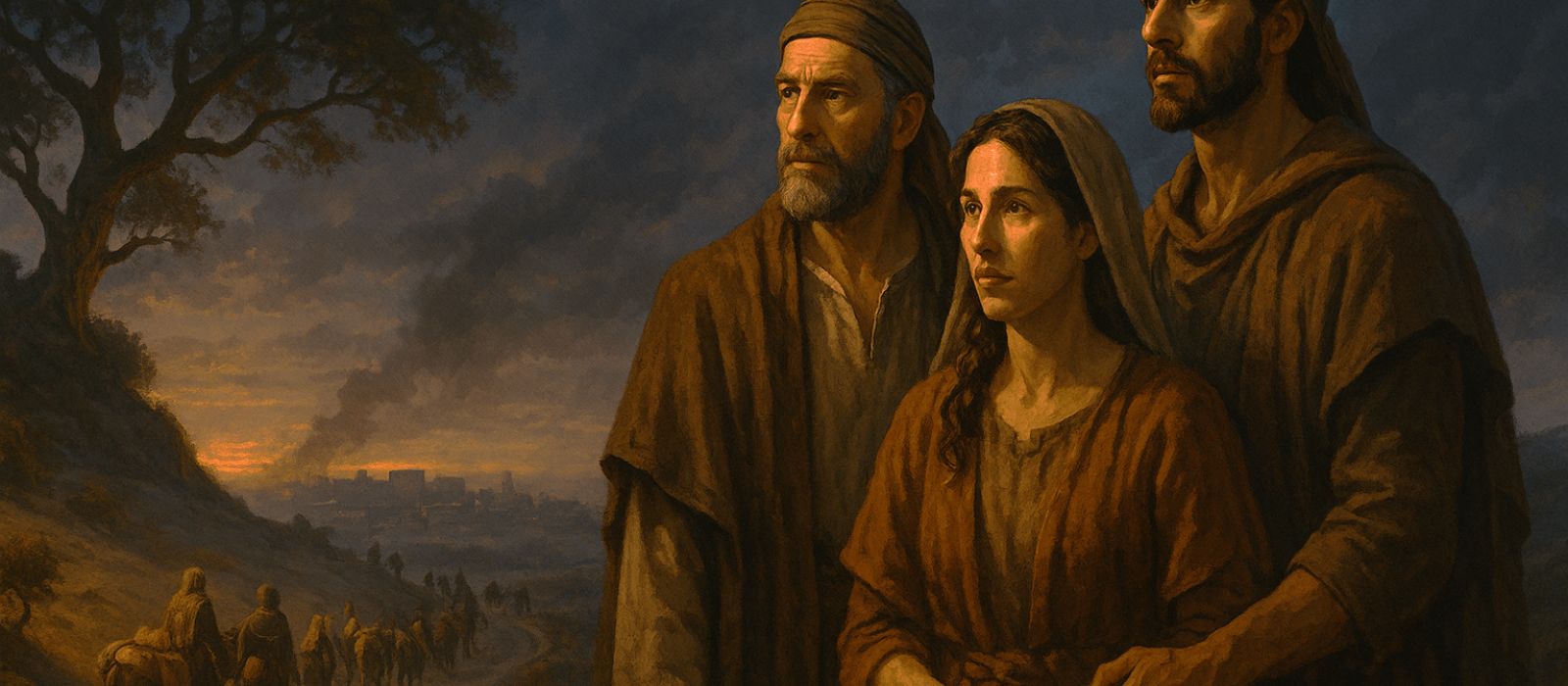
Ezra stood and gestured wildly. “Don’t count on it! What is this? What do you think the Romans were doing for three years? Bacchanalia? Maybe, but they were also plotting their vengeance. It is not a political parley. They will level everything, leaving everything desolate. Do you remember what happened in Cyprus, Cyrene, and Egypt? They destroyed the city, leveled it, salted the land, cut down all the trees, and built a temple to their abominable gods. Barely a handful survived and made it here to tell us, and only because the Romans wanted them to spread fear. Well, it’s working. Do you think they will do any less to us? We must get away from Jerusalem. Maybe head north.”
“I see,” Benaya said. “Do you plan to go right now?”
Ezra looked around, then at his father, and finally sat back down.
“I hear you, Ezra. L’Chaim, remember? We will start packing tomorrow, and we will tell the community what we are doing and invite whoever wants to live to come along. But certainly, we should honor Hashem tonight.”
☼ ☼ ☼
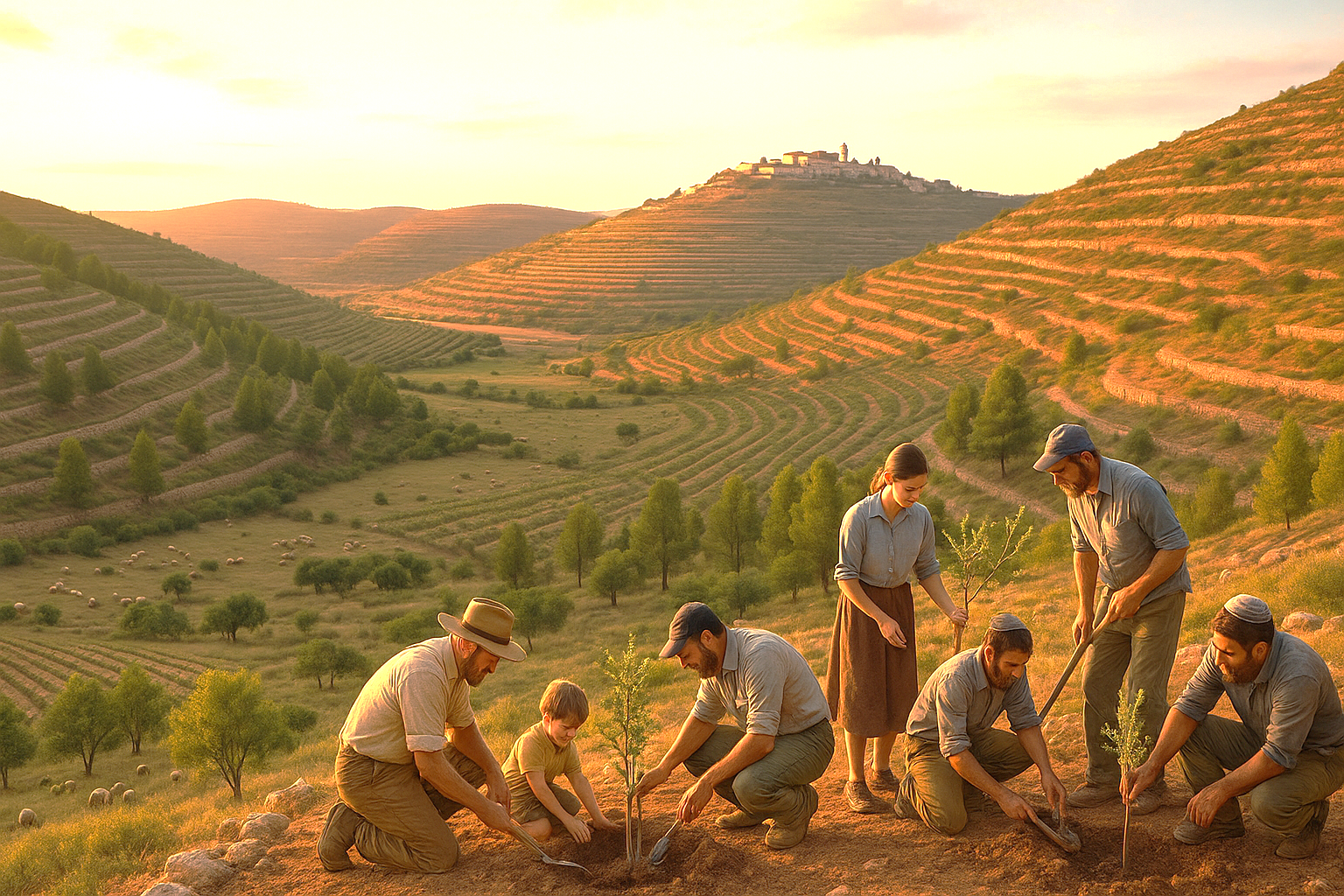
While not everyone was thrilled to hear about Benaya’s family leaving, they understood the concern. By the time the next letter arrived, which ended up being the last, a large caravan headed to the upper Galilee. Adonai blessed their travels, and they were not molested by either Romans or raiders. They were welcomed and settled in the small community of Peki’in, where they thrived.
Ezra taught the men how to defend their community, but also the love of Torah. Inspired by his parents, Ezra’s days were many. His parents also enjoyed a long, peaceful life, even as the rest of Judah was ravaged by Rome.
“Resilience,” Ezra said, his gray beard hanging down to his chest.
Ezra sat under an old carob tree and spoke to the sea of children surrounding him. His demeanor was that of a stern soldier, but the sterner he spoke, the more the children giggled.
“Yes, Hashem will always preserve a remnant, but we must not be foolish. No, no! Wise! Thoughtful. We must work hard and study Torah. We must live by it. We must live by what it teaches. We must love Adonai with all that we are and love our neighbors as ourselves. We must ensure obedience to the mitzvot of Adonai, while still treating people with dignity and respect.”
Shira sat with Benaya watching Ezra teach. They reflected on how they had gotten so old. Benaya’s hands were less calloused these days, as Shira held them tightly, but their love was as bright as the day Ezra was conceived. It was just, you know, different now.
Ezra was their legacy. He loved teaching Torah, and he was married with a quiver full of his own legacy. And they knew Hashem would be faithful to a thousand generations to ensure their family, their community, and even the Jewish people would remain a light in the darkness to the nations and chaos around them.
Even if it is just a remnant.
“Though the waves of chaos rise with the tide of evil, the Rock of Ages stands firm, and His people endure forever. L’Chaim.”
Used with permission by the author. Find the author’s complete works online: Complete Works of Mack Samuels