
2505 AM (1255 BCE) – Gideon and Jotham
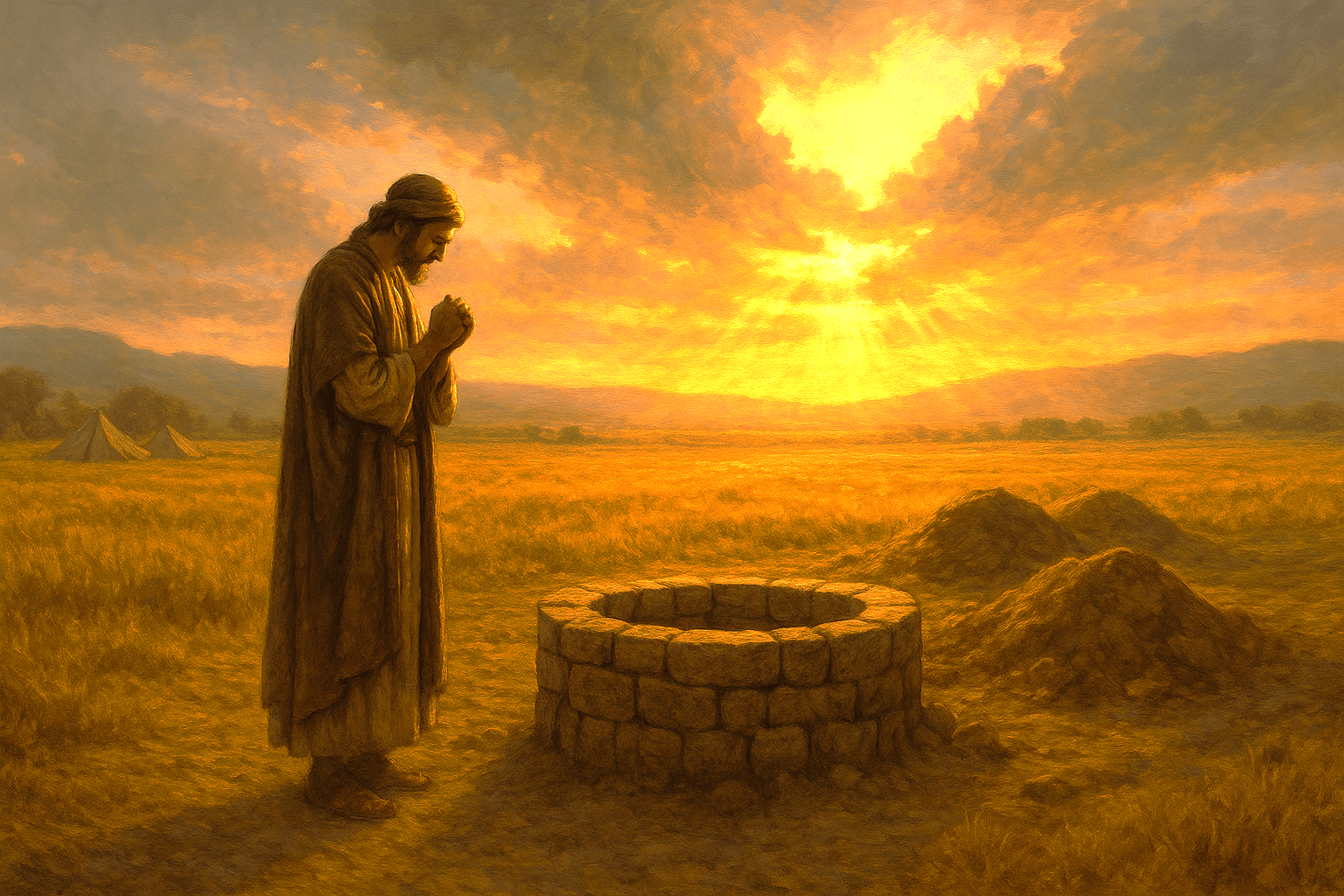
Gideon was old. His skin hung as loose and gray as his beard. But that did not seem to matter to his many young wives, who constantly fawned after the great man of war, who routed the Midianites in an epic surprise military conquest. Since then, Gideon was endowed with wealth and prestige, and many flocked to his camp largely to share in his great success, and maybe not any less largely to share in the tremendously great wealth he had accumulated.
And wasn’t Gideon hand-picked by Adonai to be the Judge of Israel? And certainly, many wanted to be ingratiated with the judge. Certainly, Gideon had once torn down the idols in Israel … well, some of them … and he had tried to get Israel back from doing evil, which was a good thing to try to do at that time. And of course, not all of Gideon’s wealth was graft. He had much of the gold and silver that was tributed to him for the defeat of the Midianite kings.
Gideon’s popularity was absolutely unwavering throughout the land of Israel. So much so that everyone wanted to make Gideon king. But Gideon, in his most benevolent voice, would quickly reply to such a suggestion, “No, no, my friends! I could never! Adonai is our King; I am but a humble judge, a humble servant to the Most High. It is enough that I am your judge.”
Abimelech was one of Gideon’s youngest sons and most trusted advisors. He also thought that Gideon would be a great king, but he demurred to Gideon’s wish to remain a judge. As Gideon aged, the love and adoration of the people never waned, and Abimelech made sure that he garnered as much favor from the followers of Gideon as possible.
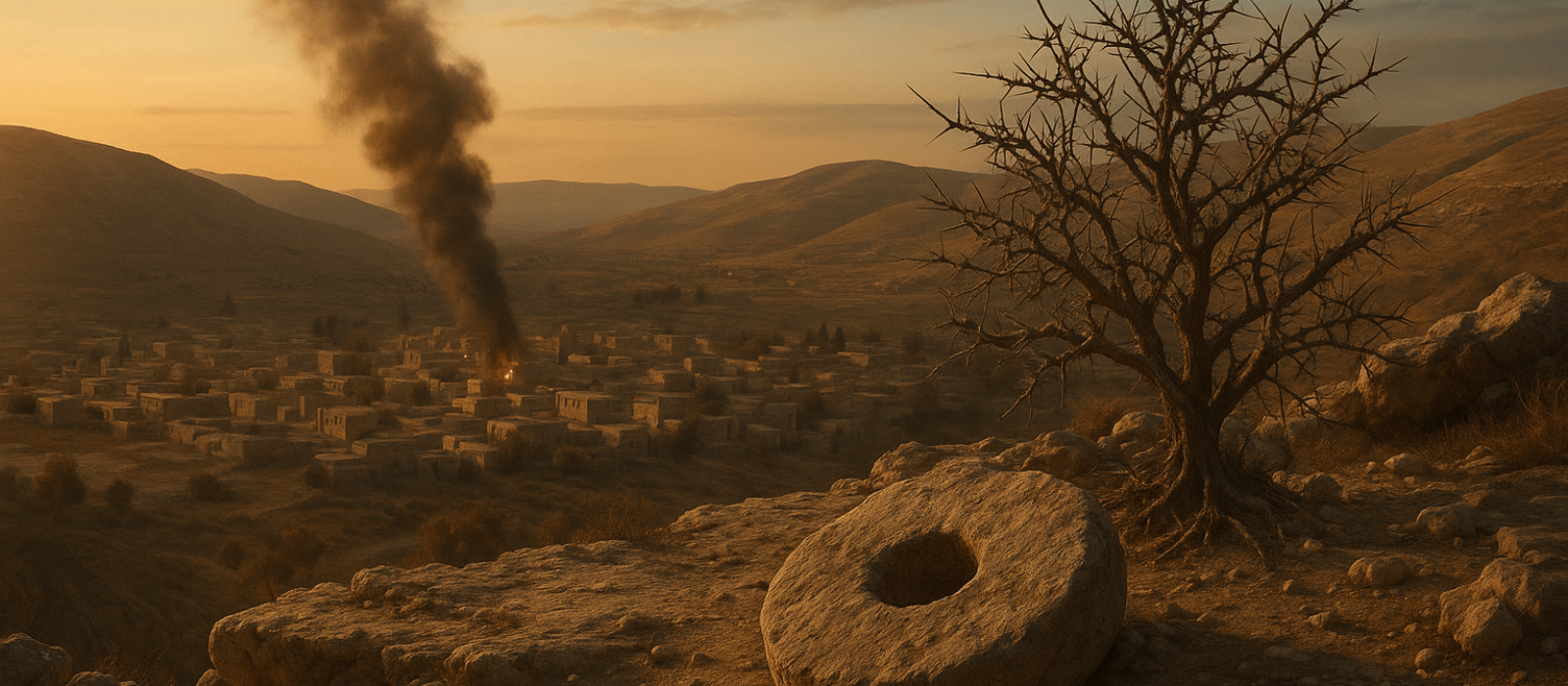
Inevitably, Gideon died at a ripe old age. The funeral for Gideon was like a new year celebration that lasted weeks. During that time, Abimelech brought all seventy of his half-brothers to Shechem, the home of his mother, for a special observance of his father’s greatness and memory. There, in Shechem, Abimelech turned on his brothers and murdered them all on the same millstone.
Only Jotham, of the seventy, survived, because he hid himself and made his escape during the carnage. Abimelech dispatched men to track down and kill Jotham, but he was elusive.
While they were giving chase to Jotham, Abimelech then returned to the mournful festivities, and spoke to everyone, “Beloved friends, associates, delegates from the furthest reaches of Israel, this is truly a sad time. For Gideon was more than a father to me, he was an icon, a vision. He held the fate of Israel in his hands, and yet he would always manage to put that fate in Adonai’s hands as well.”
Loud bouts of cheering and applause filled the air.
“I, eh, too had a dream from Adonai. He said that I should pick up where Gideon left off. I, uh, need to judge and lead and rule Israel in the same compassion and dignity that Gideon did.”
More verbal shouts of adoration and affirmation filled the air.
“But how, I ask you? I cannot do what Gideon did. He was one of a kind. Sure, I have been with him, studied him, walked alongside him at his every turn, but I am no Gideon. Am I right?”
Abimelech’s false modesty got the response he expected. Many were shouting affirmations to him that they once reserved for Gideon. The affirmations began to become contagious, and before long, and with the help of no shortage of wine, it was Abimelech’s name they were calling to be king.
“King? Who, me?” Abimelech feigned, “Well, I couldn’t, I mean, really—you think so?”
The crowd became unglued with enthusiasm. Finally, someone like Gideon who could lead them like the nations around them. Finally, someone like Gideon who would be king.
“Ok, ok, ok,” Abimelech finally spoke, “If you insist. Who am I to get in the way of social progress. Am I right?”
The cheering was deafening. The following day, the inauguration of Abimelech as king made it official. He set up his rule in Shechem, near his kin, and near the outskirts of the settled areas of Israel.
Not much later, when King Abimelech was with his advisors and courtesans near the mountain of Gerizim, Jotham finally showed himself. He yelled down the hillside, and was easily understood, though they could not see from where he was projecting his voice.
“Listen to me, you foolish leaders of Shechem, listen to me. Once upon a time, the trees went out to anoint a king, and they said to the olive tree, ‘Reign over us,’ but the olive tree said, ‘and what, give up my olives for you, so that none could be anointed?’ Then they said to the fig tree, ‘Reign over us,’ but the fig tree said, ‘and what, give up my sweet fruit so that none could be fed and satisfied?’ Then they said to the vine, ‘Reign over us,’ but the vine said, ‘and what, give up my wine so that none shall have joy?’ Finally, they said to the thorn bush, ‘Reign over us,’ and the thorn bush said, ‘Of course! Come sit under the shade of my thistles!’”
“Abimelech, you are no Gideon. If you have dealt with the family of Gideon with dignity and respect, integrity and honesty, as Gideon did when he defeated the Midianites and risked his life, may it be well with you. But have you?”
“Did you show dignity to Gideon’s memory by killing all seventy of his sons on the same millstone? Did you respect him by taking his wives? Did you show integrity by becoming king when you knew Gideon believed that Adonai alone should be King? Did you show honesty about your so-called dream from Adonai?”
“Here is what Adonai really says, ‘You were not given this kingdom—you stole it from Adonai. Thus, fire will come from Abimelech and consume Shechem, and fire will come from Shechem and consume Abimelech. Shechem will choke to death on the thistles of the thorn bush, and Abimelech will be crushed by a millstone.’”
The voice of Jotham disappeared back into the hills, as did Jotham himself. He would stay in hiding until such time as all of this came to pass exactly as Adonai said it would, just three short years later. Unfortunately, by the time Abimelech was removed from his apostate position as a false king, all the work that Gideon had done was undone. Abimelech had led Israel back into darkness, and they worshipped the false gods and idols of their many neighboring nations.
Used with permission by the author. Find the author’s complete works online: Complete Works of Mack Samuels