
Torah (Parashat Pinchas): Numbers 25–27
Haftarah: Jeremiah 1
Brit Chadasha: Philippians 2; John 10; Hebrews 7
This is a special time to come before the Lord with hearts open, to draw near so that He will draw near to us. We ask Him to bless His precious Word to our hearts and to speak by the power of the Ruach HaKodesh, because what He wants to say in Parashat Pinchas is all about covenant, legacy, and a broken connection that only Messiah can heal.
The portion begins with Pinchas, the grandson of Aharon and the great-nephew of Moshe. Israel is in a terrible moment. A plague is sweeping through the camp because of the sin with the daughters of Moav and Midian, and 24,000 have already died. Even as the people are weeping over their sin, Zimri and Cozbi commit brazen immorality right in front of the Mishkan. It is an in-your-face act against God and the whole community.
Pinchas is seized with qin’ah—godly jealousy and zeal for the Name of Adonai. He cannot just stand there and watch evil parade itself in a holy place. He takes a spear and acts, and by that act the plague is stopped. It is shocking, but Heaven calls it zeal for the Lord.
Because of that zeal, God gives Pinchas a very special promise: a “covenant of shalom” and a “lasting priesthood” for him and his descendants. Hidden inside the Hebrew text of that covenant is a little detail that almost disappears in English—but it tells a huge prophetic story.
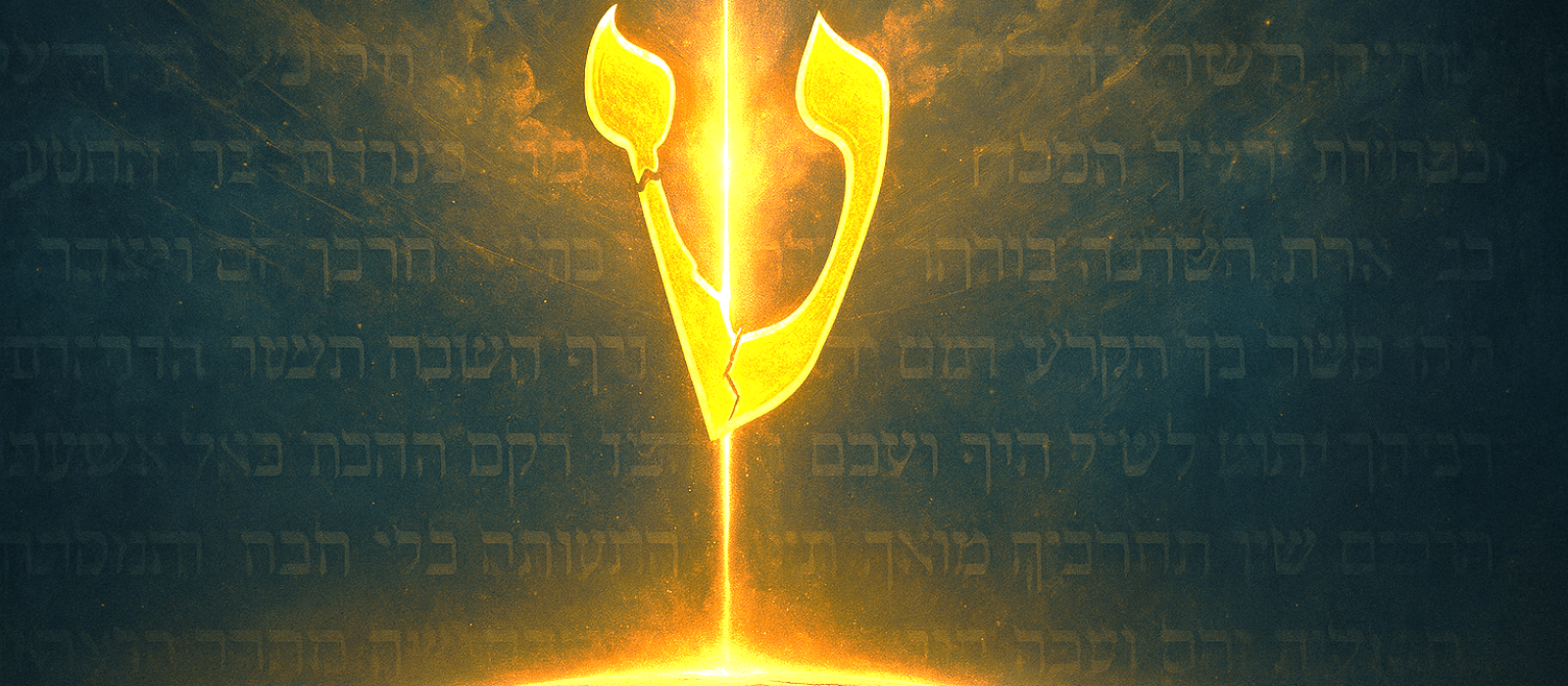
In the word shalom in this passage, the letter vav is written broken in the Sefer Torah. The vav, which normally stands like a simple vertical line, is drawn with a gap in the middle. Scribes have preserved it that way for generations. It is a visual signal: something between Heaven and earth is broken.
The ancient picture meaning of the letter vav is “hook, nail, peg”—something that connects, fastens, and secures. The vav ties things together. A broken vav in the word shalom says, “Peace itself is fractured. The connection between God and humanity is not yet whole.” In the very same passage there is also a missing vav in the word for “generations.” Even the generations are marked by this brokenness: a generation of the broken vav.
This is more than scribal artwork. It is a prophecy. One day there would come a Kohen, a High Priest, who would restore the broken vav, reconnect Heaven and earth, and establish a priesthood that never ends—like the order of Malki-Tzedek. That is Yeshua.
Think about the holy Name revealed to Moshe at the burning bush: Yud–Hei–Vav–Hei. Ancient Hebrew pictures give a beautiful hint: the yud is a hand; the hei is “behold”; the vav is a nail; the final hei is again “behold.” Many teachers summarize it as, “Behold the hand; behold the nail.” The redemptive Name revealed to Moshe points ahead to a hand pierced with a nail—the One whose death would heal the fracture between God and man.
So in Pinchas’ story we see both things at once: a covenant of shalom given to a zealous priest, and the hint of a greater Priest coming—One who will Himself be pierced, the Nail that secures Heaven and earth back together.
From there the parsha moves to a very different scene: five daughters standing before Moshe. They are the daughters of Tzelophehad—Machlah, No’ah, Choglah, Milcah, and Tirtzah. Their father has died in the wilderness; he has no sons. According to the usual pattern, his name and land inheritance could simply vanish.
But these young women refuse to let their father’s name disappear. They do something that would have felt very bold in that culture: they step forward and speak to Moshe, Elazar the Kohen, the leaders, and the entire community at the entrance to the Tent of Meeting. They ask, “Why should the name of our father be removed from his clan because he had no son? Give us a possession among our father’s brothers.”
They are not arguing from selfishness; they are aligning themselves with God’s own heart revealed earlier in the Torah. The Lord had already shown how important it is that a brother raise up seed for a deceased brother so that his name will not be blotted out. These daughters are, in effect, quoting God’s own principles back to Him.
This is one of the great keys in the story: if you want to “win your case” before the Lord, you go to God on behalf of God. You come to Him with His own Word and His own character, not just your wish list. You bring Him the promises He has already spoken and say, “Do in my life what You have said is on Your heart.”
This is also what it means not to “take the Name of the Lord in vain.” In Hebrew the verb can carry the sense of bearing or carrying something. To take His Name in vain is not only to speak it carelessly; it is to carry His Name while acting in a way that contradicts His character. The daughters of Tzelophehad are doing the opposite: they are carrying His Name faithfully by asking for something that reflects His own concern for legacy and inheritance.
When Moshe brings their case before Adonai, the Lord’s answer is simple and powerful: “The daughters of Tzelophehad speak rightly; you shall surely give them a possession of inheritance.” Heaven is “ready to perform My word” (Jeremiah 1), and bold, faith-filled requests that echo His Word are the kind He loves to answer.
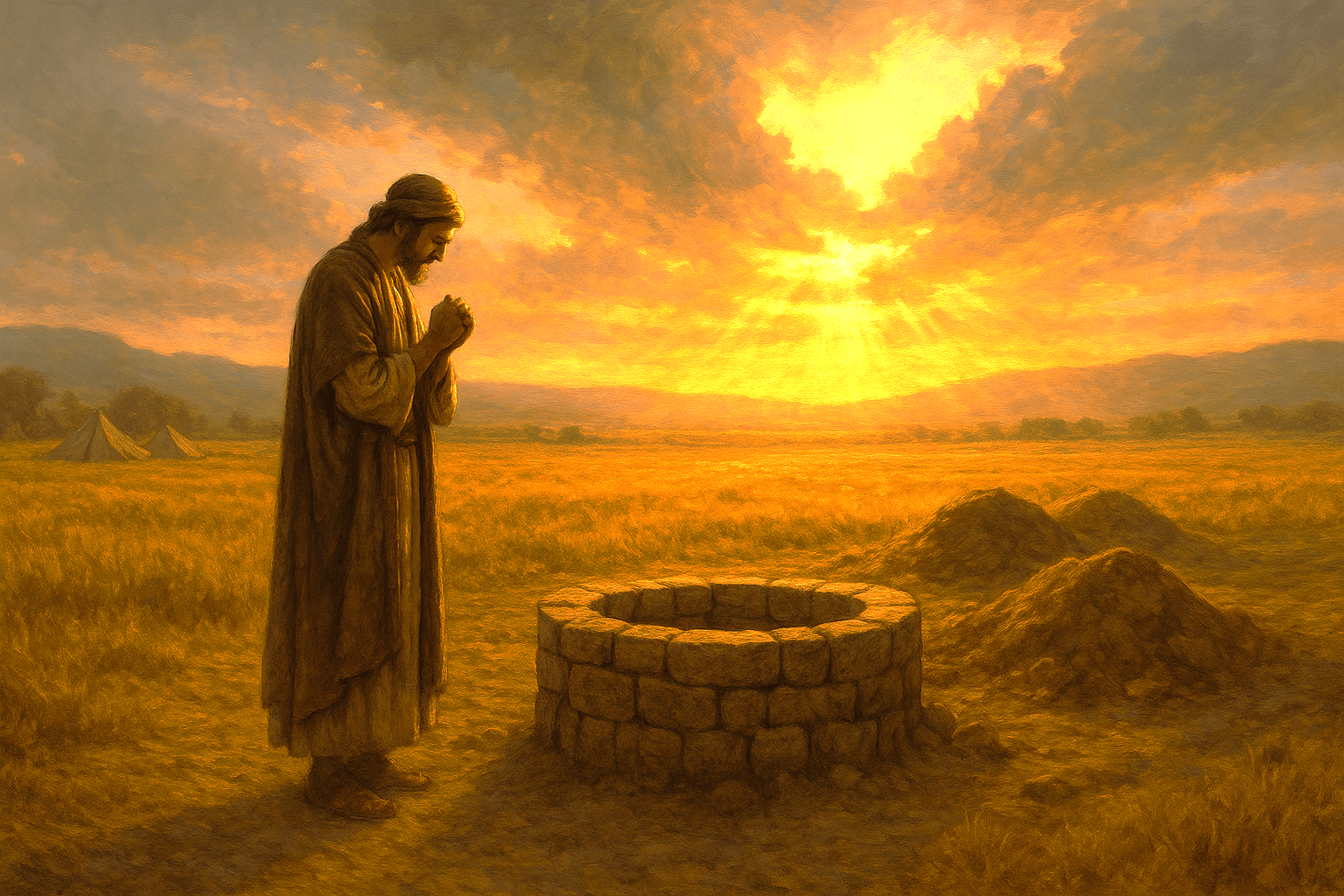
Then, suddenly, the narrative shifts again. God tells Moshe to go up onto Mount Avarim, to look out over the Land, and then—to die there, as Aharon did. After everything Moshe has walked through, it can hit you like a shock. Where is his inheritance? Where is the long chapter describing his property, his tribal allotment, his family line? We hear about Aharon’s sons and their priestly legacy, but Moshe’s sons are almost silent in the text.
This is where the theme of legacy becomes very sharp. Moshe will not enter the Land. His “inheritance” will not look like other people’s inheritances. For many of us, that question rises up just as it might have risen in his heart: “After all of this, what is my legacy?”
To answer that, consider a modern picture of stewardship and ownership. The Green family, the founders of Hobby Lobby, tell how the Lord confronted them with the question of who truly owns their company—thousands of stores, tens of thousands of employees. They would say, “The earth is the Lord’s, and everything in it; everything I have belongs to Him.” And then the Spirit pressed that truth all the way in: if it is truly His, then He is free to give it to whomever He chooses, even outside the family. They are not owners; they are stewards.
Stewardship versus ownership is at the heart of legacy. When we cling to something as if it belongs to us, we live tight-fisted and fearful. When we see ourselves as stewards, our hands stay open. God can trust us to receive and to release. Yeshua Himself modeled this in the “kenosis” passage of Philippians 2: though He was in the very form of God, He did not consider equality with God something to be grasped, but emptied Himself, taking the form of a servant.
In Parashat Pinchas, Moshe walks this same road of self-emptying. When God tells him that his time is nearly over, Moshe does not plead for a personal extension, or a special monument, or a private inheritance. His heart cry is for the people: “Let the LORD, the God of the spirits of all flesh, appoint a man over the congregation… that the congregation of the LORD may not be like sheep which have no shepherd.”
This is what a true leader’s legacy looks like. Moshe asks not for himself but for the flock. God responds by choosing Yehoshua (Joshua), the one who has been serving Moshe faithfully all along. Moshe is instructed to lay hands on Joshua and to give him some of the glory, some of the spirit that God had placed on Moshe himself. Moshe’s “inheritance” is a living one: he is poured out into people.
This points us again to Yeshua, the Good Shepherd of John 10, who lays down His life for the sheep, who stands between the flock and the wolves, who becomes the door Himself. It is the same pattern of leadership: prefer others before yourself, raise others up, impart what God has given you so that it will carry on beyond your years.
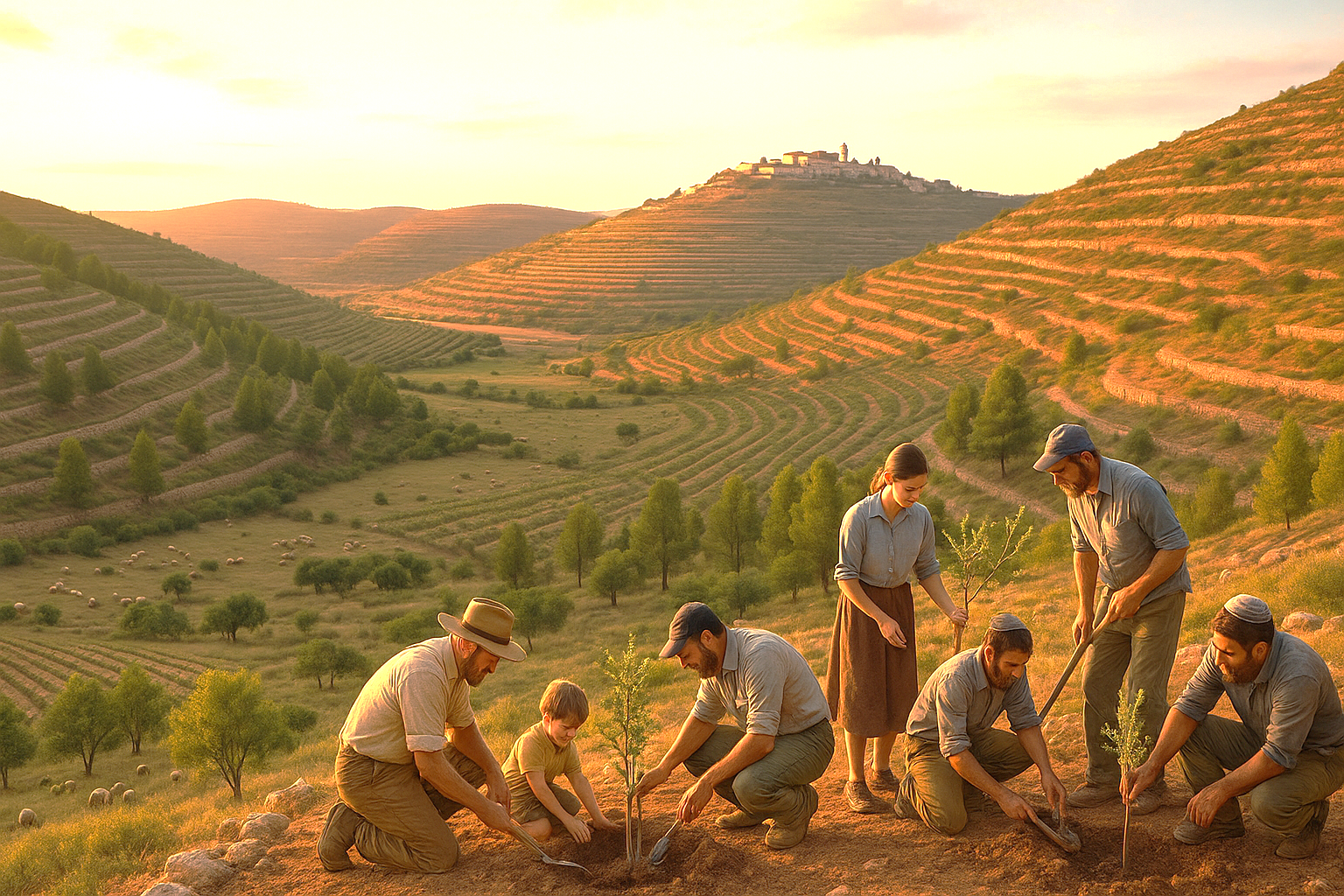
So what is our legacy? Each of us has a sphere of influence: family, children, grandchildren, neighbors, co-workers, the people we keep running into at the grocery store or the gas station. We do not all stand on a mountain like Moshe, but we are all entrusted with people to love, teach, cover, and intercede for.
And we are not done just because we are older. In fact, Scripture gives a specific charge: older men are to mentor younger men; older women are to teach and encourage the younger women. The next generation desperately needs our prayers, our stories, our steady presence, and our example of faithfulness. Legacy in the Kingdom is less about having your name carved in stone and more about having your life written into other lives.
There is also another layer: zeal like Pinchas and compassion that reaches beyond our comfort zone. Many of us feel that gentle but persistent nudge of the Ruach HaKodesh in practical places—a whisper to pray for a stranger in the store, to start a conversation with a foreign neighbor, to reach out to the Muslim family that just moved in down the street. Sometimes we hesitate. We follow them for three aisles trying to decide if it is really the Lord. We worry about offending them or embarrassing ourselves.
But that discomfort can be the Lord’s own jealousy moving in our hearts. He is jealous for them. He longs for every nation, tribe, and tongue. Sometimes His compassion wells up in such a way that you find yourself moved to tears and you are not even sure why—that is Yeshua weeping through you for people He died to redeem.
Many of us live in towns and cities where the nations have come to us: immigrant communities, families from Muslim-majority countries, refugees learning a new language and culture. Instead of shrugging and driving past, we can ask, “Lord, what does zeal look like here? What does a covenant of shalom look like on this street?” It might be prayer. It might be practical help. It might be something creative, like offering English classes using Bible passages that they also honor in their own book, building bridges of respect and truth.
At the very end of the parsha, we circle back to that broken vav—the fractured nail in the word shalom. In a sense, we are living in that broken generation: we feel the disconnection in our families, in our culture, in our own hearts. But we also live on this side of the cross, where the greater Pinchas has already stepped in, where the nail has already pierced the hand, where the High Priest after the order of Malki-Tzedek has already secured a better covenant.
Our calling is to live as people of that restored vav: to stand in the gap in prayer, to carry His Name in a way that matches His character, to let our zeal be channeled by His compassion, to see leadership as stewardship, and to offer our legacy—our influence, our stories, our resources—back into His hands.
May we be a generation that allows Yeshua to repair the broken vav in us, to reconnect Heaven and earth in our homes and communities, and to leave behind the greatest legacy of all: a people who know Him, love Him, and walk in His covenant of shalom.