
Scripture: Numbers 25:10–13; Numbers 26; Numbers 27:1–23; Jeremiah 1:11–12; Philippians 2:5–11
This week’s parsha, Pinchas, is overflowing with treasures about zeal, covenant, and legacy. It weaves together the story of a priest who stops a plague, five bold daughters who ask for an inheritance, and a humble leader who passes his mantle on to another. Beneath it all, in the very letters of the Hebrew text, there is a quiet prophecy about a Priest who will heal a broken world.
We begin with Pinchas, the grandson of Aharon and the great-nephew of Moshe. In the midst of Israel’s sin with the daughters of Moav, while the people are weeping at the Tent of Meeting and twenty-four thousand have already died in the plague, one man dares to flaunt wickedness right in front of everyone. In holy jealousy for God’s Name, Pinchas rises, takes a spear, and stops the plague with a single, shocking act of zeal.
In response, God gives him something astonishing: a beriti shalom, “My covenant of peace,” and a “priesthood of eternity” (Numbers 25:10–13). Hidden in that phrase in the Torah scroll is a tiny mystery. In the word shalom, the letter vav is written broken. In the world of jots and tittles, nothing is accidental. The vav is the ancient picture of a nail, a hook, something that connects and secures. A broken vav in “shalom” is a picture of something fractured between heaven and earth.
In other words, there is peace promised here, but the bridge is cracked. The connection is damaged and needs to be restored. That little broken letter points forward to Another Priest whose very body will be pierced like a nail, One who will become the true bridge between heaven and earth. The writer to the Hebrews calls Him our High Priest forever, “after the order of Malki-Tzedek.” We know Him as Yeshua.
Think of the Name that was revealed to Moshe: the holy Tetragrammaton. In the ancient pictures you can see it as: Yud (a hand), Hei (behold), Vav (a nail), Hei (behold). “Behold the hand, behold the nail.” This is not the Name Avraham knew; it is the redemptive Name God reveals to Moshe, the Name saturated with the promise that one day a pierced One will restore what is broken and secure peace between God and man forever.
And this brings us to something else in the text: what it really means to “take the Name of the Lord in vain.” In Hebrew, the word can mean “to bear” or “to carry.” To carry His Name in vain is not only to misuse syllables with our mouth. It is to act in ways that misrepresent His character, to do things in His Name that look nothing like Him. That is what Zimri and Cozbi did: sinning brazenly in front of the whole congregation, thumbing their noses at God in a holy place. It was a public misrepresentation of who He is.
In contrast, Pinchas bears God’s Name with holy zeal. His jealousy is not about ego or rage; it is a consuming love for God’s honor and for the survival of the people. That same kind of jealousy burns in Yeshua, who said, “The zeal of Your house has consumed Me.” True zeal doesn’t look like random anger. It looks like willingness to step into the breach, to stand between the living and the dead, even at great cost.
Right after this covenant of peace with Pinchas, the Torah gives us a census of the tribes and then another surprising story: the daughters of Tzelophehad (Numbers 27:1–11). Machlah, Noa, Choglah, Milcah, and Tirtzah step forward because their father died in the wilderness with no sons. According to the normal patterns of inheritance, their family line is about to vanish. But these five women refuse to accept that erasure quietly.
They come to Moshe, to Elazar the priest, and to the leaders, and they present their case: “Why should the name of our father be done away from among his family, because he had no son? Give us a possession among the brothers of our father.” They are bold, but not rebellious. They are appealing to what they already know of God’s character, to patterns in Torah where God commands that a brother raise up seed so that a name is not cut off from Israel.
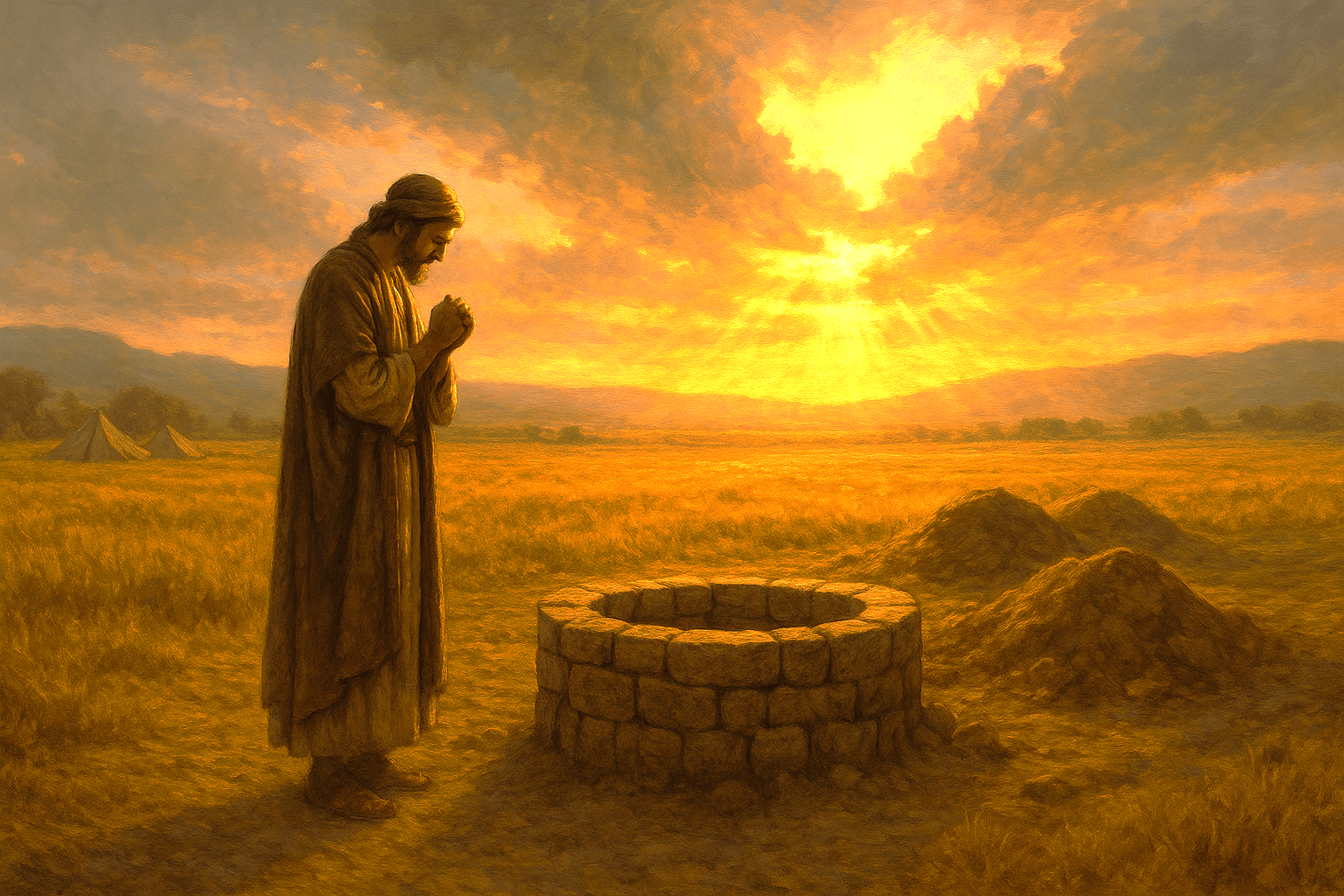
In other words, they go to God on behalf of God, using God’s own words and ways as the foundation of their request. That is one of the most powerful lessons in this parsha: if you want to “win your case” with God, learn to pray His Word back to Him. Jeremiah records the Lord saying, “You have seen well, for I am watching over My Word to perform it” (Jeremiah 1:12). When we come to Him with prayers anchored in His promises, we are standing on solid ground.
Moshe doesn’t answer the daughters himself; he brings their case before Adonai. And what does God say? “The daughters of Tzelophehad speak right.” God Himself changes the legal structure of inheritance for Israel because five women dared to ask in line with His heart. Bold prayer, rooted in His character, reshapes history.
Then the narrative takes another turn. God tells Moshe to go up to the mountain of Avarim, to look over the Land, and then to prepare to die like Aharon. If we were writing the story, we might expect the text to now list Moshe’s sons and their inheritance, the great legacy of the man who led Israel out of Egypt. Instead, the Torah is strangely silent about Gershom and Eliezer. Moshe will see the Land, but he will not enter. His death is mentioned here long before it happens at the end of Devarim. It feels abrupt, almost out of order.
Can you imagine what Moshe might have felt? After all of this, after confronting Pharaoh, splitting the sea, interceding for a stubborn people again and again—he is told to go up a mountain and die. No visible estate, no list of lands that will carry his name. Where is his legacy?
Yet Moshe’s response reveals what godly leadership looks like. He doesn’t say, “What about my sons?” He doesn’t argue for a monument for himself. Instead he cries out, “Let the LORD, the God of the spirits of all flesh, appoint a man over the congregation… that the congregation of the LORD may not be as sheep which have no shepherd” (Numbers 27:16–17).
That is the heart of a true leader: he is more concerned for the flock than for his own name.
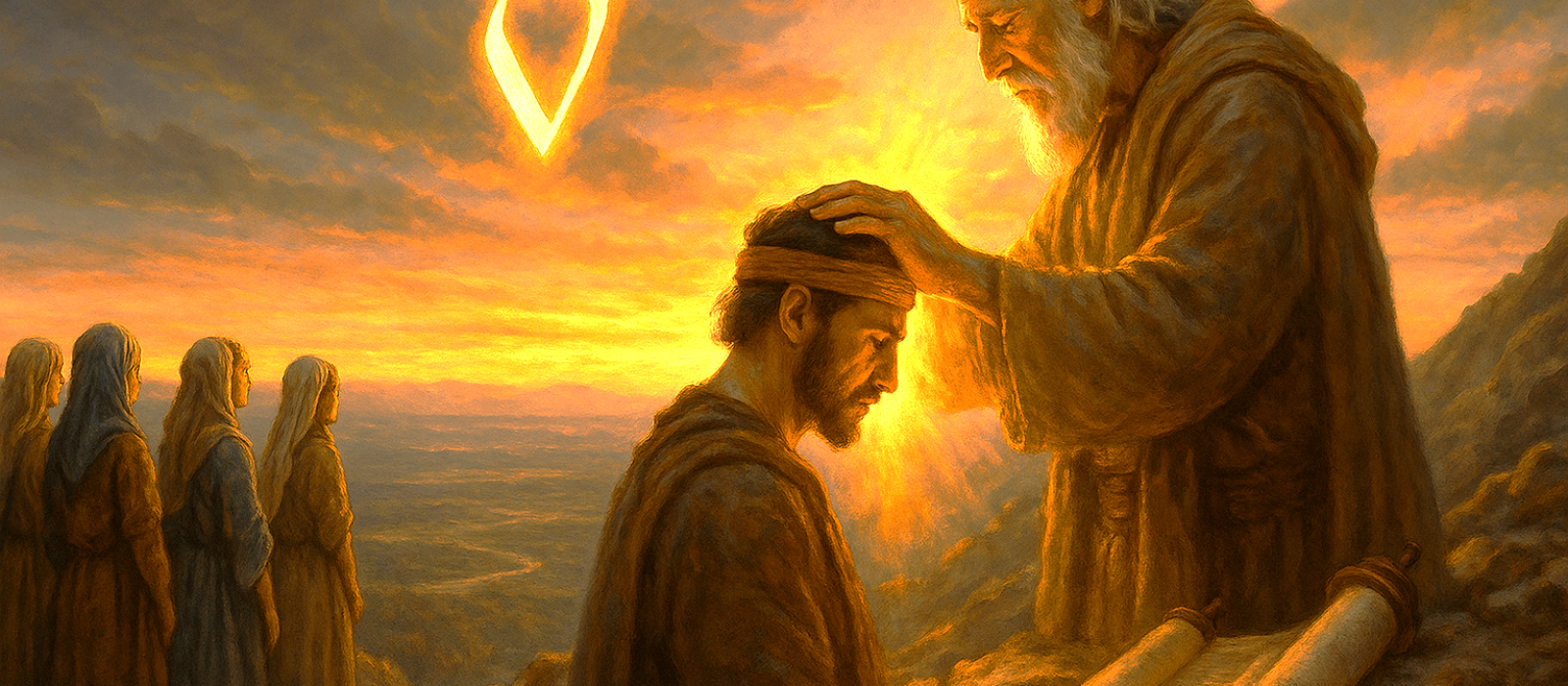
God answers by choosing Yehoshua, the one who has served Moshe faithfully. Moshe is told to lay his hands on Joshua, to put some of his own spirit upon him, and to commission him in the sight of all Israel. Moshe’s legacy is not a pile of possessions; it is a man equipped and anointed to carry God’s purposes forward. His real inheritance is spiritual: the values, revelation, and courage he passes on.
This dynamic is not unique to Moshe. In our own day, there are believers wrestling with the same questions of legacy and ownership. Business leaders, parents, pastors, and teachers ask, “What will happen to all this when I am gone?” Yeshua shows us the pattern in Philippians 2, the great kenosis passage. Though He existed in the form of God, He did not consider equality with God something to be grasped, but emptied Himself, taking the form of a servant. True greatness is not clinging, but pouring out.
We like to say, “The earth is the Lord’s, and the fullness thereof.” But the Lord will sometimes test whether we really mean it. Are we owners or stewards? Owners cling; stewards keep their hands open so that God can give and take as He pleases. When we live as stewards, He can entrust greater things to us—because He knows the flow won’t get dammed up in our fists.
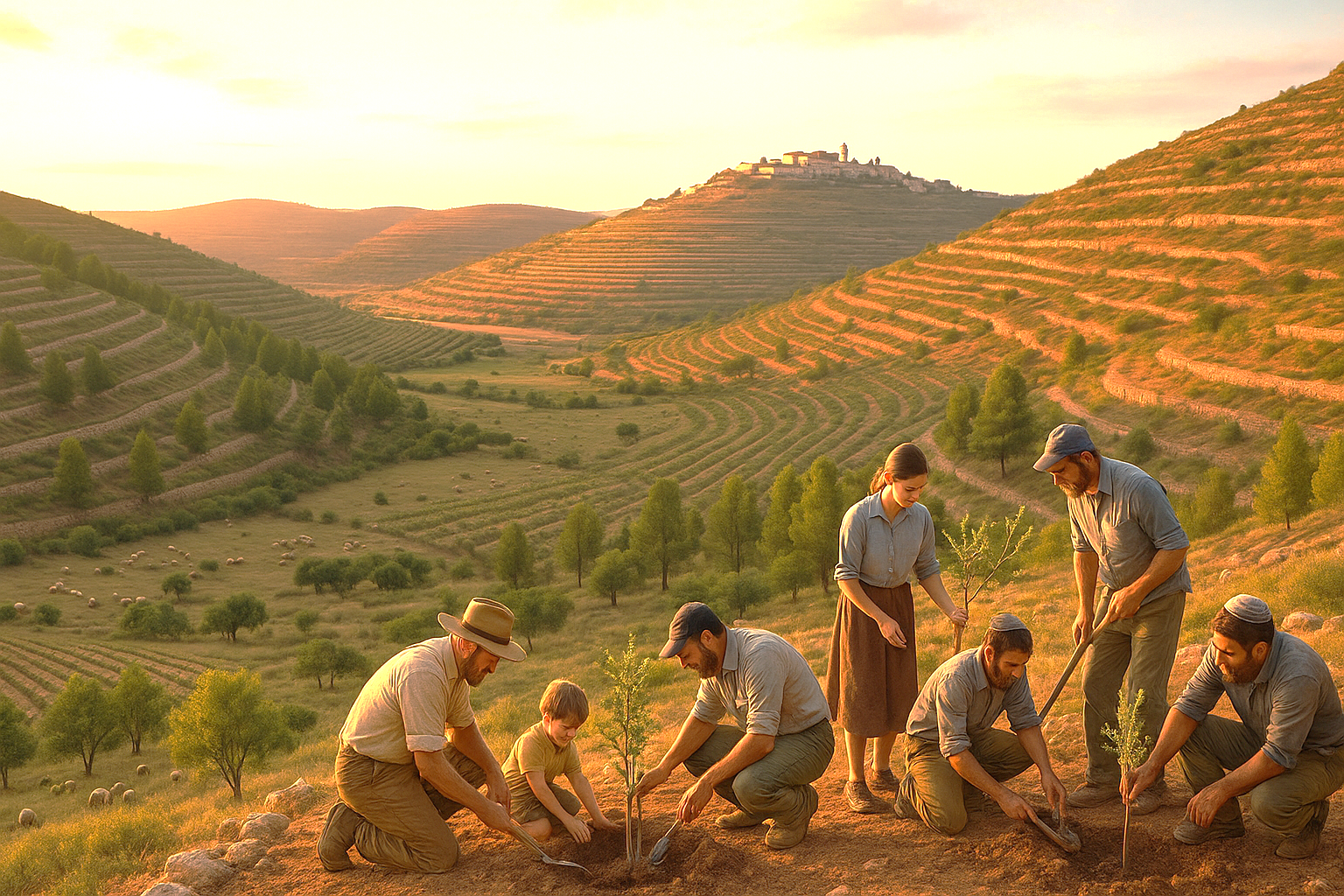
Every one of us, not just business owners or pastors, has a sphere of influence: children and grandchildren, neighbors, coworkers, the person at the grocery store, the stranger at the gas pump. You are already a leader in the eyes of heaven. The question is not whether you have a legacy, but what kind of legacy you are building: one that reflects His character, or one that bears His Name in vain.
Sometimes that legacy looks like bold intercession—praying God’s own Word back to Him for your family, for your community, for the nations. Sometimes it looks like mentoring: older women teaching the younger, older men strengthening the younger, covering them with prayer and wisdom. Sometimes it looks like simple, practical creativity, like offering English classes to immigrants in your city and using Scripture as the reading text, or befriending Muslims, refugees, and foreigners whom God has brought right to your doorstep.
Many of us feel a strange, holy attraction to people who are far from the covenant. We find ourselves watching them, praying for them, feeling our hearts stirred with compassion and sometimes even tears we don’t fully understand. That is the jealousy of God at work inside us—the same jealousy that burned in Pinchas, the same zeal that consumed Yeshua. He is jealous for every soul He purchased with His blood. He deserves to receive the full reward of His sufferings.
And yes, walking out that jealousy in practical ways can feel awkward and risky. We may feel timid, second-guessing whether we are really hearing the Ruach HaKodesh when He nudges us to go pray for someone in the store. We may worry about cultural misunderstandings, fear rejection, or simply feel too tired. But remember the daughters of Tzelophehad: the turning point came when they stepped forward. They asked. They spoke. And God said, “They speak rightly.”
We are living in what you might call the generation of the broken vav: a time when the connection between heaven and earth looks fractured, when peace is fragile and many hearts are divided. Yet in Yeshua, the true Vav, the nail that secures, heaven and earth are already joined. He has restored shalom at the deepest level through His cross. Our calling is to live as people of that restored covenant of peace and to carry that peace into every relationship and every nation.
So ask yourself: What kind of legacy am I leaving? Am I clinging to my life, my resources, my ministry, as an owner—or offering them back to God as a steward? Am I praying small, timid prayers, or am I daring to quote God back to God for the sake of my family and my city? Am I content to watch the nations pass by my window, or will I ask the Lord how to reach them practically with love and truth?
The good news is that Yeshua has already healed the broken vav. The covenant of peace has been purchased with His own blood. Now He invites us, like Moshe, to lay hands on the next generation, like Pinchas to stand in the breach, like the daughters of Tzelophehad to ask boldly, and like Joshua to carry the vision forward. This is our leadership. This is our inheritance. This is our legacy.