

Parashah Yitro Comments (Jan 2014)
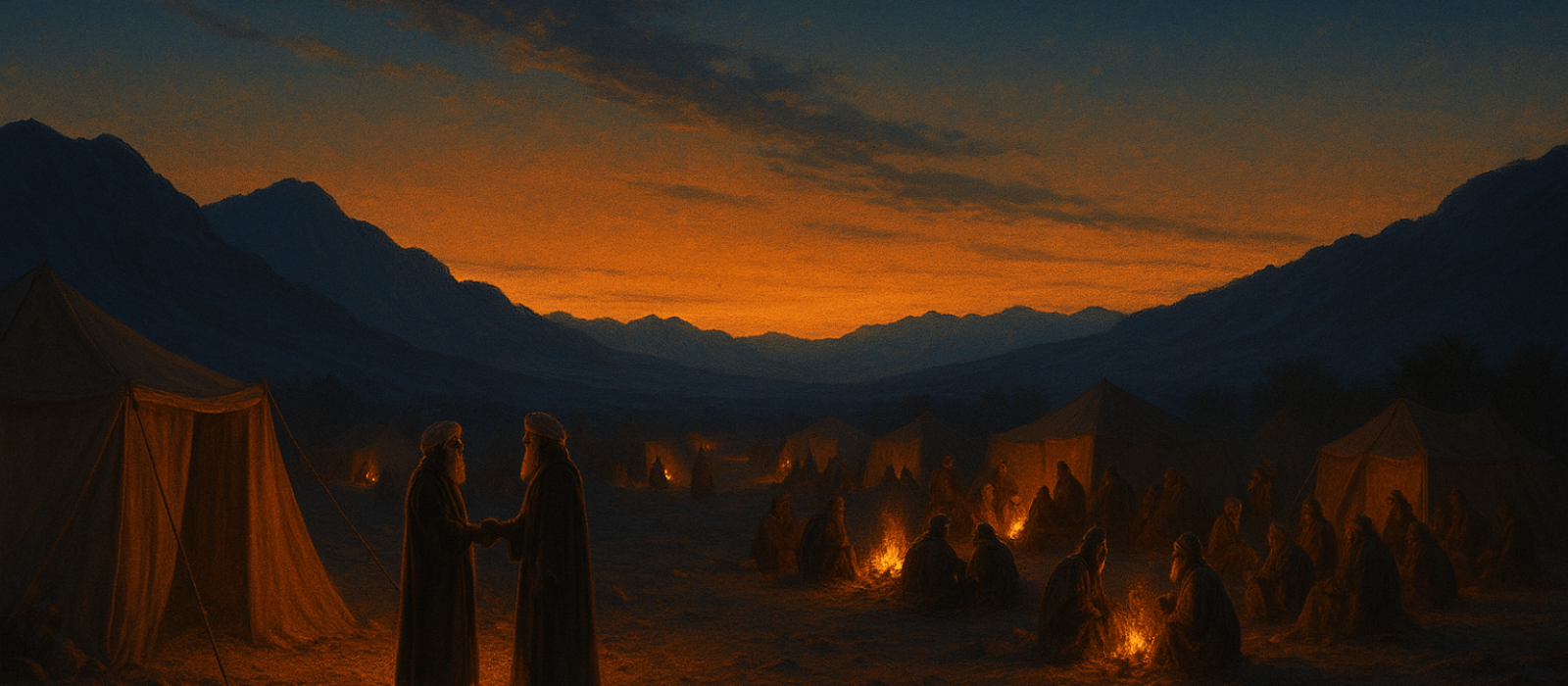
Chapter 18 of Exodus describes the visit of Yitro (Jethro) to his son-in-law Moshe in the wilderness of Sinai and the wise counsel the elder priest of Midyan offers the younger leader of Israel. Moshe bows in respect, and after Yitro observes how Moshe judges every dispute personally, he advises a God-honoring structure of delegated justice—appointing capable leaders over thousands, hundreds, fifties, and tens—so the people are served well and Moshe is not exhausted.
Jethro’s Counsel and Delegated Justice
Yitro’s insight is simple and profound: if it is God’s will, empower qualified men who fear God, love truth, and hate unjust gain to judge the smaller matters, bringing the heavy cases to Moshe. The result is ordered governance, shared responsibility, and shalom in the camp. Moshe listens—and Israel flourishes.
Moshe and Y’shua: Patterns of Redemption
Moshe is the first judge of Israel and a picture of the Messiah. After Moshe came Yehoshua (Joshua); and throughout Israel’s story, judges and prophets carried forward the revelation given at Sinai. The Torah, the Nevi’im, and the Ketuvim are God-breathed instruction for Israel. In many ways, Moshe foreshadows Y’shua: the one who leads from slavery to freedom, who mediates covenant truth, and who guides a people toward the promised future.
Prophetic Peace—and Present Division
“For unto us a Child is born… and His name will be called Wonderful, Counselor, Mighty God, Everlasting Father, Prince of Peace.” (Isaiah 9:5–6)
As Messiah ben Yosef (the servant Messiah), Y’shua teaches that our free will and divided loyalties mean His first coming would not usher in universal peace:
“Do not think that I came to bring peace on earth. I did not come to bring peace but a sword.” (Matthew 10:34–35)
He confronts hypocrisy and misplaced authority, calling us back to the plain command of God over the traditions that nullify it (see Matthew 15:2–3).
“It Is Not in Heaven”: Tradition vs. Torah
“For this commandment… is not too mysterious… It is not in heaven… the word is very near you, in your mouth and in your heart, that you may do it.” (Deuteronomy 30:11–14)
Some claim this passage grants rabbinic courts ultimate interpretive authority; others extract texts to serve their own systems. But in context, Torah emphasizes accessibility and obedience—God’s word is near, given for living faithfulness. Respect for tradition can offer wisdom, yet no tradition stands above God’s revealed command.
Common Controversies—And Our Humility
Across Jewish and Christian worlds, fiercely held positions abound: whether Torah is abolished or fulfilled, burden or blessing; whether circumcision is binding for all; whether Gentile believers keep the whole Torah or the basics given in Acts 15; whether there is an afterlife; whether Y’shua is the divine Son. These debates remind us to pursue truth with humility, not weaponize it.
Messiah the Breaker (Ben Haporetz)
“How did you break through? … Therefore his name was called Peretz.” (Genesis 38:29)
In Jewish literature, one of Messiah’s titles is Ben Haporetz—the Breaker, the One who breaks through. Peretz’s name (“breach/breakthrough”) signifies that Messiah will shatter barriers and open the way. Y’shua, in the line of Peretz, breaks through our rigidities and pious fences that keep people from God.
The Lifted Serpent and the Son of Man
“…Moses made a bronze serpent… and if a serpent had bitten anyone, when he looked at the bronze serpent, he lived.” (Numbers 21:4–9)
“As Moses lifted up the serpent in the wilderness, even so must the Son of Man be lifted up…” (John 3:14–15)
The paradox of the healing serpent prefigures Messiah’s own lifting up—what looks like defeat becomes the means of life for all who look in faith.
Ba’al Torah and the Eternal Torah
Some sages describe Messiah as Ba’al Torah—rightful owner and final interpreter of Torah—bringing its eternal fullness. Jeremiah speaks of a renewed covenant written on our hearts (Jeremiah 31:31–34). We are like children learning God’s ways; when Messiah, the Living Torah, speaks, He integrates our partial understanding into His complete truth.
Y’shua Deepens Torah’s Intent
“You have heard… but I say to you…” (Matthew 5:21–48)
In the Sermon on the Mount, Y’shua does not abolish; He amplifies—pursuing the heart behind the command: reconciliation, covenant faithfulness, integrity of speech, non-retaliation, radical generosity, and love of enemies. This is a foretaste of the eternal Torah to be revealed fully in the Messianic Age.
From Yitro’s Courts to Messiah’s Kingdom
Yitro’s advice reunites Moshe with his family and equips him to govern with justice. Likewise, the Father presents the Bride to the Messiah, and Y’shua will establish His Kingdom with perfect judgment. What Yitro sketched in the camp, Messiah will complete for the world—ordered justice, shared responsibility, and true shalom.
Beatitudes: The Ethos of the Kingdom
“Blessed are the poor in spirit… the meek… those who hunger and thirst for righteousness… the peacemakers…” (Matthew 5:3–10)
Here and now, we practice the life of the coming age—bringing Eden’s hope, the New Jerusalem’s light, into our ordinary days.
Truth and the Two Messiahs
“In the beginning, God” hints at emet (truth), and many sages speak of two messianic roles: Messiah ben Yosef (suffering servant) and Messiah ben David (reigning king). Y’shua of Natzeret fulfills the first and will return as the second. In Him, Pilate’s question is answered: What is truth?—Y’shua is the Way, the Truth, and the Life (John 14:6).
Conclusion and Prayer
“For He is coming to judge the earth… He shall judge the world with righteousness, and the peoples with His truth.” (Psalm 96:12–13)
Amen. May the counsel of Yitro and the kingship of Messiah form our homes, congregations, and communities in justice, mercy, and truth.