
“Father, speak to our hearts by the power of Your Ruach haKodesh. Enlarge our hearts to receive from You. Increase our faith, that we may truly live by the faith of the Son of God, who loved us and gave Himself for us. Amen.”
Re’eh – See: Blessing, Curse, and the Place God Chooses
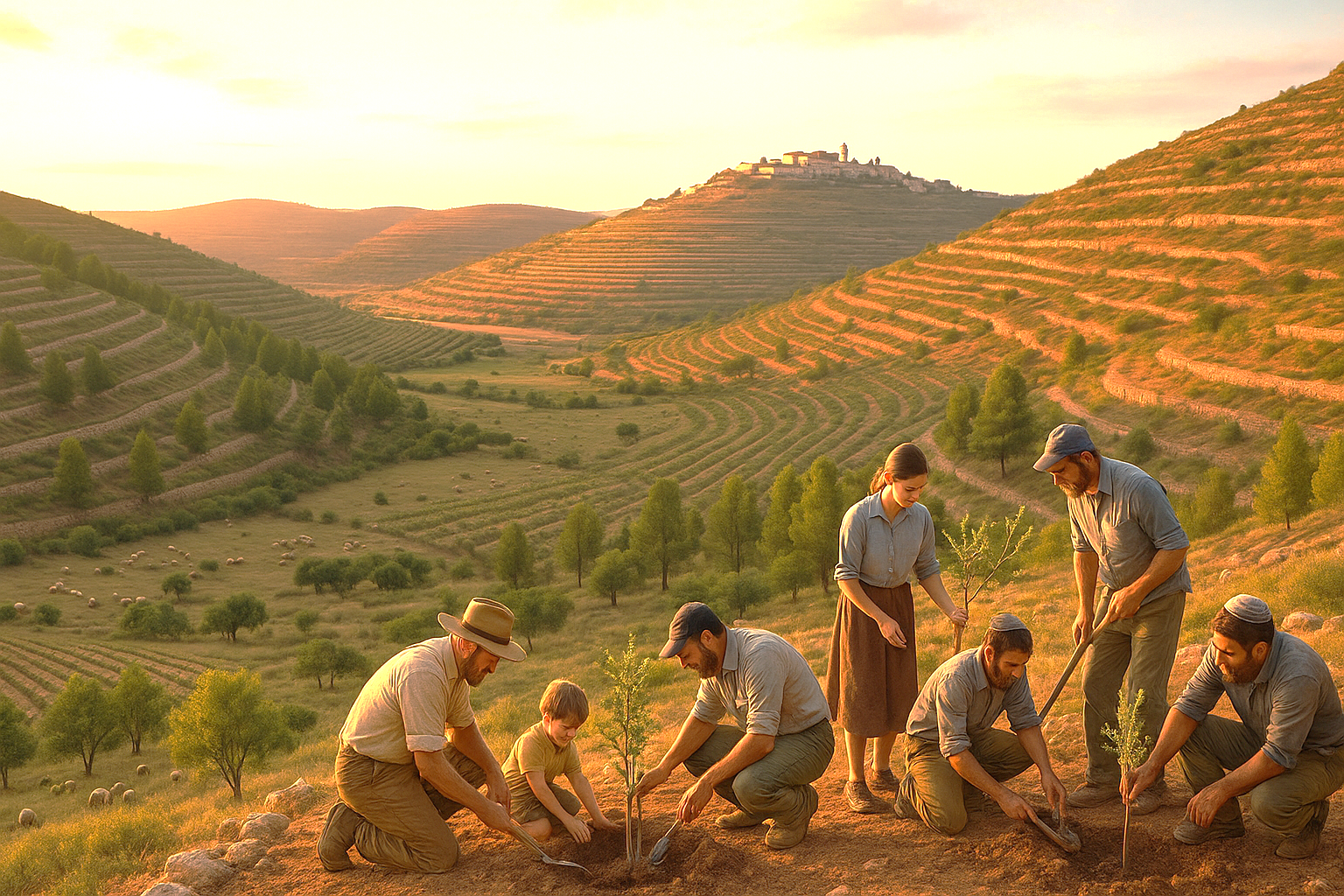
This week’s portion, Re’eh (“See”), begins with a stark choice: “See, I set before you today a blessing and a curse.” The blessing is linked to obedience; the curse is linked to turning aside. Moses points Israel to two mountains in the Land—Mount Gerizim and Mount Ebal. Gerizim is the mountain of berakhah, blessing. Ebal is the mountain of kelalah, curse.
To this day, Mount Gerizim is green and flourishing, while Mount Ebal is barren, a bald mountain where almost nothing grows. It is as if the land itself has remembered the blessing and the curse.
In Deuteronomy 12, God becomes very specific: “You shall not worship the LORD your God in that way,” like the nations do. Tear down their altars. Destroy their high places. Don’t even ask, “How did these nations serve their gods?” Instead, the Lord says, “You shall seek the place where the LORD your God chooses… there you shall go.” One place, of His choosing, not ours.
That phrase—“the place I will show you”—should sound familiar. It links us back to another story, another mountain, and another father called to radical obedience.
Abraham, Moriah, and the Lamb That Will Be Seen
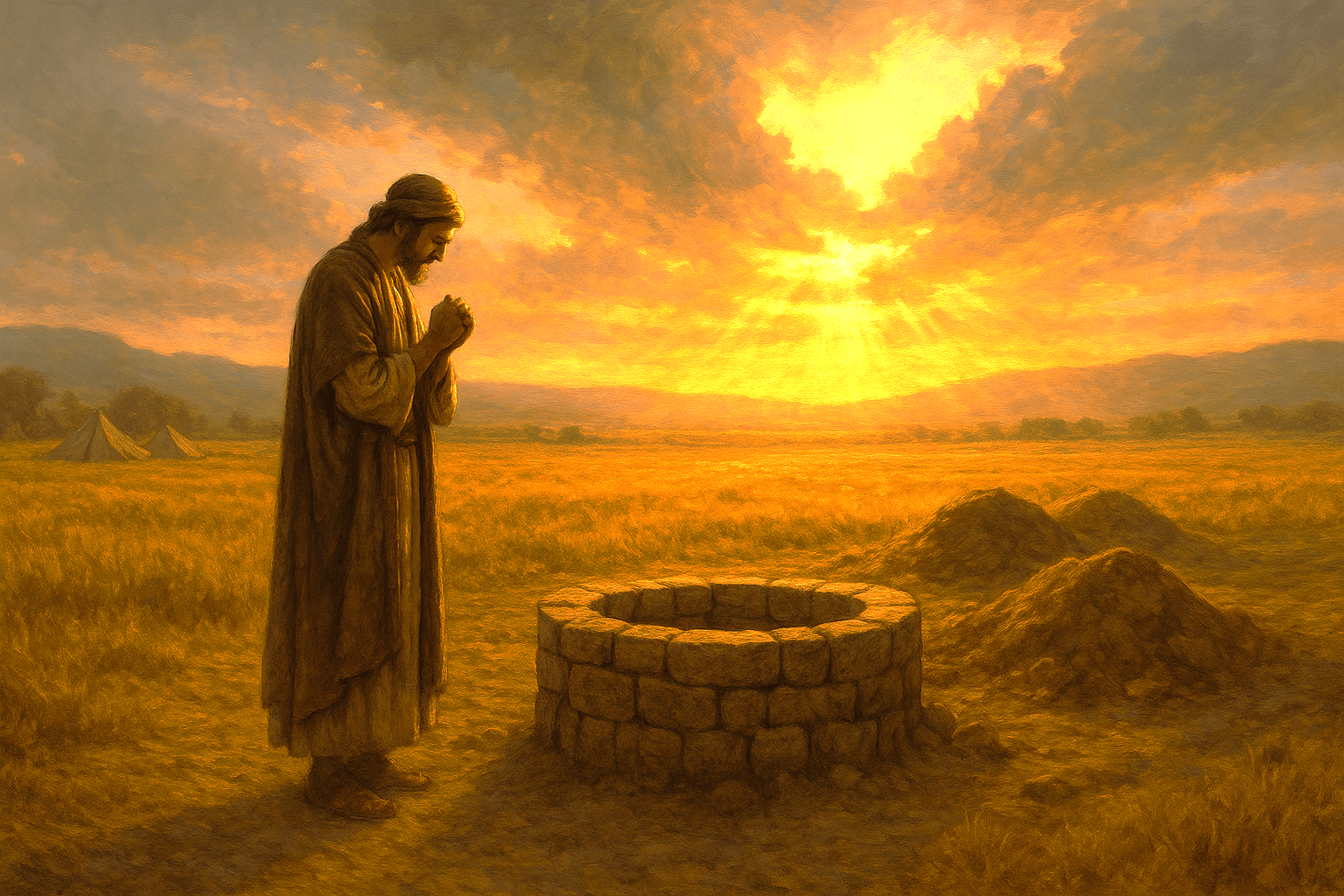
Before Israel ever heard the words of Moses, Abraham heard a similar call. He left Ur of the Chaldeans to go to a land God would show him. Many years later, in Genesis 22, God tested him again: “Take your son, your only son whom you love, Isaac, and go to the land of Moriah. Offer him there as an olah, a burnt offering on one of the mountains I will show you.”
That same region—Moriah—is later identified as the very place where Solomon built the Temple. The same mount where sacrifices would be offered for generations. Many see in this a prophetic thread leading all the way to Yeshua, the Lamb of God, offered outside Jerusalem on a hill that bears the weight of Moriah’s shadow.
On the mountain, Isaac carries the wood up the slope, just as Yeshua carried the cross. Isaac asks, “My father… here is the fire and the wood, but where is the lamb for the offering?” Abraham answers with a phrase rich in Hebrew layers: “God will provide Himself the lamb” and “it shall be seen.”
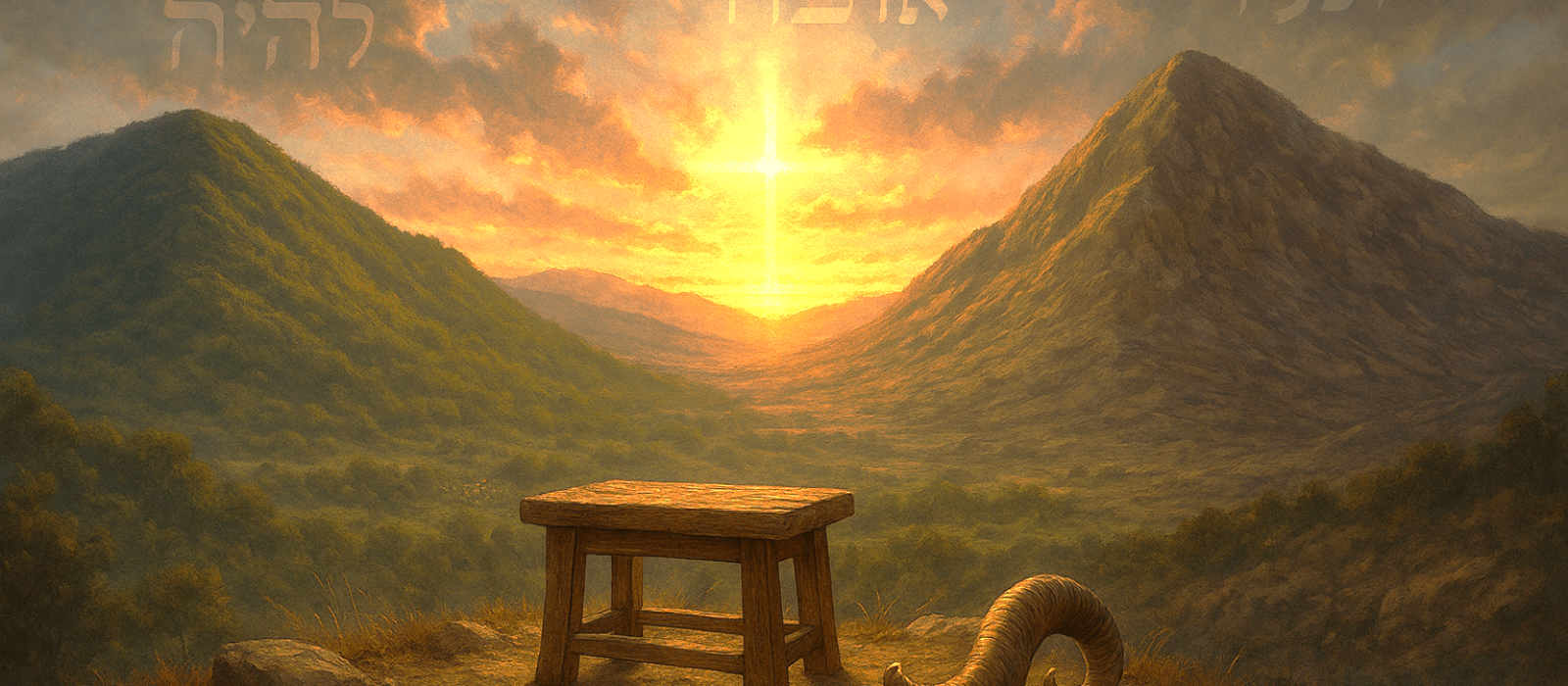
The Hebrew word there, yir’eh, is related to our portion’s opening word, re’eh—“see.” The place becomes known as Adonai Yir’eh, “the LORD will provide” or “the LORD will be seen.” God will provide for Himself, to Himself, and even in some mysterious way, He Himself will be the lamb.
But notice: the animal caught in the thicket is not a lamb. It is a ram. Why? Because Isaac cannot be the true sacrifice; he is imperfect. The ram stands in as a substitute, but the ultimate Lamb still points forward. Yeshua alone is that Lamb.
Abraham obeys in a culture where child sacrifice was normal among the Canaanites, Hittites, and other nations. He knows God hates those abominations—later, in Deuteronomy, God says He detests child sacrifice to Molech. Yet Abraham hears this command from the very God who gave him the promised son. The test cuts across culture, emotion, logic, and everything in him that screams, “This is what the pagans do!”
How could Abraham walk in that kind of obedience? He had walked with God for decades. He had seen God rescue Lot, protect him in battle, and keep covenant promises. He feared the LORD more than he feared the culture around him. He knew God’s character enough to trust Him, even when he didn’t understand the instruction.
Old Idols, New Names
Deuteronomy warns Israel not to worship like the nations. Their worship is soaked in fear and manipulation, especially around fertility and control. They offer what is most precious—their children—to false gods in hopes of securing rain, crops, and favor.
Today, the stone idols and carved images may have different names, but the heart issues remain. The god of convenience is alive and well. We still sacrifice children to maintain our lifestyle and comfort, whether through abortion or through neglect. We still bow to money, reputation, success, and control. We still build “altars” to the things that promise security apart from God.
Idols are not only carved statues. They can be locations we won’t let go of, jobs we cling to, relationships we fear losing, or even ministries that become more important than obedience. Anything we trust more than God, or refuse to place on the altar when He asks, can become an idol in our hearts.
When Wounds Turn into False Images of God
There is another kind of idol we rarely recognize: false images of God formed by our wounds.
Jeremiah says, “The heart is deceitful above all things… who can know it?” We often don’t realize what is hiding inside us until the Ruach shines light on it. Our experiences—especially childhood wounds—can shape how we see God. Without realizing it, we can superimpose the face of our earthly father onto our heavenly Father.
In my own story, I grew up with a stepmother and stepsisters who, to my child’s heart, felt like the “evil stepfamily” from the Cinderella tale. My father paid for their piano lessons, bought them what they wanted, and seemed to favor them. I longed for music lessons, for time, for attention—but those gifts went to them instead. My mother, not my father, bought me a guitar one year for Christmas.
Years later, as an adult in ministry, a similar wound reopened. I deeply desired a particular position in women’s ministry. I felt qualified—I had a Bible college degree; I was already overseeing children’s ministry from the nursery up through young teens. But the role went to my best friend, and she chose another assistant instead of me.
The reaction in my heart was far bigger than the situation. I found myself mopping floors, cleaning bathrooms while the women enjoyed a luncheon, refusing to join them because I was hurt and offended. I was in full-on Cinderella mode—feeling like the overlooked stepchild in the body of Messiah.
As I wept before the Lord, He began to uncover what was really going on. Out of my childhood wound had grown a belief: “The Father will always choose someone else over you. You will never be the favorite. You will never be first.” That belief had become an idol—an image of God that was not true, but which I had bowed to for years.
From that wound also grew pride. My inner dialogue sounded like this: “I’ll show them. I don’t need anyone’s help. I’ll teach myself guitar. I’ll prove I’m better qualified than the ones who were chosen.” Pride dressed itself in hurt and self-reliance, but at the root was a false picture of who God is.
One day, the Lord spoke into that place using the very story that had shaped my childhood imagination. He whispered to my heart, “So, Cinderella… who got the prince?” Suddenly, the mocking tone I had heard in that nickname shifted into tenderness. “Who got the prince?”
“Cinderella did,” I answered. And in that gentle question, the Father was saying, “You are not the overlooked stepchild. In My kingdom, you are the one I chose. You get the Bridegroom Himself—Yeshua. Others may get titles, platforms, ministries, approval from people. But you get Me.”
That revelation began dismantling the idol of a false Father-image. But He also had to deal with the pride that grew out of the wound—the “I’ll show you” attitude, the need to compete and prove my worth. He humbled me through years of hidden service, cleaning toilets, mopping muddy floors, doing unseen things. In that place, He exposed the lie and healed the wound.
Wounded in the House of Friends
Wounds don’t only come from family; they also come from the house of God. Yeshua Himself was “wounded in the house of His friends.” Many of us have been hurt by believers, leaders, or congregations. Sometimes we are misunderstood when we stand for something righteous; sometimes we are simply treated unjustly.
Once, I was arrested for quietly praying outside an abortion clinic with others. We weren’t blocking doors; we were praying. Police on horseback drove us onto the property and arrested us for trespassing. I spent a night in jail, weeping because I knew I wouldn’t be at congregation the next day. When I called my pastor to explain, he was upset and didn’t understand why I was there at all. His reaction cut deeply.
Situations like that can feed a lie: “God isn’t really there to protect me. He doesn’t stand with me when I take a risk. He lets others stand aside safely while I pay the price.” If we aren’t careful, we become offended with God, not just with people. Yeshua said, “Blessed are those who are not offended in Me.”
When we are wounded, we can project the actions of people onto God’s character: “If these believers are cold, unfair, or unkind, then God must be like that too.” That projection becomes an idol—a false god formed in the image of our pain.
Letting God Put His Finger on Our Altars
So how do Abraham’s obedience on Moriah and Moses’ instructions about Gerizim and Ebal speak into all this?
On Moriah, Abraham lays his most precious promise on the altar. In Deuteronomy, God commands Israel to tear down every altar that belongs to other gods and to bring their offerings only to the place He chooses. The underlying issue in both is the same: Who has the right to claim what is most precious to us?
Today, we may not build stone altars, but we still have “altars” in the heart. God may ask us to lay down a location we love, a lifestyle we don’t want to leave, a dream we cling to, a ministry we feel entitled to, or a relationship we fear losing. Sometimes He even touches gifts He Himself gave us—music, leadership, influence—just to see whether they have become more important than His voice.
For a season, the Lord asked me to lay down my drums. I had walked away from the nightclub world, then later attended a Bible college with a fantastic worship band. Everything in me wanted to jump back behind the kit, but the Lord said, “No, not now.” A dear friend shared a similar story about laying down singing and piano for a time. Those seasons aren’t punishment; they are invitations to let God dismantle anything that has become an idol, even good things.
Sometimes the idol isn’t the thing itself but the belief attached to it—“If I don’t have this, I’m nothing. If God doesn’t promote me, I’m unseen. If I don’t live here, I won’t be happy. If my family rejects me for following Yeshua, I have no identity.” God is after those deep places because He wants us free.
Living on the Mountain of Blessing
God’s heart is not to shame us for our wounds or expose our idols to humiliate us. He wants to heal us and bring us into blessing. Hebrews says we now have “a new and living way” by the blood of Yeshua, and that we can “come boldly” into the Most Holy Place. The torn veil is an invitation to intimacy, not a threat.
But intimacy requires honesty. If there are false images of God in our hearts, He will lovingly put His finger on them. If there are idols—visible or hidden—He will call us to dismantle them. His goal is not to leave us empty, but to fill us with Himself.
Re’eh—“See.” God wants us to see clearly: the mountain of blessing, the mountain of curse; the true God and the false gods; the real Father and the distorted image our wounds have painted. He invites us to stand on Mount Gerizim, the place of blessing, by responding in obedience when He speaks.
That obedience may look like forgiving someone who hurt you in the House of God. It may look like laying down a dream or a ministry title. It may be surrendering a relationship, a city, or a lifestyle. It may mean repenting for ways we have bowed to the god of convenience instead of honoring life. Whatever the “Isaac” is, He asks us to trust that He will provide Himself as our portion—and that on the mountain of the LORD, it will be seen.
A Prayer of Surrender and Healing
Father, we thank You that You are a God who desires to heal us and make us whole. We come from broken homes, broken families, broken relationships, and a broken culture that still sacrifices its children and bows to idols of convenience and control. Yet You call us to be a fragrance of healing in the midst of this brokenness.
Lord, we ask: show us our idols. Reveal the false images we carry of who You are—the ways we have believed You are like our earthly parents, or like the people who wounded us in the House of God. Expose the pride that has grown out of our wounds. Tear down every false altar in our hearts.
Give us the radical obedience of Abraham, rooted not in fear, but in trust. Teach us to say with Yeshua, “Not my will, but Yours be done.” When You ask for something precious, give us grace to lay it on the altar, believing that You are good and that You will provide.
We pray for healing in our own lives, in our communities, and in our nation. We ask for mercy and restoration for Israel and for all who live under the shadow of violence and terror. Rescue the captive, comfort the traumatized, and bring a mighty revelation of Yeshua, the true Lamb of God.
Make us ministers of reconciliation, carrying Your heart into a world full of idols and wounds. Let us live on the mountain of blessing—Mount Gerizim—by walking humbly, loving mercy, and obeying Your voice. In the precious name of Yeshua, amen.