
Deuteronomy 1; Numbers 13–14; Genesis 2–3; Joshua 1:7–9; Isaiah 55:1;
John 4:4–26; John 7:37–39; Mark 16:15; Romans 8:1; 2 Corinthians 5:21; Hebrews 13:5
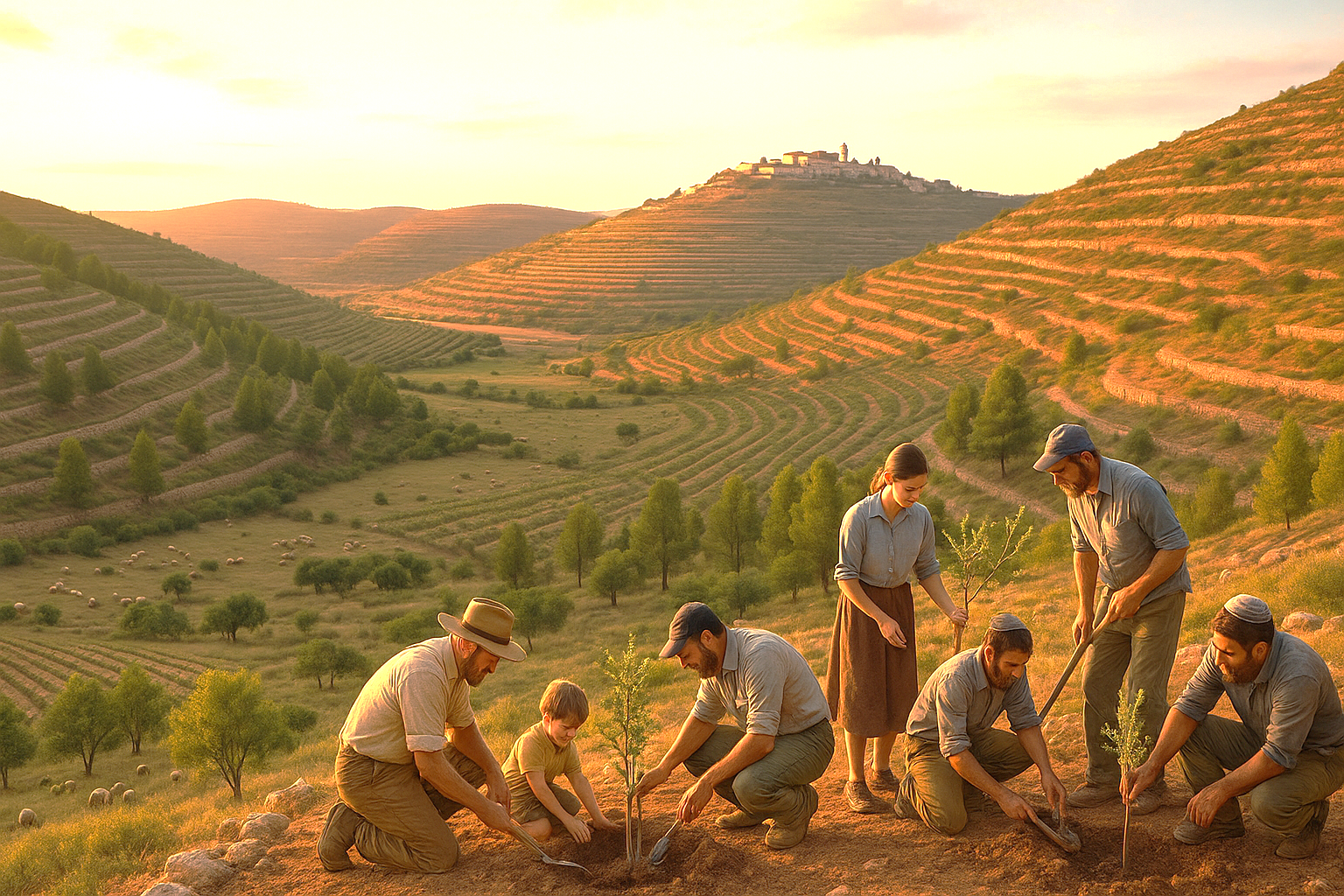
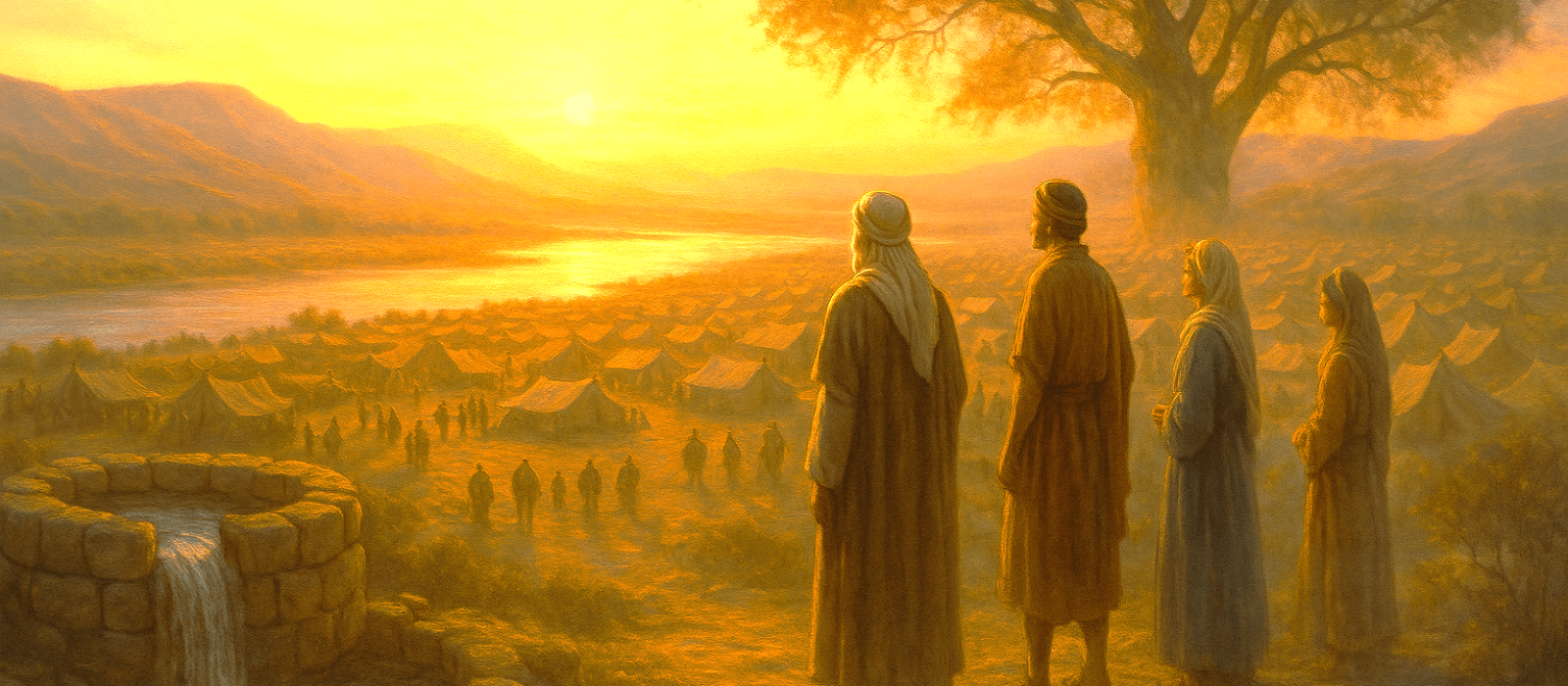
There are moments in life that feel like a birth canal—tight, pressured, and unstoppable. You cannot stay where you were, but you haven’t yet arrived where God is taking you. Israel knew that place well. After forty years in the wilderness, they were finally standing at the edge of the Promised Land, looking across the Jordan at the future God had spoken over them.
In that moment of transition, Moses doesn’t simply give them a motivational speech. Instead, he begins to retell stories of their past—especially the painful one about the spies who went into the land and came back afraid. Deuteronomy opens with Moses “expounding” these things, unpacking them like a teacher at a well, drawing up old memories and pouring them out again.
Why revisit such failure right on the threshold of promise? Not to shame Israel, but to remind them: You are not here because you earned it. You are here because God is faithful. :contentReference[oaicite:0]{index=0}
Moses carefully chooses which stories to rehearse. He doesn’t focus on every incident. He centers on those places where Israel forgot who God was and who they were in Him. The story of the spies is one of those moments. Ten spies look at the land and say, “We are like grasshoppers in our own eyes—and in theirs.” Two spies, Joshua and Caleb, look at the same giants, the same cities, the same land, and see something entirely different: the faithfulness of God and the certainty of His promises.
Same land, same facts—two completely different interpretations. The difference is where their eyes are fixed.
The ten spies fix their gaze on their own weakness and their past failures. They rehearse worst-case scenarios. They let fear interpret reality. The result is paralysis. The people refuse to go forward, and an eleven-day journey turns into forty years of wandering.
Joshua and Caleb, on the other hand, fix their eyes on the God who promised. The giants are real, but they are not the main character in the story. God is.
That is the heart of Moses’ message at the edge of the land: Do not drag your old, fearful vision of yourself into the new land I am giving you. Remember your past only in light of God’s faithfulness, not in the shadow of your failures.
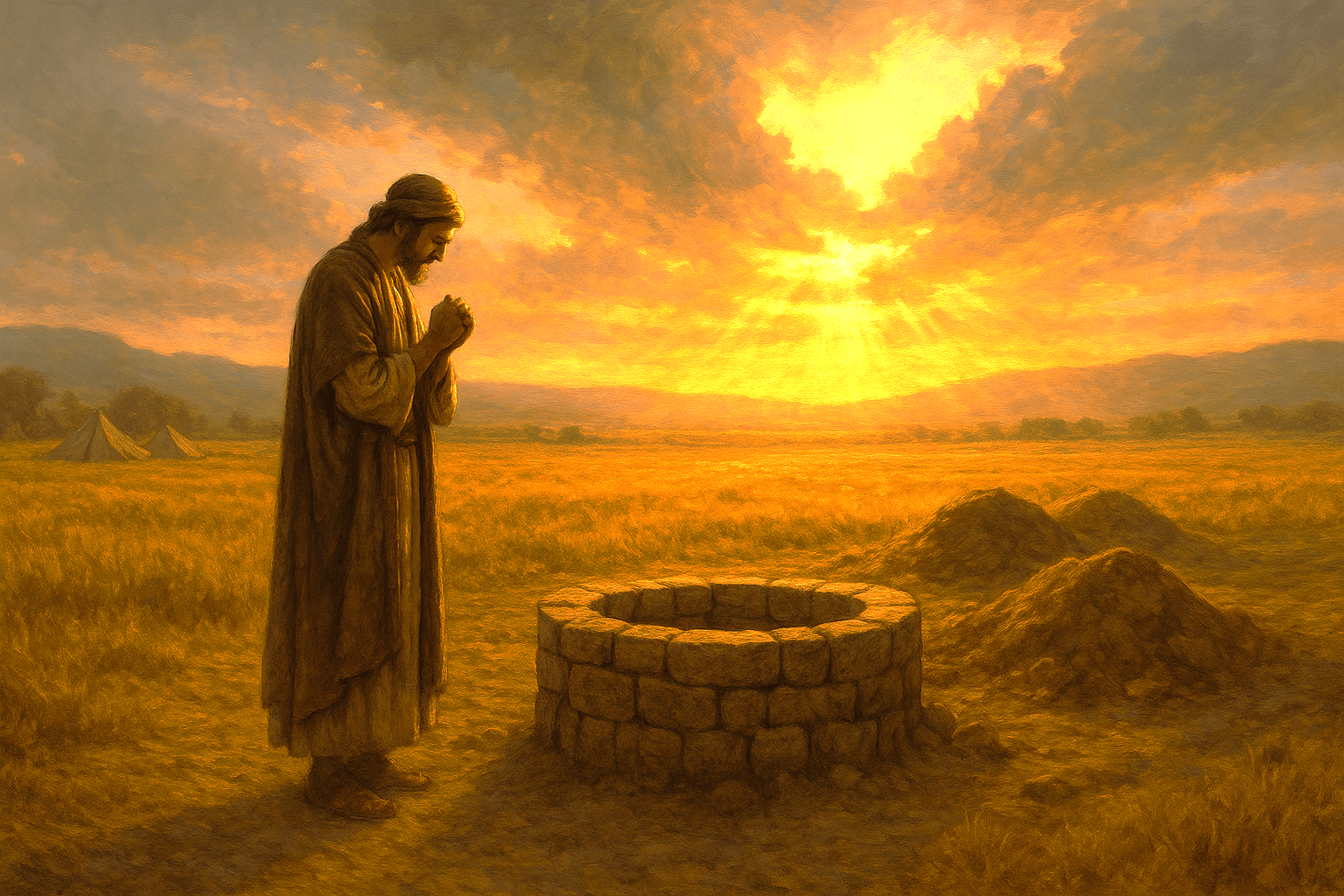
In the Hebrew, Moses “expounds” (בֵּאַר, be’er) the Torah to them (Deut. 1:5). That word is related to Be’er, a “well,” and it also carries the sense of explaining, making something clear, bringing it into the light. There’s a beautiful play here: at the well, things are drawn up and revealed. Think of Be’er Sheva—the “well of seven” or the “well of the oath”—a place tied to covenant, promise, and God’s sworn faithfulness.
If you look a little deeper, you can hear another echo: add one letter and you get be’or
Wells in Scripture are often places of encounter and revelation. Rebecca is met at a well. Rachel, too. In John 4, Yeshua says to the Samaritan woman, “Whoever drinks of the water that I will give him shall never thirst; but the water that I will give him will become in him a spring of water welling up to eternal life.” The well becomes a place where identity, sin, shame, and calling are all brought into the open—and healed. This is the same God who stands with Israel at the edge of Canaan. The same God who stands with you at the edge of your next step. Moses also asks the spies a strange question: “Is there a tree in the land?” An etz. Of course there are trees in the land! But the Torah invites us to remember another tree—the tree in the Garden, the tree of the knowledge of good and evil, and the fruit that looked so good but led to death (Genesis 2–3). Adam and Eve decided they knew better than God. The ten spies did the same. They weighed God’s promise against what their eyes could see and decided their judgment was more reliable. That’s the original sin on repeat: “We know better than You what is truly good and truly evil.” In contrast, God says that the children—those who “have no knowledge of good and evil” yet—will be the ones to enter the land (Deut. 1:39). The generation that prided itself on knowing better than God dies in the wilderness. The ones who receive, trust, and follow are the ones who inherit the promise. So what does that mean for us, right now, in our own season of transition? First, it means we have to choose what we will remember. The enemy wants us fixated on failure. He wants us to say, “I’m a grasshopper; I always mess up; I will never change.” If we live there, our past becomes a prison, and we miss the land God has prepared for us. God, however, calls us to remember His emunah, His faithfulness. The Hebrew root for emunah (faithfulness) is related to em, “mother,” and imma, “mom”—the one who holds, nourishes, and keeps covenant. When we say “amen,” we are leaning into that faithfulness, saying, “So be it; I trust You.” Second, it means lifting our eyes from the giants to the One who goes before us. In every battle, God is the first wave. He is Jehovah Nissi—our banner. He goes ahead to establish the beachhead. Our part is not to outmuscle the giants; our part is to follow in His footsteps. “Do not look to the left or the right,” Joshua is told (Joshua 1:7–9). Fix your gaze. Stay on the path. In the New Covenant, we hear the same call: fix your eyes on Yeshua, the author and finisher of your faith (cf. Hebrews 12:2). This is not just theory. When we follow Him into the “land” of His calling, we step into stories we would never see otherwise. Maybe it’s a street corner, a park, another nation, or a quiet conversation with a neighbor. Maybe, like the woman at the well, it’s a single encounter that redirects a whole life. There is risk in following. Sometimes there are “rocks and bottles”—real opposition, misunderstanding, even persecution. And yet, in the middle of that, we can see God’s protection in ways that mark us forever. We find that He really does make a way straight in the wilderness, really does open a path through what looked like an angry crowd or an impossible situation. Third, it means letting God define our identity. Moses could have blamed the people—“God was angry with me because of you.” But in the end, he had to own his choices. In the same way, we are invited to bring our failures honestly to the Lord, to repent where needed, and then to believe Him when He says He remembers our sins no more. He casts our sins behind His back. As far as the east is from the west, so far has He removed our transgressions from us. Who are we to reach behind His back and pull those old accusations forward again? In Messiah Yeshua, you are accepted in the Beloved. You are the righteousness of God in Christ (2 Corinthians 5:21). There is now no condemnation for those who are in Messiah Yeshua (Romans 8:1). That is where we are called to live—not in denial of the past, but in the truth of what His blood has done with it. Finally, it means trusting that the God of your past is also the God of your present and your future. He is the One who was (הָיָה, Haya), who is, and who will be (אֶהְיֶה, Ehyeh). He is Jehovah Shammah—the Lord who is there—present in every circumstance, every transition, every crossing of the Jordan. So as you stand at your own edge of promise, hear this invitation: His word over you is not a vague wish; it is a settled promise. His faithfulness did not fail Israel in the wilderness, and it will not fail you now. The God who brought you out intends to bring you in—into the fullness of His purposes, promises, and presence. Step forward. The river will part when your feet touch the water.