
Parashah Beha’alotcha Comments 2024
In the Torah section (or parashah) for this week, chapter 12 of Numbers recounts the curse of Tzara’at—spiritual leprosy—that God inflicted on Miriam because of the disrespectful way she and her brother Aaron were talking about their other brother Moses and his leadership of the people of Israel.
Now this man Moshe was very humble, more so than anyone on earth. (Numbers 12:3)
Hear God speak in the next few verses:
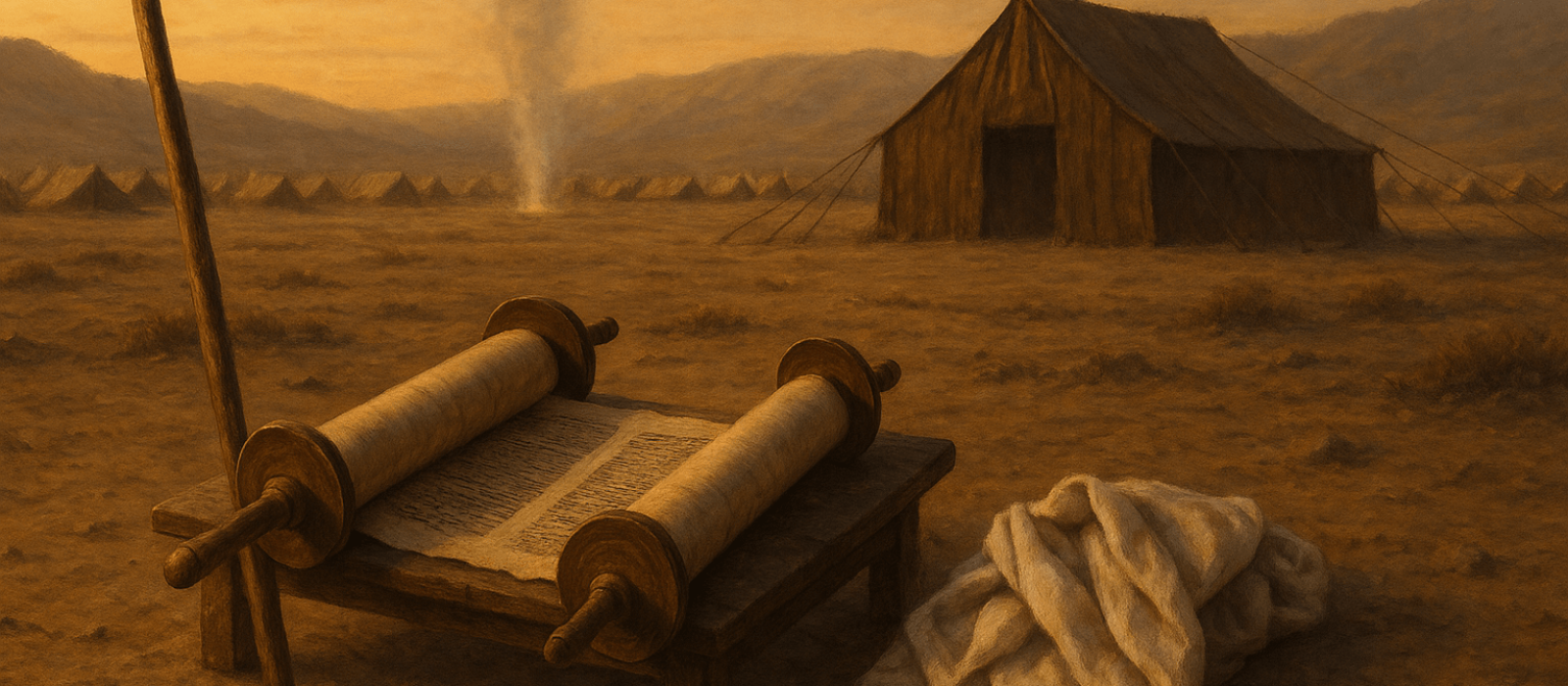
4 Suddenly Adonai told Moshe, Aharon and Miryam, “Come out, you three, to the tent of meeting.” The three of them went out. 5 Adonai came down in a column of cloud and stood at the entrance to the tent. He summoned Aharon and Miryam, and they both went forward. 6 He said, “Listen to what I say: when there is a prophet among you, I, Adonai, make myself known to him in a vision, I speak with him in a dream. 7 But it isn’t that way with my servant Moshe. He is the only one who is faithful in my entire household. 8 With him I speak face to face and clearly, not in riddles; he sees the image of Adonai. So why weren’t you afraid to criticize my servant Moshe?” (Numbers 12:4–8)
Moses is so humble—“meek” is a good synonym—that he is unoffended and does not react when Aaron and Miriam criticize him:
1 Then Miriam and Aaron spoke against Moses on account of the Cushite woman he married, because he had married a Cushite woman. 2 They asked, “Has Adonai spoken only through Moses? Hasn’t He also spoken through us?” Adonai heard it. (Numbers 12:1–2)
That is what prompted God to defend him in Numbers 12:4–8 above.
The Lord would speak to Moses face to face, as one speaks to a friend. (Exodus 33:11)
Why Moses’ Humility Matters
The humility of Moses gives us the key to the intimacy of the relationship between God and Moses. This direct relationship is the reason the Five Books of Moses are considered to be the most authoritative sacred writing in all Judaism. It is as though Moses didn’t really write them in the ordinary sense.
To be clear, he did write them down, but it was more like taking dictation from God. In other words, the Five Books of Moses are considered to be the most direct and authentic communication God has revealed to the Jewish people. The writing of the Books of Moses and the leading of the Israelites fell to a person who totally and completely opened himself to the majesty, power, and love of God. When Moses spoke to the people, it was as if God were addressing them.
In the act of writing down the words given to him by HaShem, he was so modest and obedient that he even recorded negative comments about himself:
But Adonai said to Moshe and Aharon, “Because you did not trust in me, so as to cause me to be regarded as holy by the people of Isra’el, you will not bring this community into the land I have given them.” (Numbers 20:12)
At a lodging-place on the way, Adonai met Moshe and would have killed him, (Exodus 4:24)
Also, because of you Adonai was angry with me and said, ‘You too will not go in there.’ (Deuteronomy 1:37)
It also accounts for how a man could write that he himself is “the humblest man on earth.”
What Humility Is—and Is Not
Humility or meekness is not being a dishrag or a doormat, and it is not low self-esteem. It is seeing others as more important than yourself—serving others, being compassionate, serving God above all else. It requires a balance between self-assurance and service. You could say humility is the courage to forego our wants for the needs of others—true piety.
He must become more important, while I become less important. (John 3:30)
Primary dictionary nuances of “meek” include “enduring injury with patience and without resentment” (Merriam-Webster) and “humbly patient or quiet in nature” (Dictionary.com). Yeshua told us what humility is not when He rebuked some Pharisees in the parable of those who refused the King’s banquet (Matthew 22:1–12). Yeshua is God’s best example of humility.
God’s Nearness and the Voice Between the Cherubim
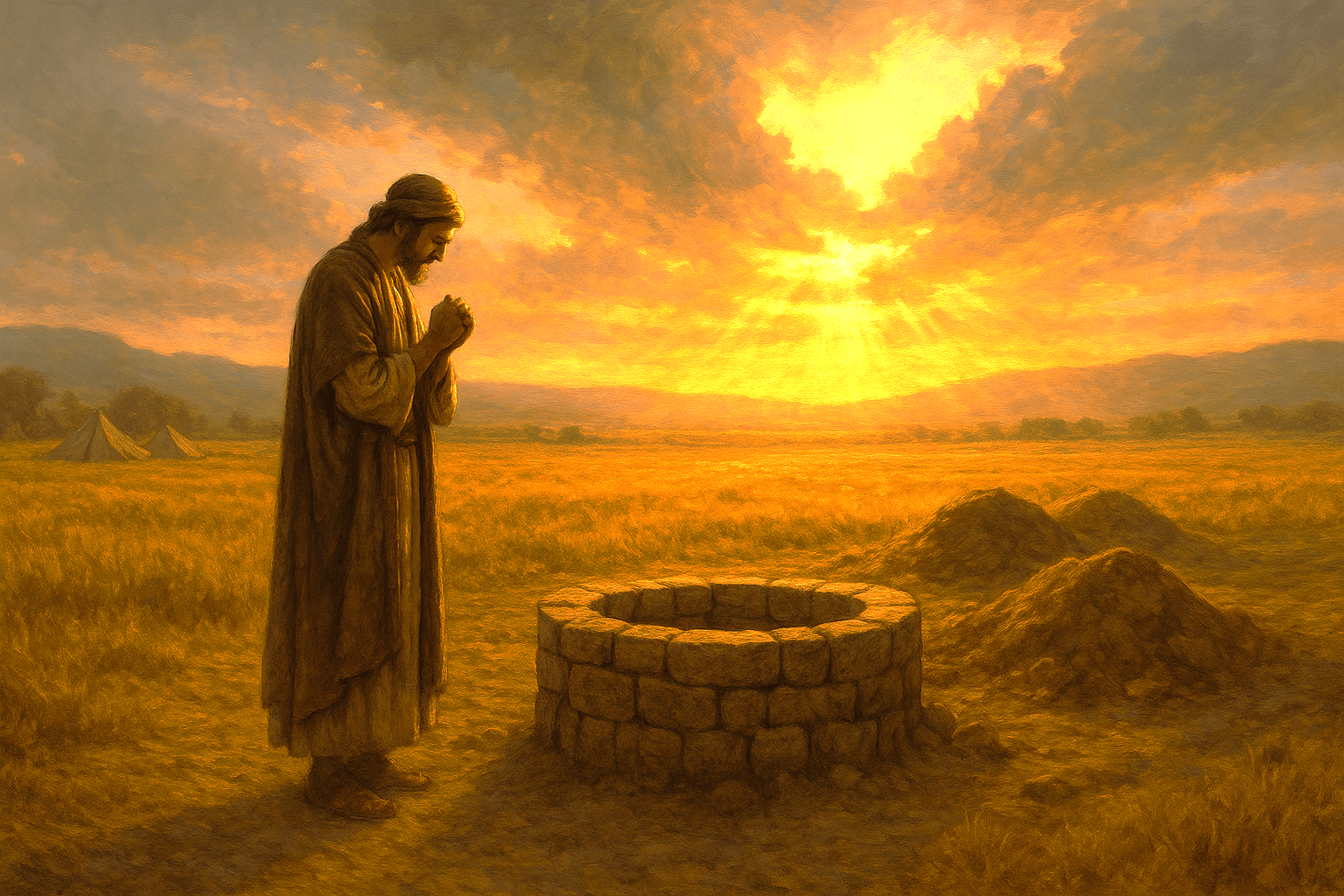
God Himself expresses humility when He condescends to our level and gives us everything needed to receive His greatest gift—life with Him now in peace and forever in His presence. Though God is everywhere, He chose to speak to Moses from between the cherubim of the Ark.
Whenever Moses needed to talk with the Lord, he went into the sacred tent, where he heard the Lord’s voice coming from between the two winged creatures above the lid of the sacred chest. (Numbers 7:89)
The level of communication between Moses and HaShem surely contributed most to Moses’ reputation as Israel’s greatest leader and prophet. Having a deep, personal relationship with the Source of all reality—the One outside of time, who knows the end from the beginning—is profoundly amazing and anticipates Heaven on Earth.
1 Then I saw a new heaven and a new earth… 3 “See! God’s Sh’khinah is with mankind… 4 He will wipe away every tear from their eyes…” (Revelation 21:1–4)
Moses and Yeshua: Standing in the Gap
Moses was the spokesperson for his people before God and the instrument God used to shepherd Israel. He stood in the gap—an intercessor. Yeshua also stood in the gap between God and humanity. Both spoke with God, both were prophets, both were sent to save Israel. Moses himself prophesied of the One to come:
Adonai will raise up for you a prophet like me from among yourselves… You are to pay attention to him. (Deuteronomy 18:15)
“I will raise up for them a prophet like you… I will put my words in his mouth… Whoever doesn’t listen to my words… will have to account for himself to me.” (Deuteronomy 18:17–19)
Isn’t it clear that God, through Moses, was speaking of the Messiah?
…he humbled himself still more by becoming obedient even to death—death on a stake as a criminal! Therefore God raised him to the highest place… (Philippians 2:8–9)
There were no two people more connected to God—nor humbler—than Moses and Yeshua.
Humility Opens Access to God
Humility opens access to God. The humbler—and therefore the more obedient and trusting—we are, the more God can work to bring us to spiritual maturity. Our greatest achievement is to become the person God created us to be. Actively pursue God’s will: this blesses Him and blesses you, leads to your best life now, and prepares you for eternal life with Him.
Seeking God is the best way to know God and maximize your relationship with Him. We were created “in His image” (Genesis 9:6). His image for you is not identical to His image for me. Each of us plays a distinct role in the Almighty’s plan; embracing that calling is the shape of our best life.
Trust in Adonai with all your heart and lean not on your own understanding; (Proverbs 3:5)
The reward for humility is fear of Adonai, along with wealth, honor and life. (Proverbs 22:4)
When Zeal Overruns Humility
Moses may have been the humblest man of his time, but he wasn’t perfect. God told him to strike the rock at Horeb (Exodus 17:6), which he did. But at M’rivah Spring he was commanded to speak to the rock. In anger he called the people “rebels,” raised his hand, and struck the rock twice. Water flowed, but the consequence was severe: Moses could only see the Land, not enter it (Numbers 20:11–12). Even a friend of God can let zeal overrun humility; Yeshua alone models perfect humility.
Faith, Capacity, and Collaboration with God
…if you have living faith the size of a mustard seed… you will say to this mountain, ‘Move’… and nothing will be impossible for you. (Matthew 17:19–20, AMP)
From multiplying loaves to Peter’s steps upon the water (Matthew 14:29), Scripture hints at human capacity when fully yielded to God. Yeshua’s words and works show what perfect humility—perfect alignment with the Father—looks like.
“I and the Father are One [in essence and nature].” (John 10:30, AMP)
“…the Father Himself who sent Me has given Me a commandment regarding what to say and what to speak… I speak… just as the Father has told Me.” (John 12:49–50, AMP)
Whether one reads John 10:30 as ontological identity or as perfect unity of will, Yeshua’s humility is unmistakable: total surrender to the Father. That is the pattern we are invited to imitate.
Blessed are the meek: for they shall inherit the earth. (Matthew 5:5, KJV)
God blesses those people who are humble. The earth will belong to them! (Matthew 5:5, CEV)
Perfect humility achieves the fullest access to God’s attributes. None of us is sinless, but in Messiah we learn how far humility can take a human life when aligned with Heaven.
Learning Across Traditions
Not only does Yeshua represent the “gold standard” in relationship with God; He models how we should regard each other. We can become more God-like as we grow in humility—“Be holy, for I am holy.” Our spiritual maturity expands when we are willing to learn from others, even across denominational lines. As Rabbi Bonney Cassady says, “Eat the meat but spit out the bones.”
Hear, O Israel. Adonai is our God, Adonai is One. (Deuteronomy 6:4)
God gave us two ears and one mouth; we learn when we listen. Bishop Robert Barron notes that “repent” can be heard as metanoia—going beyond the mind you have. Humility opens us to truths we might otherwise miss.
Toward Perfect Humility
During Yeshua’s earthly ministry, many did not recognize Him; hardened traditions and arrogance obscured the message. Things are similar today. We can approach the Divine to the extent of our humility. The perfectly righteous Yeshua is the best example.
It will also come about in that day that the root of Jesse will stand as a banner for the peoples… He will lift up a banner for the nations, and assemble the dispersed of Israel… from the four corners of the earth. (Isaiah 11:10–12)
Let us not cut ourselves off from growth by refusing the wisdom God has given others. In humility, we listen, test, and hold fast to what is good.
Prayer
Father, we trust You. We believe You are actively working for the good of all Your children. Lead us in the paths of truth; use us to share that truth with those who are open. Keep us from arrogance and closed-mindedness. Open us to deeper understanding of You, ourselves, and one another. In and through Yeshua HaMashiach, Amen.