
Deuteronomy 3–4 – Moses’ plea, “for your sakes,” latter days, cities of refuge, Israel’s witness
Deuteronomy 6:4–9 – The Shema, Israel’s watchword
Exodus 3; 19–20; Deuteronomy 34 – Moses’ mountain encounters
Isaiah 40:1–2 – “Comfort, comfort My people”
John 14:15, 21–23 – “If you love Me, keep My commandments”
John 19:30 – “Tetelestai… It is finished”
Luke 15:11–24 – The prodigal son restored
Romans 8:1 – No condemnation in Messiah
Romans 11:25–27 – “All Israel will be saved”
Matthew 17:1–3 – Moses in the Land at the Transfiguration
Moses’ Last Request: More Than Just Stepping Into the Land
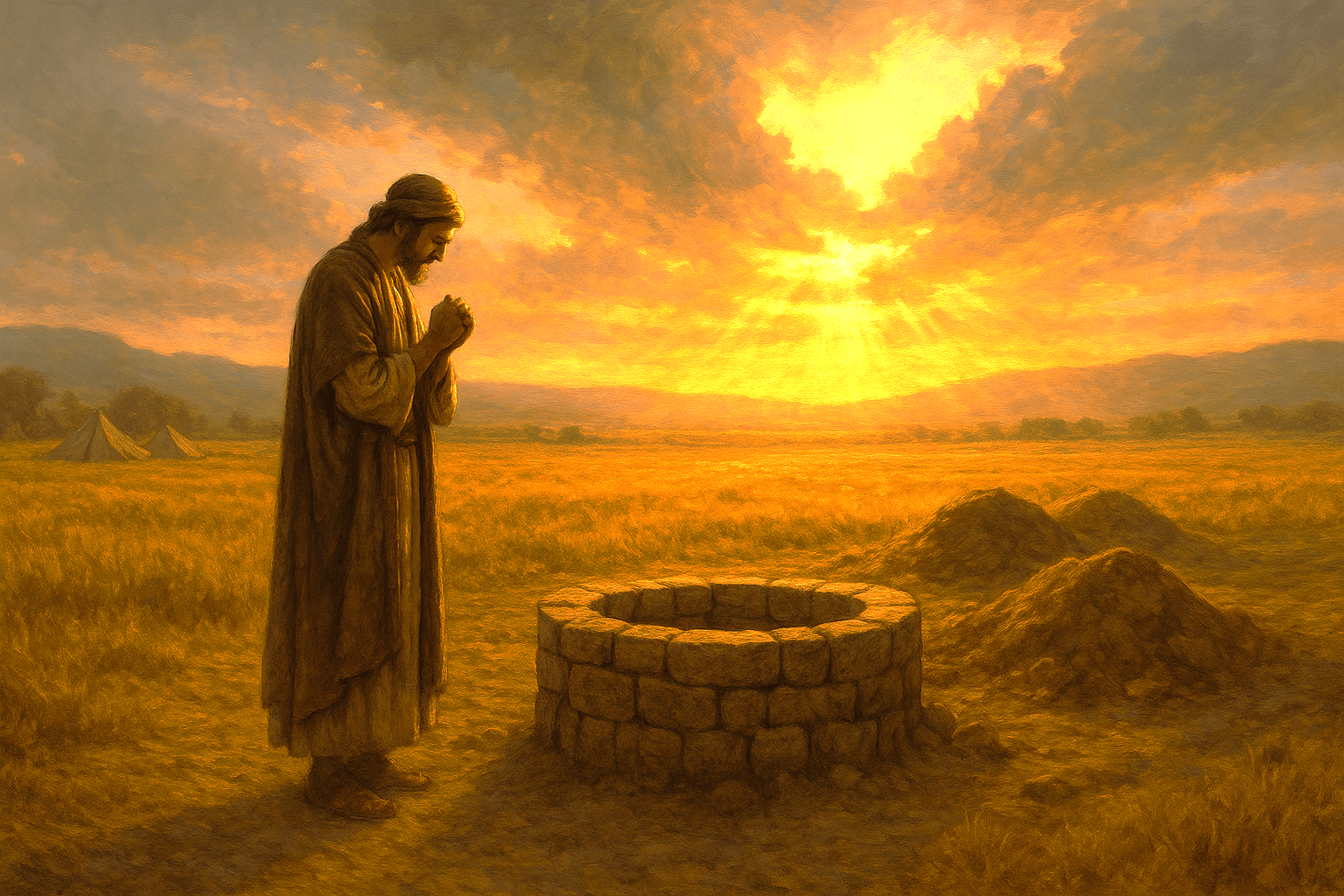
In the Torah portion Va’etchanan, Moses opens his heart in a way that is almost painful to read. After leading Israel out of Egypt, confronting Pharaoh, interceding through plagues and rebellions, and standing alone in the presence of God, he makes one last request: “Please, let me cross over and see the good land.” He is not asking to be the leader anymore. The mantle has already passed to Joshua. Moses is simply longing to step into the fulfillment of everything God promised, to taste the end of the story with his own feet in the dust of the Land.
But God answers with a firm “No.” Moses may go up, look from the mountain, and see it, but he will not enter. At first glance, this sounds harsh, almost unfair. Yet Moses himself explains that it is “for your sakes” that the Lord was angry with him and would not let him cross over.
“For Your Sakes”: Discipline as a Merciful Safeguard
In Hebrew, that phrase “for your sakes” appears in two different ways in this passage, using two different words. One carries the sense of “because of you” and the other of “for your benefit, for your sake.” Moses is not just shifting blame onto the people. He is recognizing that what happens to him becomes a visible lesson for Israel, so that their hearts will not grow hard toward their own sin.
Think of a parent. If one child is never corrected, every other child will quietly notice. Resentment builds. Hearts harden. By dealing with Moses openly, in front of the people, God is not humiliating him but protecting Israel. He is showing them that sin, even in a beloved leader, is real and serious, and that He loves them enough to correct it.
Moses’ final “no” becomes a merciful safeguard for an entire nation. It is “for your sakes” so that, over generations, Israel’s heart would not shrug off disobedience as if it did not matter.
Chen: The Wall of Grace Around All Our Life and Activity
When Moses makes his appeal, he does not stand before God and say, “Remember what I have done for You. Look at how faithfully I served. Surely that earns me entry.” Instead, he leans on one Hebrew word: chen—grace.
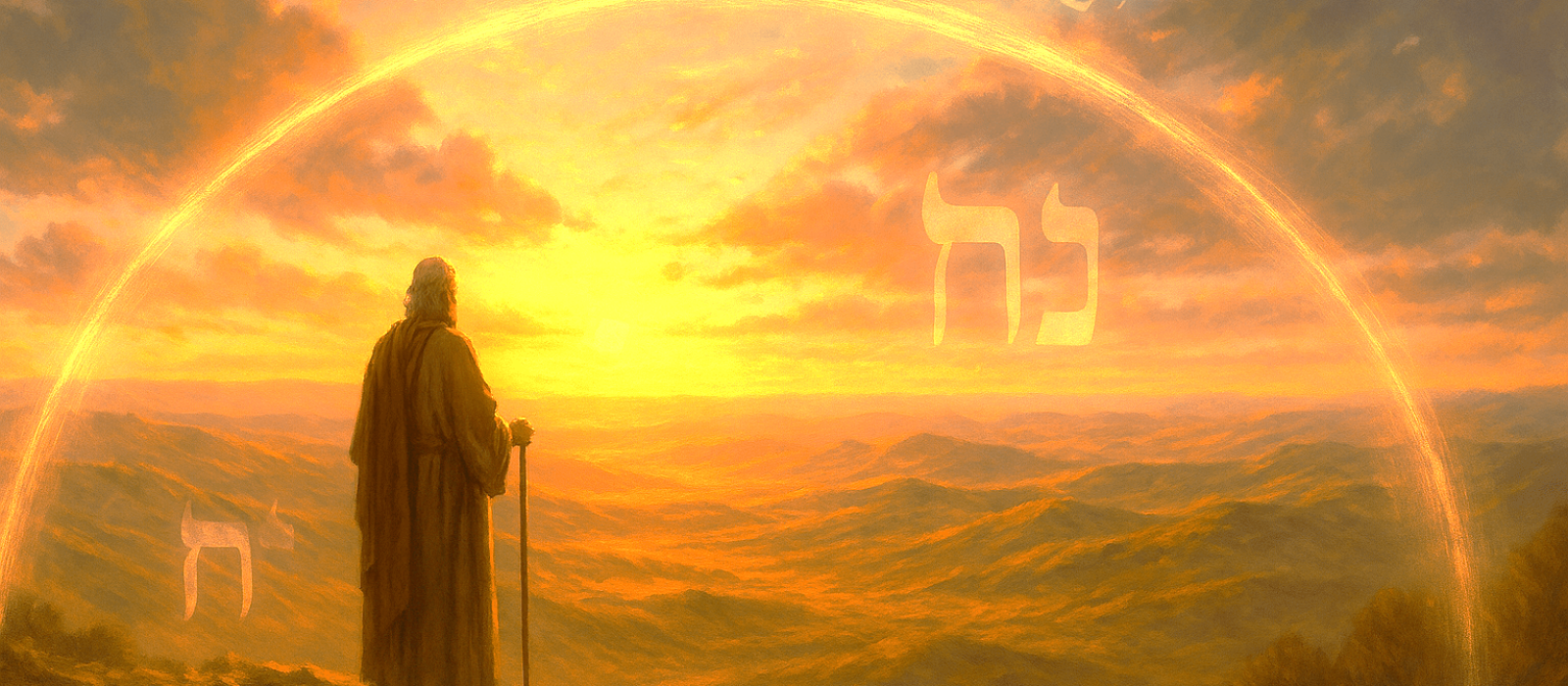
In Hebraic word-pictures, chen is spelled with two letters: Chet and Nun. The ancient form of Chet looks like a wall or fence, something that surrounds and protects. Nun pictures life—like a fish, full of movement and activity. Put together, chen paints a striking picture: God’s grace is like a wall surrounding all of our life and activity—every action, every choice, even the foolish ones.
Moses knew this deeply. God had chosen him even after he killed an Egyptian and buried the body in the sand. That failure did not erase God’s calling, but it did have consequences. Many of us know that feeling: “I’ve blown it. God can’t use me now. My story is over.” Condemnation loves that line. It crawls into our thoughts and whispers that the best we can do is step aside and disappear.
But chen tells a different story. God’s grace is not a weak shrug toward sin; it is a protective wall around a living, moving, imperfect person whom He loves. It is there when we are walking well, and it is still there when we are drifting into trouble.
When God Sounds the Alarm
Gerrie Lou shared a moment when this became very real. She was in Israel and had let her heart drift into a compromising relationship, telling herself it might be “ministry” while knowing it was drawing her away from the Lord. Late one night, as she sat at a bus stop, the alarm on a nearby bank suddenly erupted—sirens shrieking, lights flashing, everything shouting that something was wrong. In that instant, she sensed the Lord saying, “I’m sounding the alarm for you.”
She jumped up, flagged down a taxi, and left immediately. That was God’s chen—His grace—acting like a wall around her life and activity. He was not standing far off, arms crossed in disgust. He was near, intervening, warning, and making a way out. That is what grace looks like: a holy God refusing to let us stay comfortable in compromise.
Paul captures this when he says, “There is therefore now no condemnation to those who are in Messiah Yeshua.” No condemnation does not mean no correction. It means that even when God disciplines us, He does it as a Father within the wall of grace, not as a judge casting us away.
Israel, Blind Spots, and the Latter Days
The prophetic reading alongside this portion begins, “Comfort, comfort My people.” It speaks of Israel’s suffering and of double payment for sins, yet also of God’s unshakable love and His promise to restore. Deuteronomy speaks of “latter days” when Israel will return to the Lord and He will have compassion.
When we look at modern Israel, we see a people regathered physically but not yet fully restored spiritually. There are religious communities, secular Israelis, even outspoken atheists. Many have returned to the Land not in a state of belief, and some religious groups even argue the return is out of order because Messiah has not yet come. It can look like a blind spot, a hole in the armor of the nation.
Yet the same God who spoke of the latter days still surrounds Israel with chen. Like Paul, we can say with confidence that “all Israel will be saved” in God’s time and God’s way. His wall of grace embraces their story, just as it embraces ours.
The Shema and Israel’s Mission Statement
Within Va’etchanan we find the Shema, the heartbeat prayer of Israel:
“Shema Yisrael, Adonai Eloheinu, Adonai Echad.”
“Hear, O Israel: the LORD our God, the LORD is one.”
In a Torah scroll, two letters in this declaration are written larger: the Ayin (ע) in Shema and the Dalet (ד) in Echad. Together they form the Hebrew word ed—“witness.” It is as if the text itself is proclaiming, “You are My witness.”
Deuteronomy 4 describes Israel’s mission statement. If they live by God’s statutes, the nations will say, “Surely this great nation is a wise and understanding people… what great nation is there that has God so near to it?” Israel’s obedience, their justice, their mercy, their Shabbat rest—these were all meant to be a testimony to the world about who God is.
We share that calling. Our co-workers, neighbors, and families may never read Hebrew, but they will read our lives. The way we honor God’s ways, the humility in our repentance, our willingness to forgive—these become a living Shema, declaring that the Lord is one, and that He is good.
Brit: Taking Hold of the Sign of the Covenant
Deuteronomy is often described like an ancient covenant treaty between a great king and his vassals. There are blessings, warnings, and conditions for staying in the Land. But Biblically, covenant is far more than dry legal terms; it is intimate, relational, costly love.
The Hebrew word for covenant is brit. Looking at the letters as a word-picture is rich with meaning. Bet (ב) is like the floor plan of a house—home, family, dwelling place. Resh (ר) points to the head or the person. Yod (י) is a hand—reaching out, grasping, taking hold. Tav (ת) is a sign or mark; in ancient script it looked like a cross-shaped mark.
Put together, brit can be seen as “the house of the man whose hand takes hold of the sign of the covenant.” In Messianic understanding, that sign of the covenant is ultimately revealed at the cross, the place where Yeshua sealed the New Covenant in His own blood. The Tav, the cross-shaped sign, is the marker of God’s faithfulness through sacrifice.
Even modern Hebrew carries this echo. Some Israelis refer to the United States as Artzot HaBrit—“the Lands of the Covenant.” But the deeper, eternal Brit is not about nations and politics; it is about a household and a people whose hand has taken hold of Messiah and His cross.
Yeshua reflects covenant language when He says, “If you love Me, keep My commandments.” This is not legalism; it is love lived out. The one who loves Him and guards His words becomes a dwelling place where the Father and the Son make themselves known.
Moses’ Four Mountains and Our Hope
Moses’ life can be traced through mountain encounters. On Horeb, the mountain of God, he meets the burning bush and hears his calling. On Sinai, he receives the Torah as fire and voice and covenant. On Nebo, he stands on the brink of the Promised Land, seeing it with his eyes but not entering.
It could look like a tragic ending—so close, yet still outside. But the Gospel gives us one more mountain. On the Mount of Transfiguration, Yeshua stands in the Land with Moses and Elijah, shining in glory. There, Moses is finally standing inside the Land, face-to-face with the very fulfillment of every promise he longed to see. The desire behind his plea—“Let me see the completion, the Tetelestai, the ‘It is finished’ of God’s plan”—is answered in a way far beyond what he could have imagined.
This is our hope, too. Some of our deepest longings may go unanswered in this life, or answered differently than we expect. But in Messiah, nothing given to God is wasted. He has ways of fulfilling our prayers that stretch beyond our timeline and into His eternity.
Living Within the Wall of Grace as His Witnesses
So what does all of this mean for us?
First, it means we can bring our deepest desires to God, like Moses did, without resting our case on our own performance. Our appeal is not “Look what I’ve done,” but “Remember Your chen.” His grace is the wall around all our life and activity, even when He says “no” or “not yet.”
Second, it means we do not let condemnation write the last line of our story. The cross is the Tav, the sign of the covenant that covers every repentant heart. Like the prodigal son, we can come home in rags and find the Father running toward us, robe in hand.
Third, it reminds us that we are called to be witnesses—ed—in a world full of blind spots and brokenness. Israel’s mission statement in Deuteronomy becomes ours as we are grafted into God’s people: to live in such a way that others say, “Surely God is near to them.”
Finally, it invites us to trust that our story, like Moses’, does not end on a lonely mountain looking in from the outside. In Messiah Yeshua, the One who cried “It is finished,” every true promise of God will be fulfilled. Until then, we walk as covenant people, hands firmly on the sign of the covenant, surrounded by a wall of grace.
Adapted from a teaching by Gerrie Lou Gill on the parashah Va’etchanan.