
Scripture References: Deuteronomy 31:10–13; Deuteronomy 34; Psalm 90; Leviticus 25; Leviticus 17:11; Matthew 14:22–33; Matthew 18:21–35; 2 Samuel 6:1–11.
We are standing with Moshe at the edge of the Promised Land. His life is almost over, his work for forty years has brought Israel to this moment, and yet he himself will not cross over. In these closing chapters of Deuteronomy, and in the prayer of Psalm 90, we are invited into his heart — into a holy wrestling with disappointment, sovereignty, the fear of the Lord, and the call to forgiveness.
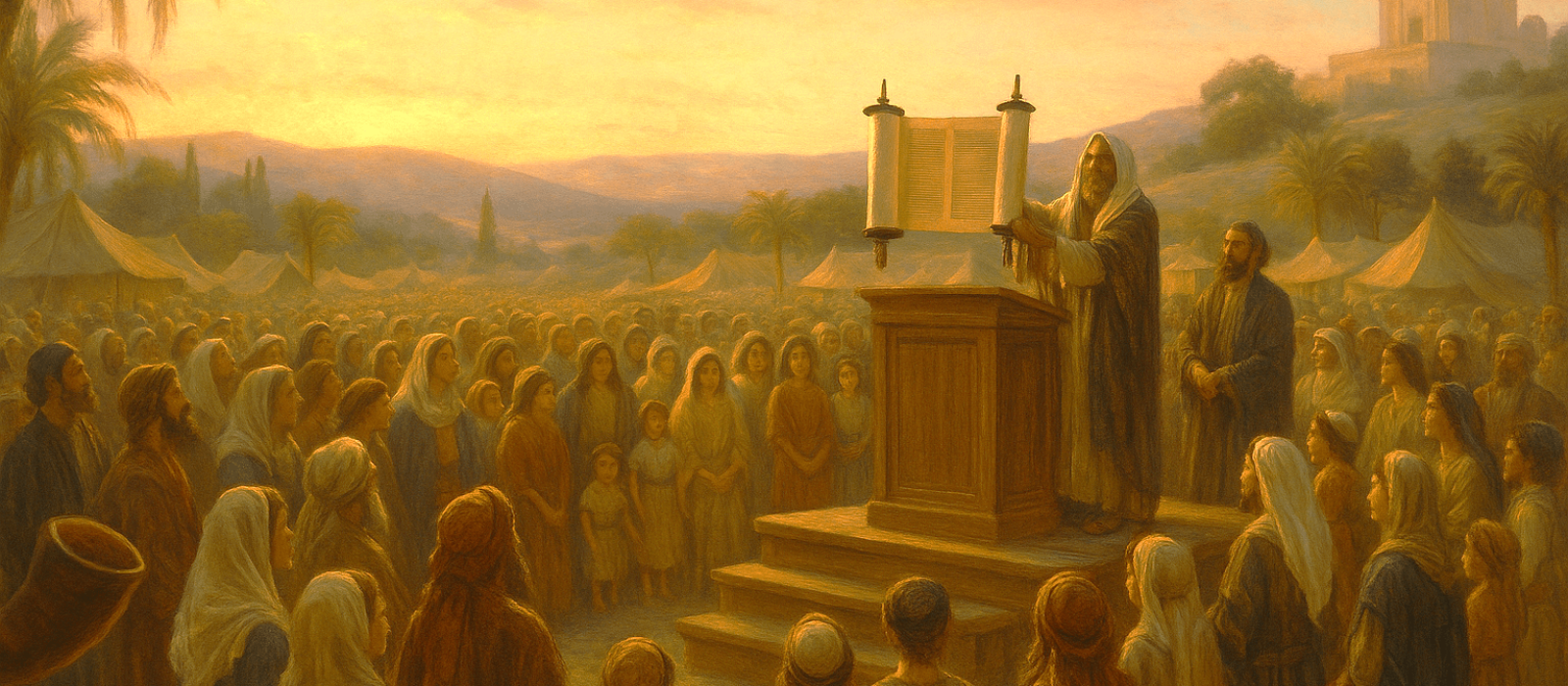
One of the last commands Moshe receives is about Hakhel, the great assembly. Every seven years, in the Shmittah (sabbatical) year, during the Feast of Sukkot, all Israel is to gather in the place the Lord chooses. Men, women, little ones, and even the gerim — the sojourners within the gates — are to stand together and hear the Torah read aloud (Deut. 31:10–13).
Why? “So that they may hear and so that they may learn to fear Adonai your God and carefully observe all the words of this Torah.” The goal of Hakhel is not information but transformation. The fear of the Lord is not something we are born with; it is something we learn, generation after generation, as we stand under His word together.
Moshe even mentions the children who have not yet been born — little ones who are still only an idea in the hearts of their parents. They, too, must be taught to fear the Lord. Hakhel is God’s answer to a problem He knows is coming: what happens when Moses, the walking reminder of Sinai, is gone? How will future generations remember, tremble, and love?
The answer is simple and profound: Gather. Read My word. Sense My presence for yourselves. Moshe will no longer stand in front of them, but the living word of God will. The fear of the Lord must shift from being attached to a human leader to being rooted in the voice of God Himself.
So what does it actually mean to “fear the Lord”?
Many of us have heard that phrase softened until it sounds like nothing more than “respect.” Others have heard it twisted into a picture of an angry deity waiting to crush us for the smallest misstep. Neither picture is complete.
The fear of the Lord includes courage — courage to obey when obedience is costly. It includes honor — giving His word kavod, weightiness, treating His commands as heavy and important in our lives. It includes humility — bowing low under His wisdom instead of standing tall in our own.
It also includes a healthy awareness that disobedience has consequences. Scripture does not hide this. Think of Uzzah reaching out to steady the ark (2 Sam. 6:1–11), or of Moshe himself striking the rock in anger instead of speaking to it as God commanded. God’s love is not an “unending tolerance” of sin. To tolerate what God hates is not love; it is a lack of the fear of the Lord.
But the fear of the Lord is not a slavish terror. It is not living as though God is constantly ready to strike us dead if we step out of line. If we walk in that kind of fear, we turn the faith into a mere works religion. Instead, we obey because we love Him and because we have come to trust that His ways are for our good, even when they cut across our desires.
Think of common fears: the dark room when you were a child; the moment you sit down for a test you did not study for; riding a bicycle in traffic without a rear-view mirror; the helplessness of not being in control. These fears are rooted in the unknown, in feeling exposed and vulnerable, and in the illusion that we should be in control of everything.
In Hebrew word pictures, there is a powerful midrash: you will fear the hand you see the most. If your eyes are fixed on human hands — the hand of a boss, a government, a critic, a circumstance — you will be hooked and controlled by what you see. If your eyes are fixed on the hand of God, you will stand firm even in the storm.
Peter learned this on the water (Matt. 14:22–33). As long as his gaze was on Yeshua, he walked above the waves. When he turned his eyes to the wind and the sea, he began to sink. We are the same. If we stare at the enemy’s hand, or at the chaos of culture, we will live in phobia — unhealthy fear — feeling helpless and hopeless. If we look at God’s hand, we remember that He is sovereign, and we can walk forward in reverent confidence.
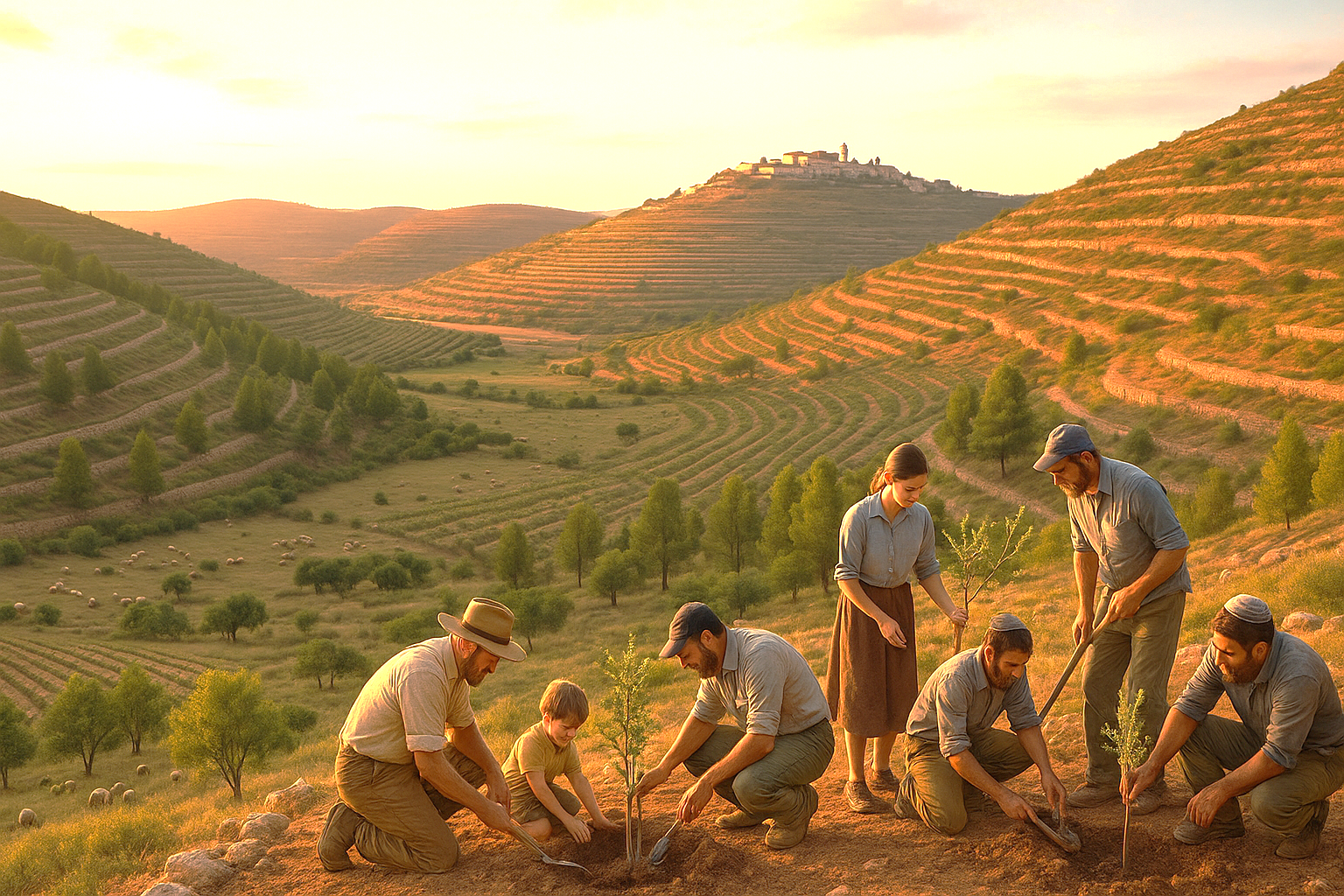
That is part of why Hakhel is commanded during the Shmittah year, when the land rests (Lev. 25). Israel is not planting or harvesting as usual. They are reminded in a very practical way that they are not in control of the rain, the sun, or the harvest. As the fields lie still, God is saying, “Look at My hand. Depend on Me. I am your Provider.” The fear of the Lord and radical trust go hand in hand.
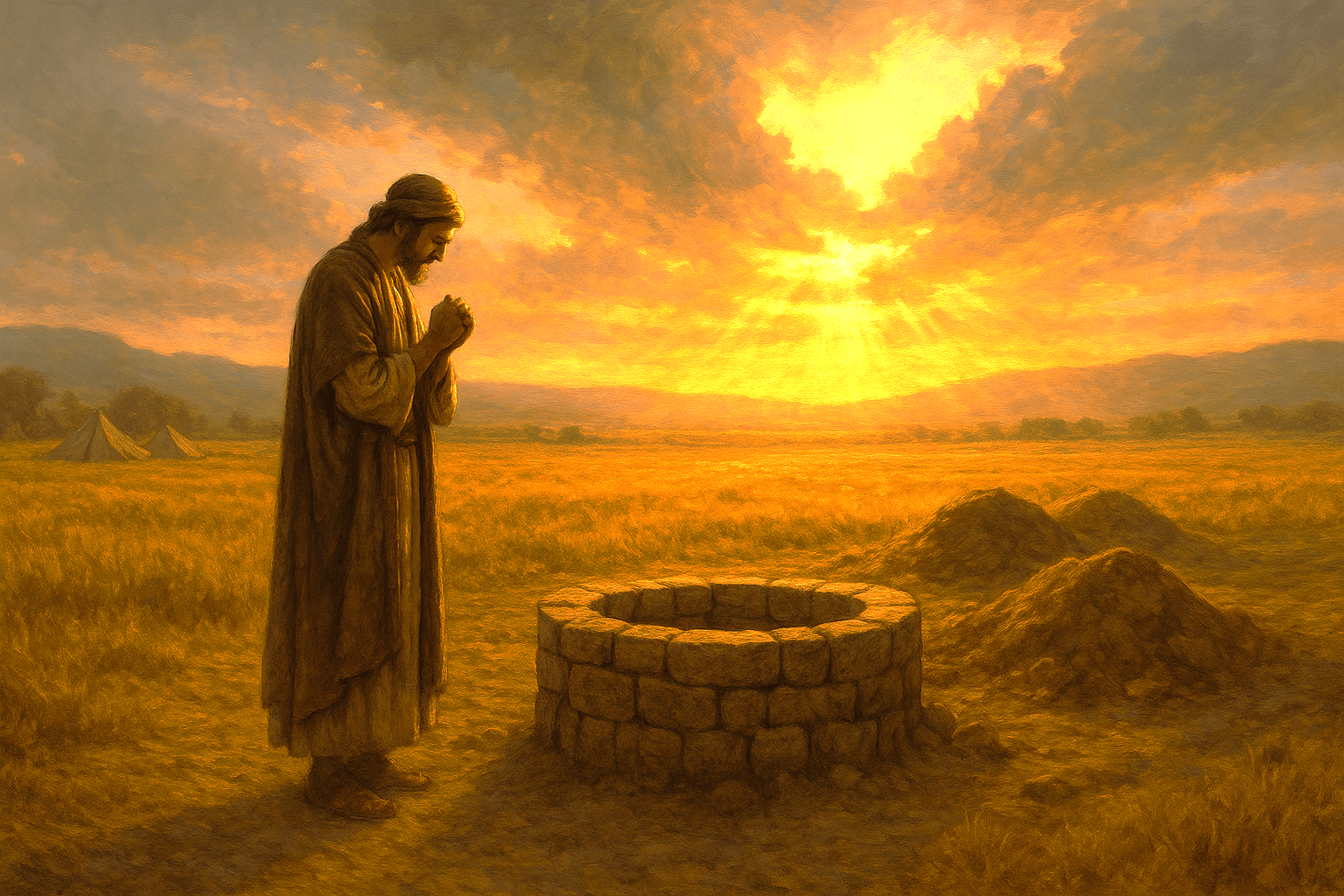
All of this becomes even sharper when we listen to Psalm 90, “A prayer of Moses, the man of God.” Here we overhear Moshe processing God’s “no.” He has begged to enter the land, and God has told him, “Lo — no more of this matter. You will not cross over.”
Can you feel the ache behind his words? “We are consumed by Your anger and terrified by Your indignation. You have set our iniquities before You, our secret sins in the light of Your presence… Teach us to number our days, that we may gain a heart of wisdom” (Ps. 90:7–8, 12).
Moshe has spent decades leading a difficult people through the wilderness. He has poured out his life to bring them to the border of the land, and he will die on the mountain, seeing the promise but not tasting it. Many of us know the pain of God’s “no.” A prayer we have prayed for years, a dream we have carried, a longing we believed was holy — and the answer is not “later,” but simply, “No.”
How we respond there reveals whether we truly fear the Lord. Do we take offense at God? Do we secretly judge His decisions? Or do we bow and say, “You are God. You see the whole story. Your ‘no’ is mercy, even when I do not understand it.” Sometimes we even need to bring our offended heart to Him and say, “Abba, I am upset. Help me to release this. I choose to trust You again.”
There is another piece Moshe emphasizes as Israel prepares to enter the land: forgiveness. In Matthew 18, Peter asks Yeshua, “How many times must I forgive my brother? Seven?” Yeshua answers, “Not seven, but seventy times seven” (Matt. 18:21–35).
In Hebrew thinking, that number is not random. Seventy times seven is 490. The word “Bethlehem” — Beit-Lechem, the “House of Bread” — adds up to 490 in its Hebrew letters. The word tamim, “complete” or “perfect,” also has the value 490. Bread, forgiveness, and being made complete are mysteriously linked.
Yeshua, born in Bethlehem, is the Bread of Life who was broken for us. He is our forgiveness. When we pray, “Give us this day our daily bread,” we are not asking only for physical food. We are asking for the daily grace to forgive — to live out, moment by moment, what He has already done for us at the cross.
Unforgiveness is the sin that so easily entangles us. It creeps in as bitterness, rage, and simmering anger. We see it in Moshe striking the rock. We see it in ourselves when someone “pushes our buttons” for the tenth time before lunch. We may never pick up a physical staff, but we strike with our words, our sarcasm, our withdrawal.
A tiny seed of unforgiveness can raise a wall between us and the felt presence of God. His love has not left us, but our hearts harden and our ears grow dull. That is why Scripture warns us, “Do not let the sun go down on your anger.” Deal with it quickly. Return — teshuvah.
Teshuvah literally means “return,” shuv. In one beautiful picture, the ancient letters for shuv suggest teeth devouring a house. The idea is that when you truly repent, you “devour the house” of sin so there is nothing to go back to — you burn the bridge. You bring the bitterness into the light, confess it with your mouth, and let the blood of Yeshua cover it so thoroughly that when the enemy tries to replay it, you can say, “That is under the blood. That house is gone.”
Forgiveness is not a one-time event for most of us; it is a path we walk, sometimes many times a day. Especially when the wound is deep, we may “fall off the wagon” often. But in the fear of the Lord, we choose — again and again — to align our hearts with His mercy, to bless instead of curse, to release instead of rehearse.
In our days, we see public examples of this that stun the world — a believer’s widow publicly forgiving the man who murdered her husband, within days of the tragedy. People ask, “How can she say that so soon?” The answer is not that she feels no pain, but that she fears God more than she fears her own grief. She trusts that His mercy and justice are wiser than her desire for revenge, and her obedience becomes a testimony to the nations.
All of this comes into sharp focus during the Days of Awe — the ten days between Yom Teruah (Rosh Hashanah) and Yom Kippur. In Jewish tradition, these are days of self-examination, repentance, and seeking reconciliation. People contemplate whether their names will be written in the Book of Life for another year.
For those who know Yeshua, our names are already written in the Lamb’s Book of Life, not because we earned it, but because of His blood (Lev. 17:11; Rev. 13:8). Yet the call of the Days of Awe still speaks to us: examine your heart; return where you have wandered; make things right with God and with people; lay down idols — including the idol of your own “ministry” or the work of your hands.
We must not worship the gifts God has given us, or the roles we play, as though we are irreplaceable. Even Moses was replaceable. Joshua would lead the people in. Your job, your calling, your talents — they are precious, but they are not God. The fear of the Lord sets everything back in its proper place.
So where do we go from here?
We begin where Moses ended: “Teach us to number our days, that we may gain a heart of wisdom” (Ps. 90:12). Ask the Lord to show you whose hand you are seeing the most. Are your eyes fixed on human strength, on circumstances, on your own plans? Or are your eyes fixed on His hand, His word, His character?
We ask Him to grow in us a healthy, relational fear — yirat Adonai — that leads to courage, obedience, humility, and deep joy. We ask for the grace to walk in daily forgiveness: toward others, toward ourselves, and even in those places where we need to lay down our offense at God’s “no.”
And we practice His presence. Sometimes that looks like literally dropping to our knees in the middle of a situation we cannot control and saying, “Lord, I need You right now. I exchange my weakness for Your strength. I choose to fear You more than I fear this storm.”
As we do, Hakhel happens in our hearts. We gather our scattered thoughts, our past wounds, our present fears, and we assemble them before the King. We listen again to His Torah, to the words of Yeshua, to the whisper of the Ruach HaKodesh. And generation by generation, in our families and communities, we learn what it means to truly fear the Lord — and to live in the freedom and forgiveness that fear brings.