

Parashah Bechukotai Comments
Behar and Bechukotai are the last Torah portions (parashiot) in the Book of Leviticus (Vayikra in Hebrew). In leap years, they are read separately; this teaching treats Bechukotai on its own. Behar ends with a clear charge:
“Keep my Shabbats, and revere my sanctuary; I am Adonai.”
Bechukotai also speaks of the Shabbats, but much of its vision warns Israel about what follows when God’s appointed rests are neglected.
The Many Sabbaths in Torah
The first Sabbath appears in Genesis 2:2–3 when God rests from creation. He later roots our weekly rest in that pattern:
“For in six days, Adonai made heaven and earth, the sea and everything in them; but on the seventh day He rested. This is why Adonai blessed the day, Shabbat, and separated it for Himself.”
Shabbat is for restoration—of people and even animals:
“For six days you are to work. But on the seventh day, you are to rest, so that your ox and donkey can rest, and your slave-girl’s son and the foreigner be renewed.”
Scripture speaks emphatically about guarding Shabbat as a perpetual covenant (Exod. 31:15–16), refraining from plowing and harvesting (Exod. 34:21), even kindling no fire (Exod. 35:1–3). Leviticus 23 outlines sacred rests in the seventh month—Rosh HaShanah, Yom Kippur, and the festival rests of Sukkot and Sh’mini Atzeret—and calls us to make Shabbat a holy day “even in your homes.”
The Sh’mittah: Sabbath for the Land
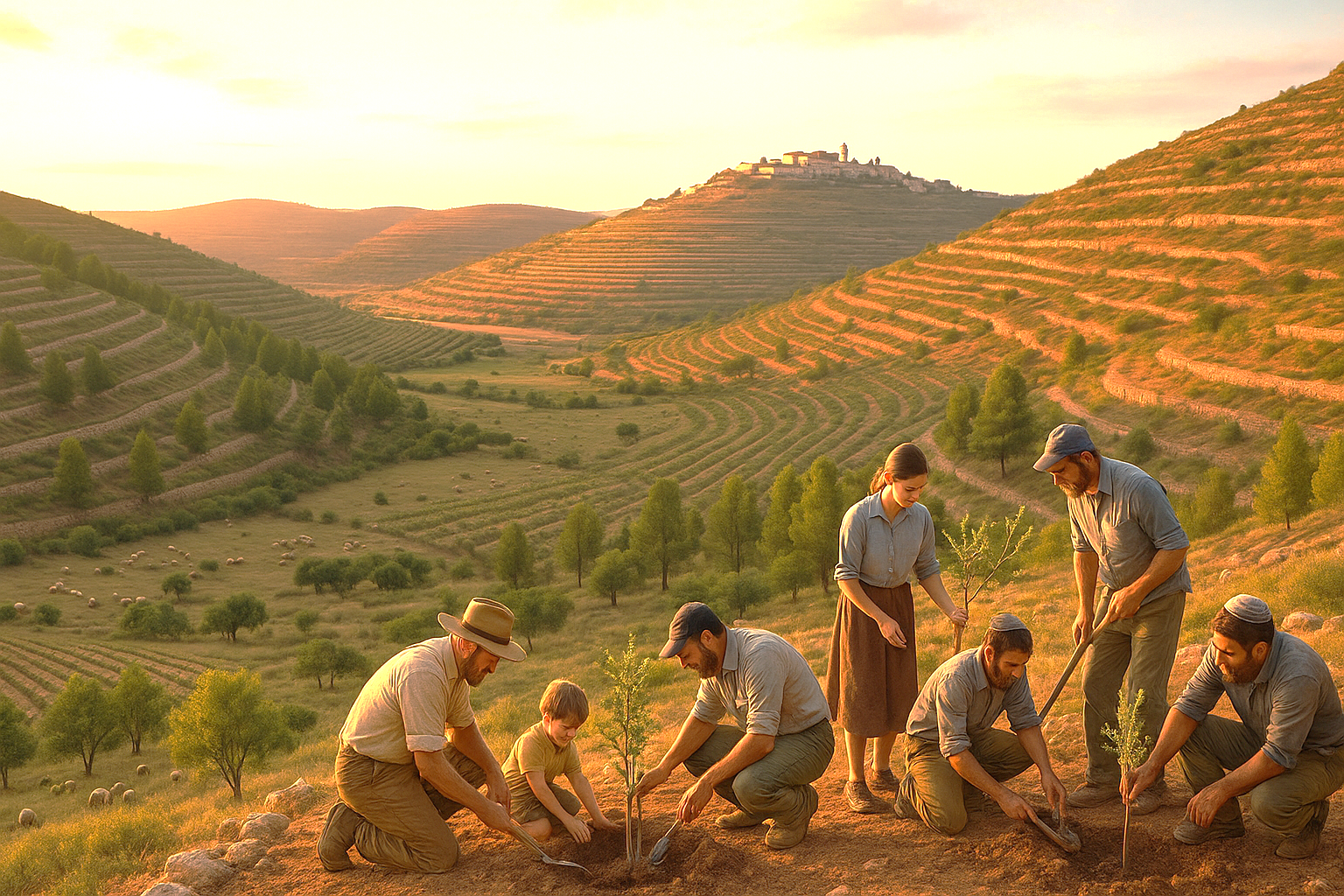
There is also a Sabbath of years: the seventh year, Sh’mittah, when the land rests, the poor glean, and fields lie fallow for renewal (Exod. 23:10–11; Lev. 25:4–5). Neglecting this command has consequences:
“I will disperse you among the nations… Then, at last, the land will be paid its Shabbats… it will have rest, the rest it did not have during your Shabbats when you lived there.”
Scripture intertwines Israel’s rest in the land with obedience (Deut. 12:10; Josh. 1:13; 21:41–43). Without honoring God’s ways, there is “no rest for the sole of your foot” (Deut. 28:65).
Rest Refused, Rest Offered
Isaiah laments that the people would not receive God’s offered rest (Isa. 28:12, 16). Isaiah 30:15 declares that “returning and resting” brings salvation, while calm trust gives strength. The point is not mere rulekeeping but receiving God’s appointed rhythms.
Reflections on Signs and Seasons
Some teachers (e.g., Rabbi Jonathan Cahn in The Harbinger) see national warnings in seven-year cycles, calling for corporate repentance. Whether or not one agrees with every historical application, the Torah’s principle remains: ignoring God’s rest erodes people and land; honoring His rest restores both.
Sharpening the Axe
Stephen Covey’s story about “sharpening the axe” illustrates Shabbat’s wisdom. Rest, recover, and renew—and you accomplish more with less striving. The land likewise bears more fruit long-term when given its God-ordained rests.
Yeshua and the Heart of Shabbat
Yeshua taught that “the Sabbath was made for man” (Mark 2:27). In Revelation 2–3, congregations are warned not to substitute works for worship. Shabbat is God’s weekly invitation to re-center on Him. When we delight in His ways, we are less likely to seek political deliverers and more likely to recognize God’s Messiah.
Unbelief and Wilderness
When the spies returned from Canaan, the people believed fear rather than promise; that generation forfeited God’s rest (Ps. 95:10–11; Heb. 3:10–12). Jeremiah urges us to the “ancient paths… and you will find rest for your souls” (Jer. 6:16), while promising ultimate restoration (Jer. 30:10).
Grace in the Tenach and the Call to Obedience
Replacement theology misreads Scripture. Grace saturates the Tenach just as it does the New Covenant writings. The “burden” falls not on Torah itself but on hardened, unrepentant hearts. God patiently draws us back, teaching us to trust and obey (Ps. 37:3–4).
Haftorah Echoes
“The heart is more deceitful than anything else… I, Adonai, search the heart… Heal me, Adonai, and I will be healed; save me, and I will be saved, for You are my praise.”
God Himself promises to shepherd His scattered flock and give them rest (Ezek. 34:11–16). If the first coming met resistance, the Father is not hurried; His purposes stand.
Ecclesiastes and Perspective
“His whole life is one of pain, and his work is full of stress; even at night his mind gets no rest… there is nothing better… than to eat, drink and enjoy the good… this is from God’s hand.”
A simple test of our labors: when our hand leaves the water, what hole remains? In the end, relationships with God and people endure. As Billy Graham said when asked what he would do differently: “Pray more.”
“Come to Me… and I Will Give You Rest”
“Come to Me, all of you who are struggling and burdened, and I will give you rest… you will find rest for your souls.”
Some will demur: “I’m Gentile; those laws are for Israel.” Scripture invites the “fellow sojourner” to share in God’s ways. Wherever you land, sanctify a day unto the Lord. Begin with what you can—“little by little.” God knows the heart.
Jubilee: The Yovel
After seven cycles of Sh’mittah, the fiftieth year—Yovel (Jubilee)—proclaims liberty. It reminds us that land, wealth, and people ultimately belong to God. Our neglect of these patterns has consequences; our return to them bears witness that He is Lord over time and property.
“Proclaim liberty throughout the land to all its inhabitants… it shall be a Jubilee for you.”
Economists may call Jubilee “utopian,” and some argue it cannot be practiced until Israel fully occupies its promised borders. But the key question remains: what does God say—and how might we practice the spirit of Jubilee now (mercy, cancellation, restoration) as a sign of the Kingdom?
Sanctifying Time
Whether your community worships on Saturday or Sunday, guard a full day for revival and renewal, not just an hour of service. In many places it is harder now than decades past, but the call stands. Sanctify a day. Then consider the fuller biblical rhythm from Friday evening to Saturday evening.
Walking Together
We are at different places in our walk, yet God leads us along the same ancient path. As we practice His Sabbaths—weekly rest, the Sh’mittah, and the hope of Jubilee—may our communities be renewed, our land refreshed, and our hearts readied for Yeshua’s return.
“So there remains a Shabbat-keeping for God’s people… let us do our best to enter that rest, so that no one will fall short because of the same kind of disobedience.”