
Shavuot Teaching (2014)
(Based on the writings of James Straight, Dr. David Stern, and Dr. Arnold Fruchtenbaum.)
The Appointed Times are the occasions at which God has instructed His children to meet Him. These Feasts are recorded in Leviticus 23. Each Feast is a picture of salvation—Yeshua HaMashiach—whose name means “salvation” and who represents God’s deliverance for us all. In Hebrew, the term for these occasions is moed (plural: moadim)—“appointed time, festival, season.”
The first appointed time is the weekly Sabbath, a gift to believers and a foretaste of the Olam Haba (“the world to come”). The annual spring moadim—Passover, the Feast of Unleavened Bread, and the Festival of Firstfruits—culminate in Shavuot (“Weeks”). These portray Yeshua’s first coming. The fall moadim—Feast of Trumpets (Rosh HaShanah), Day of Atonement (Yom Kippur), and Feast of Tabernacles (Sukkot)—foreshadow His return.
Between the day after the Passover Sabbath (Yom HaBikkurim, the early barley firstfruits) and Shavuot (linked to the early wheat harvest and also called Bikkurim), we “Count the Omer,” connecting the Exodus from Egypt to the giving of Torah at Sinai.
Leviticus 23:15–16
“From the day after the Sabbath, the day you brought the sheaf [omer] of the wave offering, count off seven full weeks. Count off fifty days up to the day after the seventh Sabbath, and then present an offering of new grain to the Lord.”
Why Count the Omer?
Deuteronomy 16:9–10
“Count off seven weeks from the time you begin to put the sickle to the standing grain. Then celebrate the Feast of Weeks to the Lord your God by giving a freewill offering in proportion to the blessings the Lord your God has given you.”
In ancient Israel an omer of barley was waved in the Temple on the second day of Passover. From that “wave offering,” Israel counted seven weeks to Shavuot. Though the Temple is gone, the season still invites us to refine character and prepare to receive afresh at Shavuot, traditionally associated with the giving of the Torah at Sinai.
Redemption from slavery was incomplete until God gave His guide to holiness—His Word. Counting the days teaches us to value both freedom and formation: the Exodus (Passover) leads to covenant instruction (Shavuot).
Names and Meanings: Shavuot, Bikkurim, Pentecost
Bikkurim (“firstfruits”) highlights gratitude for God’s bounty—early wheat at Shavuot (distinct from the barley firstfruits of Yom HaBikkurim). Shavuot is one of the shelosh regalim—the three pilgrimage festivals when all males appeared before the Lord in Jerusalem.
Deuteronomy 16:16
“Three times a year all your males shall appear before the Lord your God… at the Feast of Unleavened Bread, at the Feast of Weeks, and at the Feast of Tabernacles.”
The Hebrew Bible calls it Shavuot (“Weeks,” seven sevens). Greek-speaking Jews called it Pentecost (“Fiftieth”), marking the fifty days from the barley firstfruits to the wheat firstfruits. Gratitude for present provision grows faith for the greater harvest to come (Sukkot), echoing Philippians 4:19.
Temple Offerings and the Two Leavened Loaves
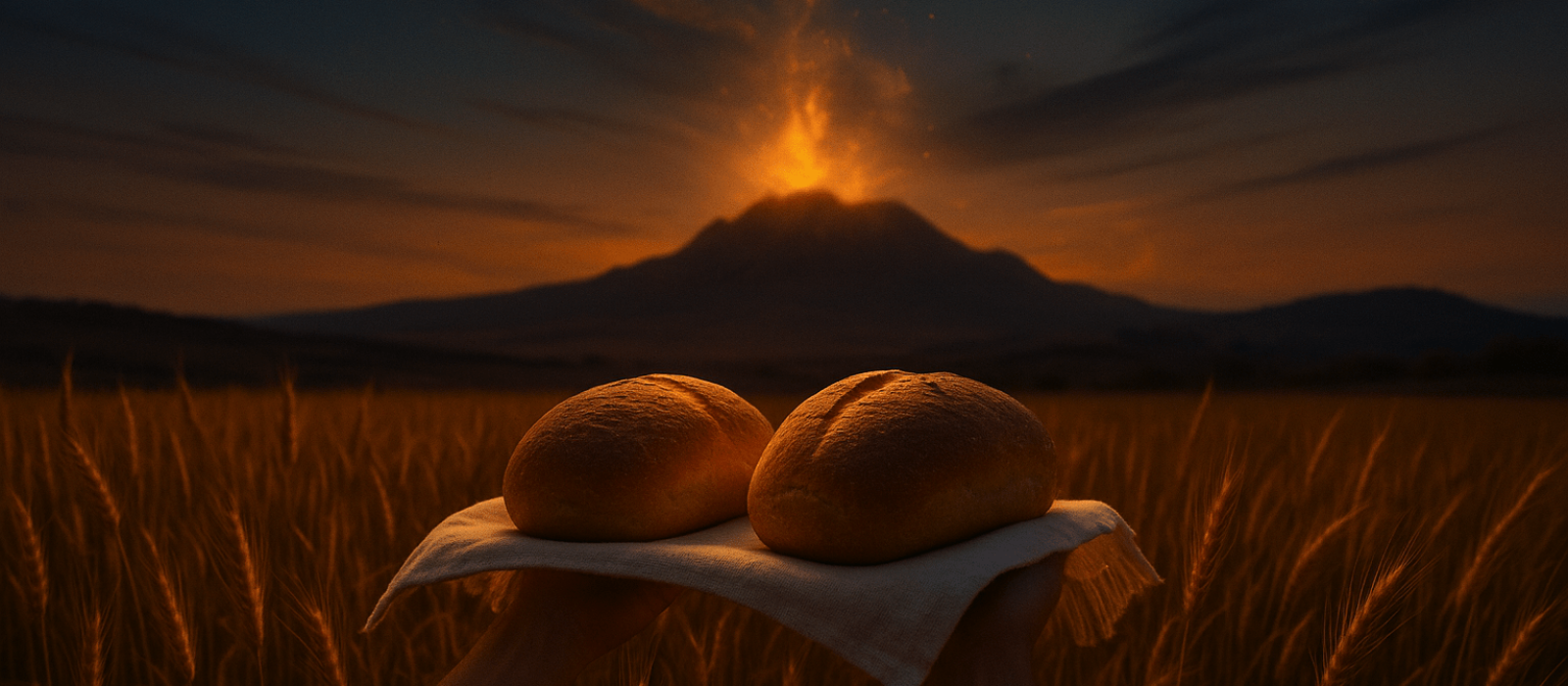
Biblically, Shavuot centered on grain and animal offerings. Uniquely, two loaves of leavened bread were waved before Adonai—striking because leaven often pictures sin. The message: we who are “puffed up” need atonement. The blood sacrifices pointed toward the once-for-all atonement in Messiah.
Leviticus 17:11
“For the life of the flesh is in the blood… it is the blood that makes atonement for the soul.”
With the destruction of the Temple in 70 C.E., sacrificial worship ceased; Judaism emphasized Shavuot as Z’man Matan Torateinu (“the time of the giving of our Torah”), traditionally the third month after Passover (Exodus 19:1). In Messianic understanding, Yeshua’s perfect sacrifice secures eternal redemption, and Shavuot also celebrates the outpouring of the Ruach HaKodesh.
Sinai Patterns and Messianic Foreshadowing
Scripture often signals Messianic themes with “ascending/descending,” “life from death,” and the number three. In Exodus 19–20, Moses goes up and down Sinai, and God’s words are given in the third month. The Torah—God’s covenant “ketubah”—binds Him to His people. In Messianic terms, it also foreshadows our union with Messiah Yeshua (cf. John 1:1, 14).
Customs and Readings
Synagogues adorn spaces with greenery and firstfruits; Torah readings include Exodus 19–20 and Ezekiel 1. The book of Ruth—set at harvest—is read. Many observe Tikun Leil Shavuot, staying up to study Torah. Home tables are set with finest linens; Yom Tov candles are lit; blessings are recited; dairy dishes (blintzes, cheesecake) recall “a land flowing with milk and honey.”
Pentecost in the Brit Chadashah
Rav Sha’ul scheduled travels around Pentecost (1 Corinthians 16:8). Most famously, Acts 2 describes wind and fire filling the house, and disciples speaking in other languages so that Jewish pilgrims from across the diaspora heard the good news in their native tongues—an echo of Sinai’s voice perceived in many languages, according to rabbinic tradition.
Acts 2:1–8
“When the Day of Pentecost had fully come… a sound from heaven, as of a rushing mighty wind… tongues as of fire… everyone heard them speak in his own language.”
The two leavened loaves can also picture reconciliation—Jew and Gentile, traditional Judaism and followers of Yeshua—lifted together before God, united in Messiah.
Harvest, Firstfruits, and Revival
Matthew 13:24–30
Parable of wheat and weeds—both grow until the harvest; then the wheat is gathered into the barn.
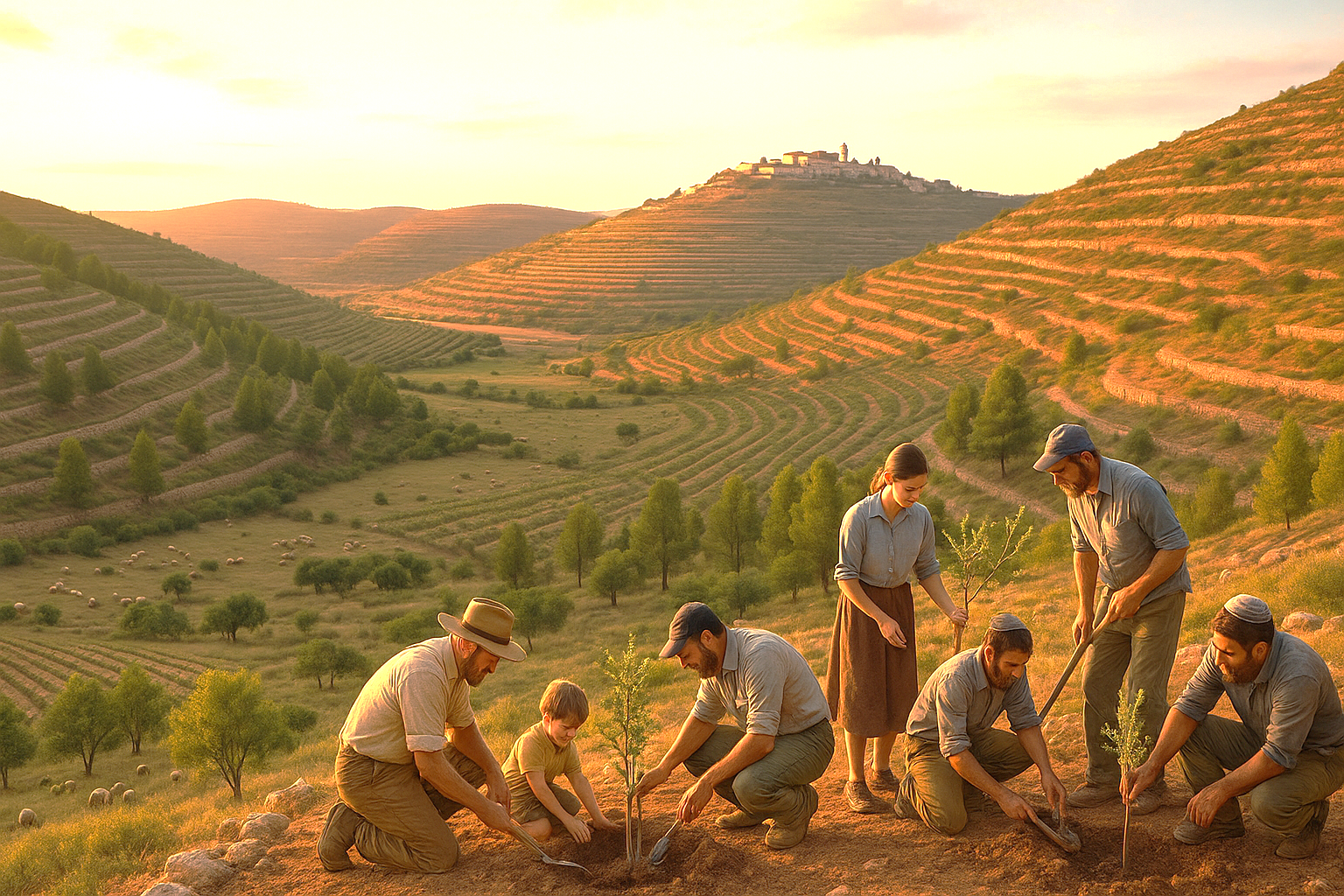
Shavuot’s “firstfruits” anticipate a greater harvest. Three thousand Jewish believers were added on that Pentecost (Acts 2), the firstfruits of a wider ingathering. James affirms: “that we should be a kind of firstfruits of all he created” (James 1:18).
Romans 11:26–27
“…and so all Israel will be saved… ‘Out of Zion will come the Redeemer… when I take away their sins.’”
This hope resonates with Isaiah 59 and 27 and with Ezekiel’s promise: “I will put my Spirit in you and cause you to walk in my statutes” (Ezekiel 36:27). The harvest theme points toward latter-day revival and reconciliation in Israel and among the nations through Israel’s Messiah.
A Practical Guide for Believers
As Shavuot begins (after completing Sefirat HaOmer), set your table with best linens; decorate with greenery and flowers; light holiday candles and recite blessings; enjoy a festive dairy-forward meal; and gather for worship and study—Erev Shavuot and the morning service, or even a late-night Tikun Leil Shavuot reading from Torah and reflecting on the Ruach HaKodesh.
Erev Shavuot Blessing
Barukh ata Adonai Eloheinu melekh ha’olam asher kidishanu b’mitzvotav l’hiyot or la’goyim u’natan lanu Yeshua m’shicheinu, ha-or la’olam.
“Blessed are You, Lord our God, King of the Universe, who has sanctified us by Your commandments to be a light to the nations and has given us Yeshua, our Messiah, the Light of the world.”
Shehecheyanu (First Night)
Baruch atah Adonai, Eloheinu, Melech ha’Olam, shehecheyanu, v’kiy’manu, v’higianu lazman hazeh.
“Blessed are You, Lord our God, King of the Universe, who has kept us alive, sustained us, and brought us to this season.”
Suggested Readings
First Day: Exodus 19–20; Numbers 28:26–31; Ezekiel 1; 3:12; Acts 1–2 (especially 2:1–13)
Second Day: Deuteronomy 15:19–16:17; Numbers 28:26–31; Habakkuk 3:1–19; Acts 1–2 (especially 2:1–13). The book of Ruth (chapters 1–4) may also be read.
May the Ruach be poured out upon the house of David, and may many look upon the One who was pierced (Zechariah 12:10), finding renewal, unity, and harvest in Messiah Yeshua.