
Parashah Sh’mini (2021): “On the Eighth Day”
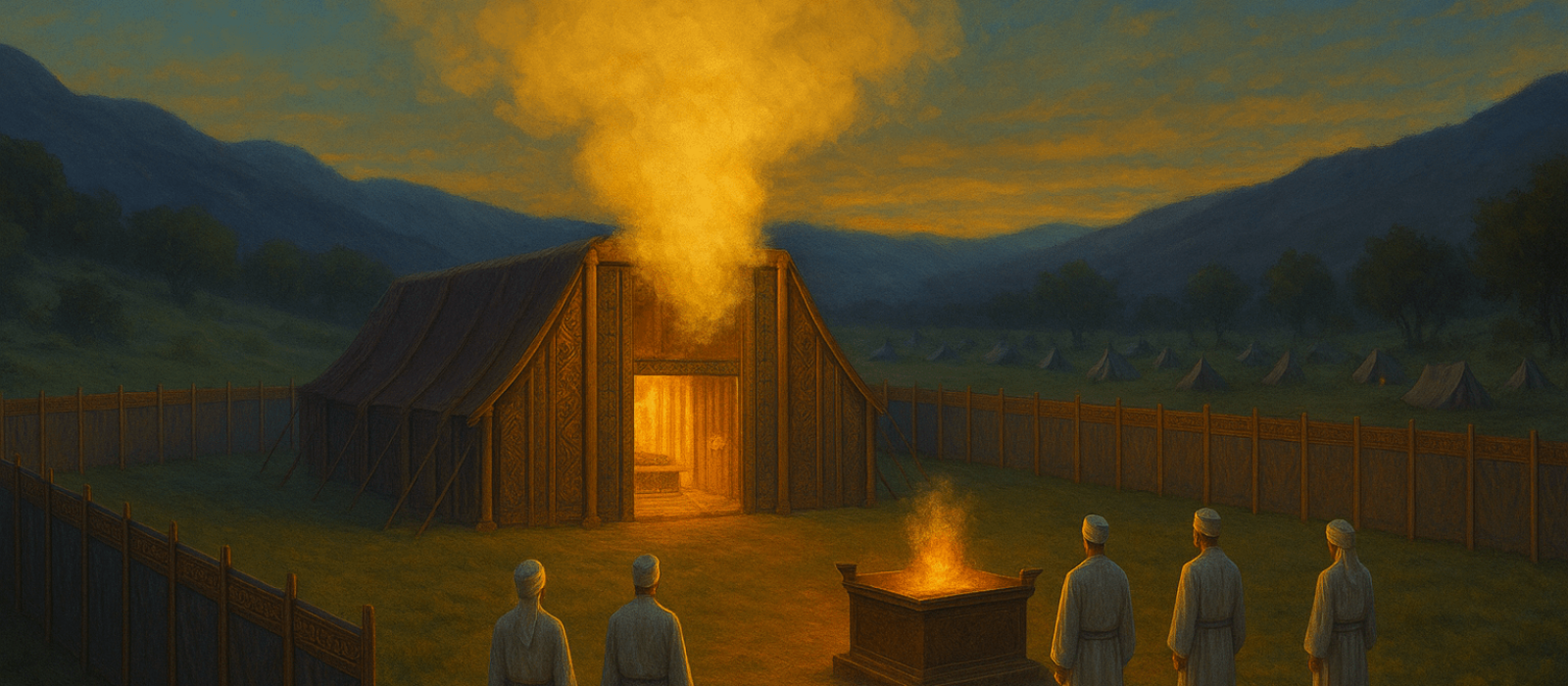
At the end of Parashah Tzav, Moses instructs Aaron and his sons to remain at the Mishkan for seven days. According to Rashi, Moses conducted the inauguration service each day—assembling the Tabernacle, performing the service, and then disassembling it. On the eighth day, all the priests were installed and the Mishkan was erected permanently. Hence the name “Sh’mini” (“eighth”).
On this day the Mishkan was sanctified—set apart for God’s service. The rest of the portion sets God’s standards of holiness and concludes with chapter 11’s instructions on clean and unclean foods.
“For I am Adonai your God; therefore, consecrate yourselves and be holy, for I am holy.”
“For I am Adonai, who brought you up out of the land of Egypt to be your God. Therefore you are to be holy, because I am holy.”
Repairing the World—and Clinging to God
Jewish tradition describes a secular mission to repair the world (tikkun olam) and a spiritual calling to attach ourselves to God. As Deuteronomy teaches:
“You are to fear Adonai your God, serve Him, cling to Him, and swear by His Name.”
And Paul reminds Gentile believers that they are “grafted in” (Romans 11:17), joining Israel’s olive tree. If we are to cling to God, purity matters. The purer we are, the closer we draw near; the closer we draw near, the greater our joy in His Presence, as Rabbi Moshe Chaim Luzzatto emphasizes.
Kosher Living as a Path of Holiness
One practical way to seek greater closeness is to heed Vayikra 11’s guidance. Why are some foods unclean? We may suggest reasons, but ultimately God’s wisdom surpasses ours. For me, He is saying: “I want intimacy with you—prepare yourself for it.” Choosing biblically kosher eating, honoring Shabbat, and setting our bodies apart are steps toward that intimacy.
A Parable of Two Patients
A doctor tells one terminal patient, “Eat and drink what you want,” but warns a second patient strictly: “Follow these instructions and avoid the rest.” Why the difference? One cannot be helped; the other can be saved if he obeys. Likewise, God’s instructions are life-giving to those who will receive them.
Holiness vs. Pornography
This is not merely about diet or tattoos; a larger spiritual battle rages in our generation—pornography. I’m not speaking about appreciating beauty (our tradition even has blessings for beauty), but the slide from appreciation into lust. Yeshua said:
“You have heard, ‘You shall not commit adultery.’ But I tell you that everyone who looks at a woman with lust has already committed adultery with her in his heart…”
Statistics show the scope of the problem, including impacts on marriages and children. See an overview at Christianity.com’s summary on pornography.
Pornography profanes worship, dehumanizes God’s image-bearers, distorts sex from a covenantal self-giving into a self-centered taking, and dulls healthy marital intimacy. It can become a gateway to escalating perversions. Even if Scripture doesn’t name “pornography” explicitly, its testimony is clear.
“Do not desire her beauty in your heart… Can a man carry fire next to his chest and his clothes not be burned?”
“Will you defile yourselves after the manner of your fathers and go whoring after their detestable things?”
“Put to death… immorality, impurity, sinful passion, evil desire, and greed—which is idolatry.”
Steps Toward Freedom
If this is your battle, there is hope. Here are Scriptural steps:
Also take wise, practical steps: install filters and blockers, limit TV/video exposure, and seek prayer and accountability with a trusted believer.
Do Not Weaken the “Right Hand” of God
In the Tenach, God is sometimes described with human imagery—His “mighty hand,” “outstretched arm,” or “face.” While God is spirit, these images convey His attributes. When Moses struck the rock rather than speaking to it (Numbers 20:8–11), he diminished the blessing God intended to display. Likewise, when we act contrary to His will, we hinder the blessings He longs to pour out.
Let us not “weaken” the right hand of God by fixating on what soils the spirit. Instead, let Sh’mini’s call to holiness shape our choices—in diet, in body, in eyes, and in heart—so we may cling to Him and delight in His Presence.
Closing Prayer
Ruach ha-Kodesh, shine Your light into hidden places. Guard the vulnerable, free the captive, and lead us to holiness through Yeshua the Messiah. Teach us to sanctify ourselves, that we may be worthy of the relationship You desire with each of us. Amen.