

Parashah Vayechi Comments 2025
(Parts of this teaching are excerpted from First Fruits of Zion — source.)
Jacob’s Unusual Blessing
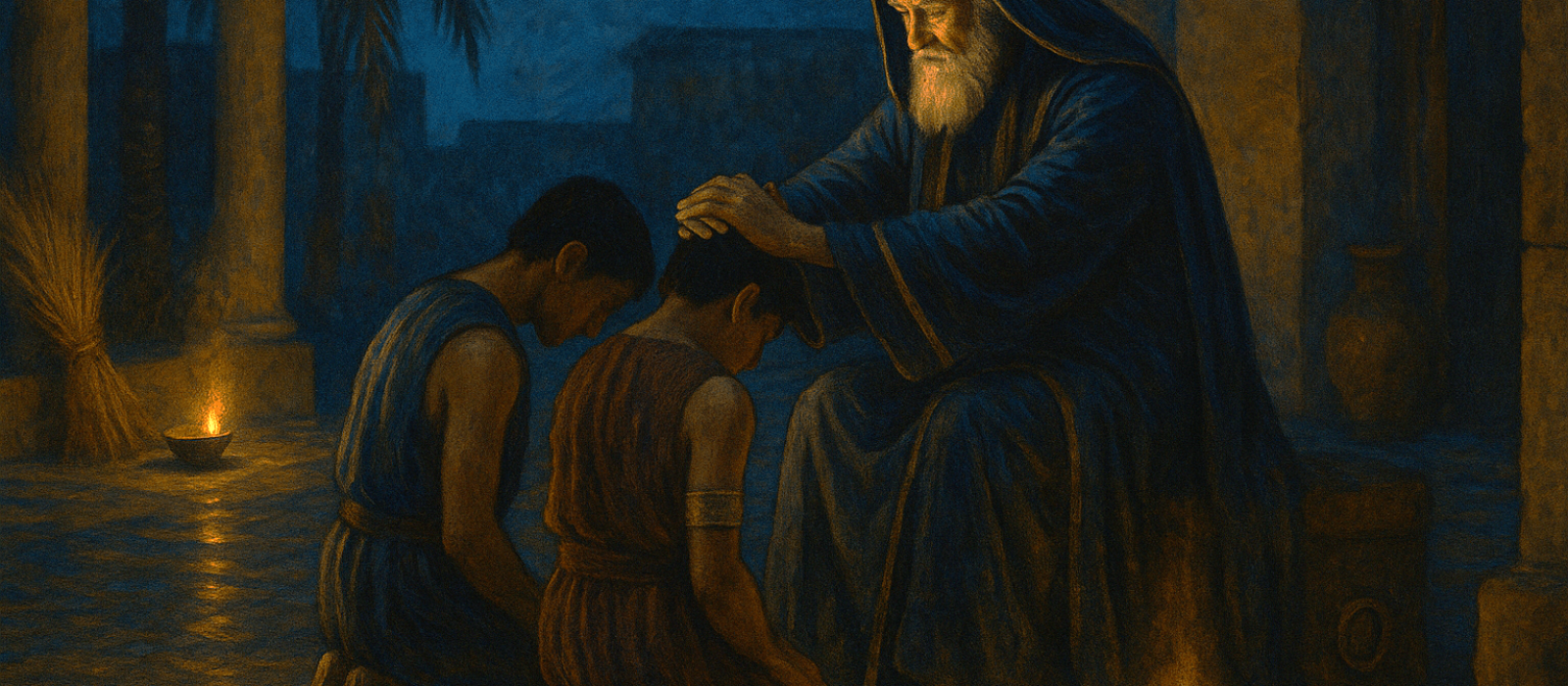
In this week’s portion, Jacob blesses his grandchildren Ephraim and Manasseh:
The angel who has redeemed me from all evil, bless the boys; and in them let my name be carried on, and the name of my fathers Abraham and Isaac; and let them grow into a multitude in the midst of the earth.
Most English translations render the final clause as “let them grow into a multitude.” Yet an older English version—the Geneva Bible (1587)—has: “that they may growe as fish into a multitude in the middes of the earth.” See parallel translations. If “like fish” reflects the Hebrew nuance, it raises a question: why compare Jacob’s blessing to fish—especially “in the land”?
Rabbi Kook and the “Evil Eye”
Rabbi Avraham Yitzchak HaKohen Kook offers a striking insight. He cites the Talmud:
Just as fish in the sea are covered by the waters and the evil eye has no power over them, so the evil eye has no power over the seed of Joseph.
What is the “evil eye”? In plain terms, it’s the corrosive, unseen influence of envy, comparison, and malice—the social pressure that bends souls away from God’s truth. (See a general overview of the concept at Wikipedia.) According to Rabbi Kook, the evil eye operates through hidden currents between people—an ambient field of jealousy and fear that can poison those who need others’ approval to feel secure.
Joseph’s Inner World
Fish are untouched by eyes above the water because they inhabit a different realm. Joseph, likewise, lived from an interior world anchored in covenantal truth. Betrayed by brothers, sold into slavery, tested by temptation, imprisoned, and then elevated to power, he remained steady. Even the flattery and pressure of Egyptian prestige could not dislodge his convictions. He moved vigorously in the outer world while remaining faithful to his inner one—like a “fish in the land.”
When the Crowd Is Wrong
This stands in sharp contrast to the ten spies, whose fearful report infected the nation, nearly leading to the stoning of Joshua and Caleb. That moment of misplaced trust delayed Israel’s entry into the Land by forty years. The evil eye thrives where self-worth depends on the crowd. Robust, God-given identity breaks its spell.
Messianic Application: Yeshua’s Thorny Soil
Yeshua warned how competing desires choke spiritual life:
They are those who hear the word, but the cares of the world and the deceitfulness of riches and the desires for other things enter in and choke the word, and it proves unfruitful.
Vayechi and Rabbi Kook’s teaching call us to become “fish” in this sense—immune to corrosive envy, unhooked from the gaze of others, swimming in the currents of Torah and the Living Torah, Messiah Yeshua. Whether in plenty or want, power or obscurity, our identity must rest in HaShem.
A Prayer for Inner Strength
Father in Heaven, grant us wisdom and courage. Free us from fear—the fear of seeing ourselves as we are and the fear of others’ opinions. You know us fully and love us still. Form in us a stable identity so we can overcome the barriers we create in our humanity.
Blessed is the one who put his confidence in Adonai, who has not turned to the arrogant, nor to those who fall into falsehood.
As disciples of the Master, may we “increase as fish upon the earth.” Amen.
Notes & Sources
• FFOZ article on Rabbi Kook’s teaching: Vayechi — Rav Kook on the Blessing of Fish.
• Geneva Bible wording via parallel page: Genesis 48:16 parallels.
• General background on “evil eye”: Wikipedia: Evil eye.
• Rabbi Kook’s short teaching (English): ravkooktorah.org/VAYEHI59.htm.