
Yeshua in the Feasts: A Messianic Perspective on the Biblical Appointed Times
Leviticus 23 begins with God instructing Moses to proclaim the “holy convocations”—the appointed times when Israel meets with the Holy One. Forty-four verses later, Israel receives a calendar of worship that sanctifies time itself.
You might say, “This doesn’t apply to me; I’m not Israel.” Yet Romans 11 speaks of Gentile believers being grafted in to the cultivated olive tree. The remnant of Israel and believing Gentiles are branches of the same tree, nourished by the same root. With that in view, the mo’adim open a rich, Messianic picture of Yeshua’s ministry.
The Torah’s Purposes
To keep us oriented toward God in obedient trust (blessing follows).
To warn of the curses we invite by rejecting His ways.
To reveal God through Messiah Yeshua, with the Spirit’s conviction and comfort.
On the Emmaus road, Yeshua interpreted “Moses and all the Prophets” concerning Himself.
— Luke 24:27
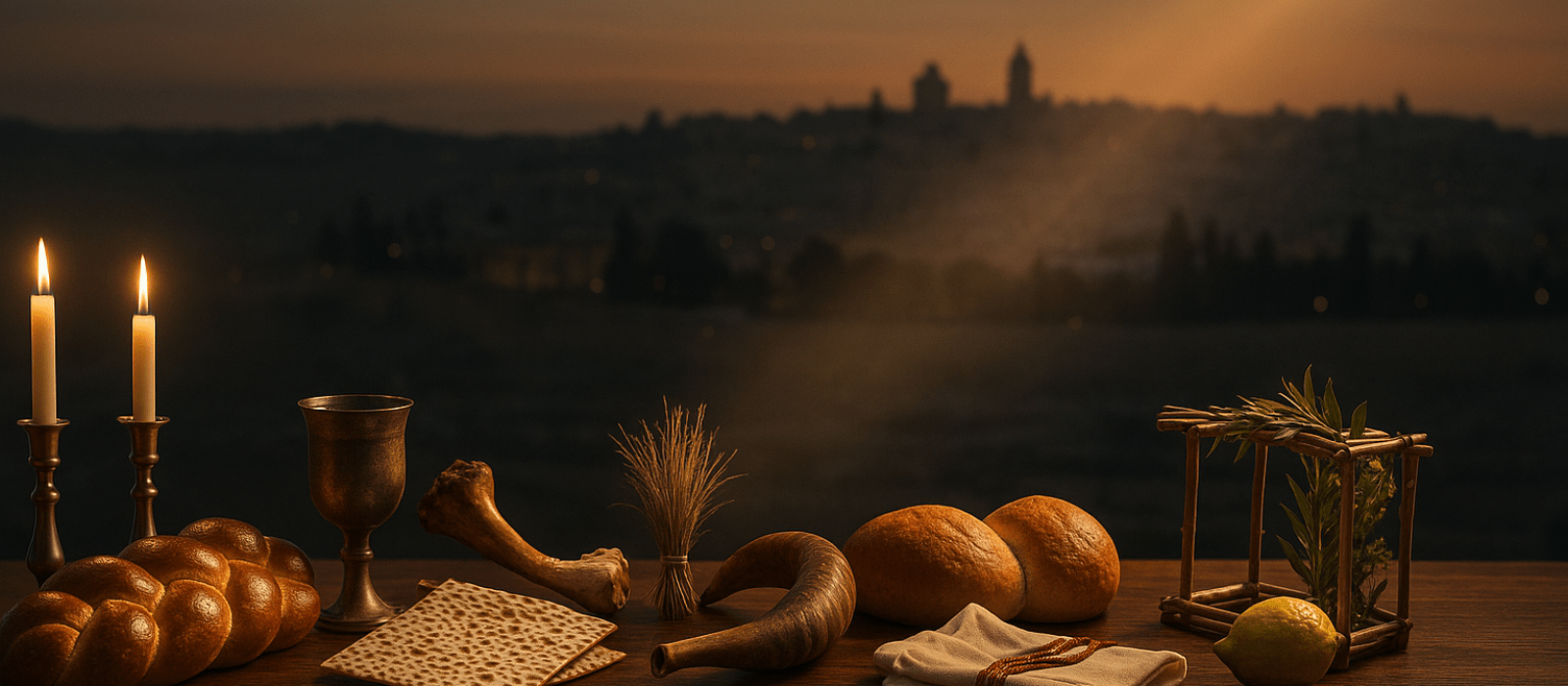
The Eight Appointed Times
Leviticus 23 lists seven annual feasts—and begins with the weekly Sabbath. Shabbat is not only included; it’s foundational. Thus we speak of Eight Appointed Times: seven annual, one weekly.
1) Shabbat (Sabbath) — God’s Weekly Gift of Rest
Shabbat (“to cease”) is God’s sanctification of time and a foretaste of the Messianic Age. It celebrates freedom—Israel’s deliverance from Egypt and our deliverance in Yeshua from sin and death. It renews mind and heart and cultivates peace.
“My Presence will go with you, and I will give you rest.” — Exodus 33:14
“Come to Me… and I will give you rest.” — Matthew 11:28
“Peace I leave with you; My peace I give to you.” — John 14:27
Yeshua is “Lord of the Sabbath” (Mark 2:28; Matthew 12:8). Shabbat’s roots stretch back to Creation.
“…the LORD made heaven and earth in six days… and rested the seventh day.” — Exodus 20:11
2) Passover (Pesach) — Redemption by the Lamb
Pesach is the unmerited gift of salvation: the blood of the lamb shielded Israel from judgment (Exodus 12). Yeshua, the Lamb of God, was crucified at Passover so that all who trust Him receive eternal life. His blood marks our hearts as His dwelling place.
3) Unleavened Bread (Matzot) — The Sinless Bread of Life
For seven days Israel ate bread without leaven, recalling the haste of the Exodus and symbolizing a life without sin’s “yeast.” Matzah’s stripes and piercings evoke Messiah’s suffering.
“They will look on Him whom they pierced.” — Zechariah 12:10; John 19:37
Yeshua is the true “Bread of Life.”
4) First Fruits (Yom HaBikkurim) — Resurrection Hope
First Fruits celebrated the early barley harvest and pledged the greater harvest to come. On this very day, Yeshua rose from the dead, the “first fruits” of resurrection.
— 1 Corinthians 15:20–23
5) Shavuot (Pentecost) — Torah Given, Spirit Poured Out
Shavuot commemorates the giving of the Torah at Sinai and the covenantal “marriage” of God and Israel.
“All the words which the LORD has said we will do.” — Exodus 24:3
Fifty days after First Fruits (Leviticus 23:15–16), in Jerusalem for the pilgrimage feast, the Spirit was poured out and about three thousand believed (Acts 2)—a redemptive mirror of the ~3,000 who fell at the golden calf (Exodus 32:28).
The spring mo’adim align with Yeshua’s first coming; the fall mo’adim foreshadow His return.
6) Feast of Trumpets (Yom Teruah / Rosh HaShanah) — The King’s Arrival
On the first day of the seventh month, Israel sounds the shofar (Leviticus 23:24). Prophetically, this day heralds Messiah’s return and the resurrection.
— 1 Thessalonians 4:16
Jewish tradition also calls this day Rosh HaShanah (“Head of the Year”). When the heavenly shofar sounds, a truly new era begins.
7) Day of Atonement (Yom Kippur) — Our High Priest and Scapegoat
On the tenth day of the seventh month, the High Priest confessed Israel’s sins over the scapegoat, which carried them away (Leviticus 16). Yeshua—our High Priest—became the once-for-all atonement and the sin-bearer who removes our guilt and restores us to God.
8) Feast of Tabernacles (Sukkot) — God With Us
For seven days Israel dwells in sukkot (booths), remembering wilderness dependence and celebrating God’s faithful presence (Leviticus 23:42–43). The Temple blazed with towering menorot, a festival of light pointing to the Light of the World. Many Messianic believers see strong evidence that Yeshua was born during Sukkot—“God with us” (Immanuel).
— Luke 2:8–11
“…and will call Him Immanuel.” — Isaiah 7:14
The Shamash and the Feasts — Lighted by the Servant
The Temple menorah has seven branches; the Chanukiyah used at Chanukah has nine, with the shamash (servant) candle lighting the others. Yeshua, the Servant-King, is exalted and yet stoops to serve—He is the One whose light kindles our understanding of God’s mo’adim.
— John 13:5, 14
Closing Blessing
May the Father, by His Spirit, deepen your love for His appointed times and reveal more of His Son, Yeshua the Messiah. May humility, holy joy, and restful peace mark your walk as you learn His rhythms. Amen.