
Parashah Sh’mini Comments 2024
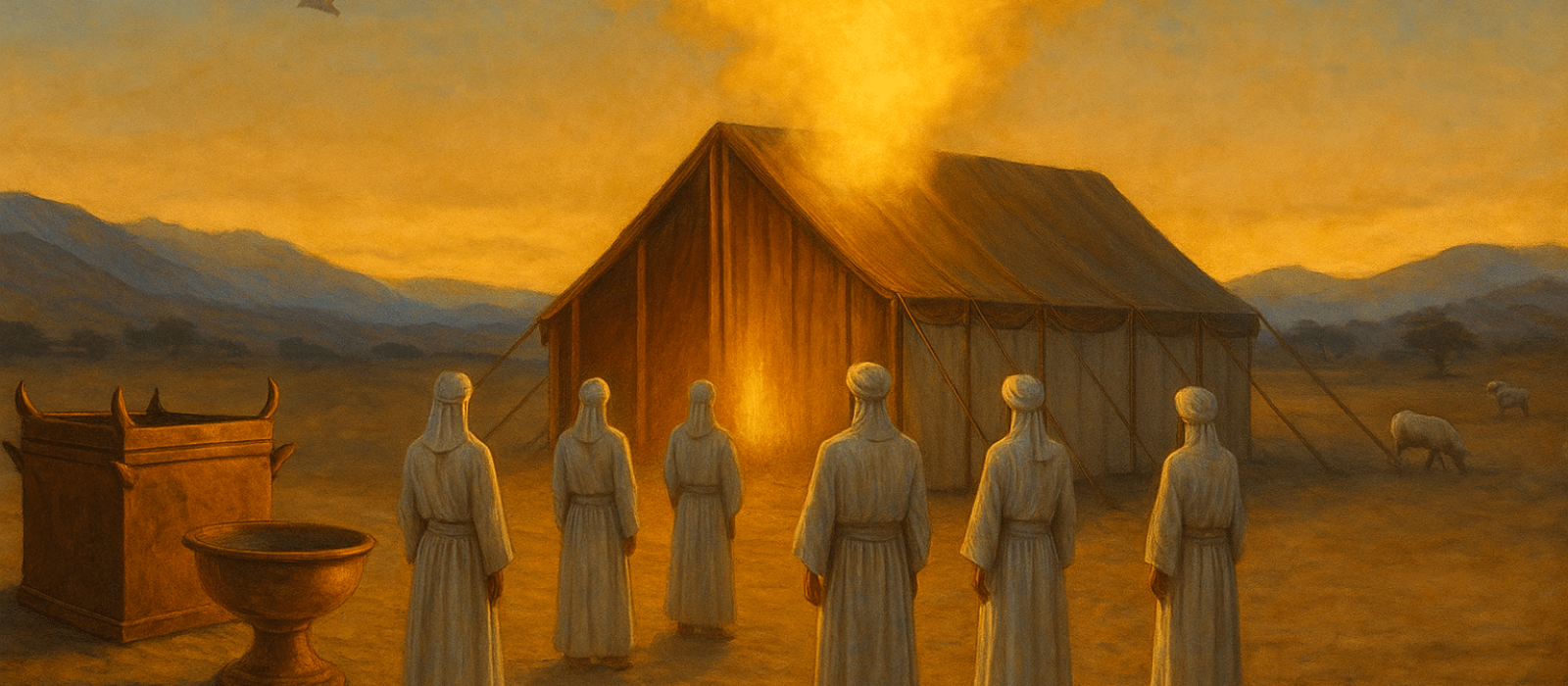
At the end of the previous Parashah (Tzav), Moses instructs Aaron and his sons to remain at the Mishkan for seven days. According to Rashi, Moses himself conducted the inauguration service each day—assembling, serving, and disassembling the Mishkan.
On the eighth day, all the priests were installed and the Mishkan was erected permanently. This Parashah is called “Sh’mini” (“eighth”). The Complete Jewish Bible begins, “On the eighth day…”—the day the Mishkan is sanctified, set apart for God’s service. The portion then details standards of holiness, culminating in a full chapter on what God deems acceptable (“clean”) and what He forbids as “unclean.”
“For I am Adonai your God; therefore, consecrate yourselves and be holy, for I am holy.”
“For I am Adonai, who brought you up out of the land of Egypt to be your God. Therefore you are to be holy, because I am holy.”
Tikkun Olam and Excellence
Jewish tradition says the descendants of Jacob have a secular mission to repair the world. As one magazine excerpted from a Jerusalem Post report noted, a significant number of Israeli researchers have been recognized globally for excellence—an outsized contribution considering Israel’s small population. This echoes a calling toward diligence and impact that blesses the nations.
Clinging to God—For All Who Are Grafted In
“You are to fear Adonai your God, serve Him, cling to Him and swear by His Name.”
Paul teaches that Gentile believers are “grafted in” (Romans 11:17). If we are called to cling to God, then the purer—holier—we become, the closer we draw near. Rabbi Moshe Chaim Luzzatto teaches that our greatest delight is to be in the Divine Presence. One practical pathway: remove impurities that diminish His nearness—including what and how we eat as taught in Vayikra 11.
A Parable from the Clinic
A doctor had two patients with the same condition. To the first he said, “Eat and drink what you like,” because that patient was already beyond remedy. To the second he gave precise dietary instructions—because obedience could save him. Likewise, God graciously shows a path of holiness to those who seek Him.
Kosher, Shabbat, and Obedience from the Heart
We may not fully understand all of God’s reasons; His ways are higher than ours. Yet He invites us into intimacy by heeding His instructions—kosher living, Sabbath rest, avoiding practices that profane our bodies. These are not mere rules; they are pathways to communion.
A Modern Challenge: Pornography and Holiness
Our culture is saturated with sexualized images. Many underestimate the spiritual and relational damage. Resources report widespread exposure, marital harm, and links to exploitation. For a concise overview with statistics, see: What does the Bible say about pornography?
This is not about crushing appreciation of beauty; the sages even bless God for beauty. The danger is the slide from appreciation to lust—an interior adultery that corrodes covenant faithfulness.
“You have heard, ‘You shall not commit adultery’; but I say that everyone who looks at a woman with lust has already committed adultery in his heart…”
Pornography re-scripts desire away from mutual self-giving into self-serving consumption. It dramatizes sex until covenant intimacy seems “dull,” then pushes escalation—fostering bondage and, tragically, fueling exploitation.
“Do not desire her beauty in your heart… Can a man carry fire next to his chest and his clothes not be burned?”
“Will you defile yourselves after the manner of your fathers and go whoring after their detestable things?”
Putting Off the Old, Putting On the New
“So put to death… immorality, impurity, sinful passion, evil desire, and greed…”
For anyone struggling, here is a pathway of renewal and practical guardrails.
Steps Toward Freedom
“If we confess our sins, He is faithful and just to forgive us… and to cleanse us from all unrighteousness.”
“Be transformed by the renewal of your mind…”
“Whatever is true… honorable… pure… lovely… think about these things.”
“This is God’s will—your sanctification: abstain from sexual immorality; learn to control your body in holiness and honor.”
Mutual marital care and conjugal faithfulness as protection against temptation.
“Walk by the Spirit, and you will not gratify the desires of the flesh.”
Practical tools: install pornography blockers; limit or eliminate triggering media; cultivate holy habits; ask a trusted believer for accountability and prayer.
Do Not Weaken the Right Hand
The Tanakh sometimes uses anthropomorphic language for God’s attributes—“mighty hand,” “outstretched arm,” “the apple of His eye.” When Moses struck the rock instead of speaking to it (Numbers 20:8–11), the miracle’s intended revelation was diminished. Likewise, the ten spies’ unbelief overpowered the courage of Joshua and Caleb, delaying God’s promise.
When we act contrary to His will, we inhibit blessings meant for us. What we behold shapes us; what we indulge can numb us to His presence. Sh’mini calls us back to holiness—so that His nearness, not our numbness, defines us.
Conclusion and Prayer
Whether embracing kosher living, honoring Shabbat, resisting tattoos, or guarding our eyes and hearts, the call is the same: “Be holy, for I am holy.” May we choose life.
Prayer: Holy Spirit, shine Your light into hidden places. Safeguard the vulnerable, free the captive, strengthen covenant love, and draw us near. Sanctify us for Your presence, through Yeshua HaMashiach. Amen.