
Parashah Vayechi Comments (Dec 2023)
Vayechi (“He lived”) is the final parashah of Genesis, covering Genesis 47:28–50:26. It begins simply: Jacob lived in Egypt for seventeen years and reached the age of 147.
Genesis 47:28 — “Ya‘akov lived in the land of Egypt seventeen years; thus Ya‘akov lived to be 147 years old.”
Rabbi Joseph Hirsch, Chief Rabbi of Great Britain, is quoted in the Plaut Chumash (Torah – A Modern Commentary, p. 306) reflecting on the phrase “Jacob lived”: only one who has been a force for human goodness can truly be said to have lived.
Blessing as the Climax of Genesis
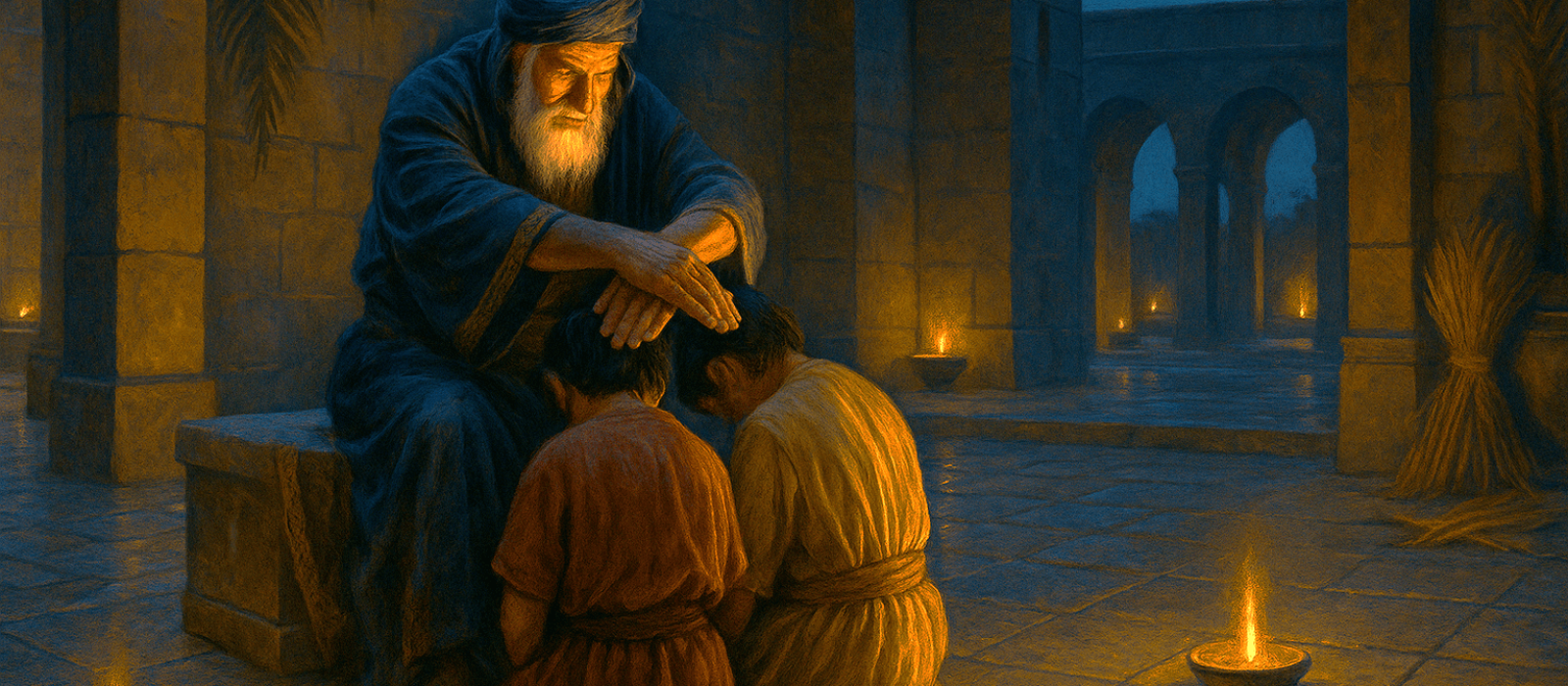
This portion concentrates on blessings—first over Joseph’s sons, then over Jacob’s own twelve sons. These words mix prayer, blessing, rebuke, warning, parable, recollection, and hope, rendered in elevated, poetic form. Much of Genesis 49 records them.
Genesis 49:1–2 — “Then Ya‘akov called for his sons and said, ‘Gather yourselves together, and I will tell you what will happen to you in the days to come. Assemble yourselves and listen, sons of Ya‘akov; pay attention to Isra’el your father.’”
Re’uven (Reuben)
Genesis 49:3–4 — “Re’uven, you are my firstborn… yet you are unstable as water… because you climbed into your father’s bed and defiled it.”
Jacob acknowledges Reuben’s primacy but rebukes his instability and the violation with Bilhah (cf. Genesis 35:22). Reuben often began well yet failed to finish well (see the allusion in Judges 5:15 to “great resolves of heart”).
Shim‘on and Levi (Simeon and Levi)
Genesis 49:5–7 — “Shim‘on and Levi are brothers… cursed be their anger, for it has been fierce.”
Jacob rebukes their violence at Shechem, cursing their anger rather than their persons. In history, Simeon is later absorbed into Judah, while Levi receives dispersed priestly cities; the tribe’s inheritance is HaShem Himself.
Y’hudah (Judah)
Genesis 49:8–12 — “The scepter will not pass from Y’hudah… until he comes to whom obedience belongs.”
Judah’s character and leadership are affirmed. Abundance images—washing garments in wine, tethering a donkey to the vine—signal overflowing blessing. Judah’s kingship anticipates the messianic hope and enduring authority.
Z’vulun and Yissakhar (Zebulun and Issachar)
Genesis 49:13–15
Zebulun is pictured at the seashore with favorable territory. Issachar is likened to a strong donkey—suited for labor yet tempted to trade freedom for comfort during the era of the Judges. Jewish tradition often pairs “Zebuluns” who support “Issachars,” the devoted students of Torah.
Dan
Genesis 49:16–18 — “Dan will judge his people… I wait for your deliverance, Adonai.”
Dan will strike shrewdly like a serpent (Samson being a Danite). Jacob’s brief prayer for deliverance may hint at Dan’s exposed position and later entanglement with idolatry (cf. Judges 18).
Gad, Asher, Naftali
Genesis 49:19–21
Gad is lauded for resilience against raiders; Asher for rich produce and provisioning; Naftali for swift grace and eloquent words, later seen in Barak’s victory.
Yosef (Joseph)
Genesis 49:22–26 — “Yosef is a fruitful plant… blessed from heaven above, from the deep below, from the breasts and the womb.”
Joseph’s steadfastness under assault—by brothers, by Potiphar’s wife, by the pressures of court—becomes the model of covenant fidelity. His blessing is layered: rain and dew, subterranean waters, and family fruitfulness. Jacob amplifies ancestral blessings upon him, resonating with Joseph’s role as sustainer of life and, in many readings, as a messianic foreshadow.
Binyamin (Benjamin)
Genesis 49:27 — “Binyamin is a ravenous wolf…”
Benjamin’s fierce energy appears in figures like Ehud and Saul, and later in Mordechai’s courage.
Genesis 49:28 — “All these are the twelve tribes of Isra’el… he blessed them, each with his own blessing.”
From Family to Nation
Vayigash transitioned divine work from patriarchs to the family of Israel. In Vayechi, that family phase culminates. The blessings become prophetic signposts as revelation moves from family to nation—Am Yisrael.
“The Word” and Creation
Many English versions of John 1:1–3 render verse 2 impersonally (“the Word was with God”), aligning with ancient Jewish ideas of Torah’s primordial role in creation. A midrash pictures God fashioning the world from the celestial Torah itself. See, for discussion, the educational note here: Midrash Konen reference.
John 1:1–3 (select traditional translations) — “In the beginning was the Word… All things were made through it; and without it was not any thing made that was made.”
Closing Prayer
As the curtain falls on Genesis, Jacob’s blessings crescendo into hope. From this book of beginnings arises a people entrusted with Torah and the Messianic promise, leading into the next movement of redemption.
As Ya‘akov prayed on behalf of Gad, so we pray: “I wait for Your deliverance, Adonai.” In Yeshua’s name, amen.