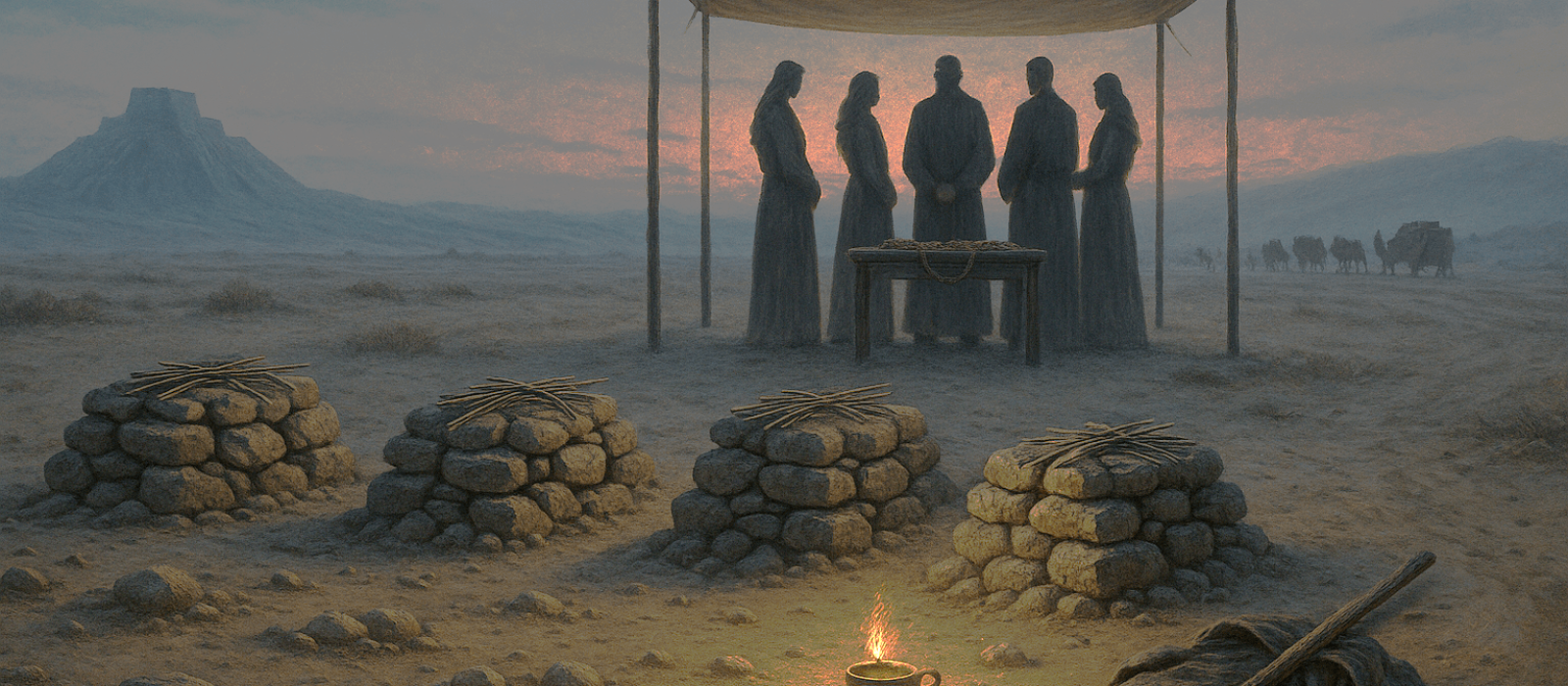

2020 AM (1740 BCE) – 4 FUNERALS AND A WEDDING
Terah stood weeping by the graves of his most beloved father, Nahor, his eldest son, Haran, Haran’s wife, and their beloved servant, Tobiah. It was so sudden, so unanticipated. We thought they were family—they were family! It’s not like they were trying to talk to the line of Lud or Elam, which was hopeless, as they had not been able to communicate since Babel. They were descendants of Joktan! They spoke our language and shared our culture. We exchanged daughters for wives and traded livestock and grains. We had a good relationship with them. We were happy, we thought, here in the land of Ur. The Chaldeans treated us better than some of the descendants of Joktan!
Terah looked up and saw his sons, Abram and young Nahor, named after his father Nahor. They stood absolutely stunned. Next to them were Haran’s daughters, Sarai and Milcah, who were wailing mercilessly. Terah decided it was good for them to cry. His thoughts went back to just that morning.
They had visited their extended family some distance away, about a half-day’s journey. Nahor senior was mortified at what he walked in on. Parents? Children? Animals? And what is this idol? This could not be allowed! It was the exact reason the Flood was brought. How could they, in clean conscience, do such things?
It turns out their conscience was not very clean. There was a heated discussion about Adonai’s expectation of how humans should live and what they should and should not do—and this they must not do ever again.
And then suddenly, out came blades. They did the best they could, but it was total chaos. Before they knew it, the only ones left standing were Terah, Abram, and young Nahor. All the attackers were slain. But also, their father Nahor lay still on the ground as well, their servant Tobiah, along with Haran and his wife.
The journey back was difficult. The day was long, and they dug the graves quickly. And there they were. Their only company was the wind and some sand. Birds sang a farewell melody. Everyone else was silent.
“We can’t stay here,” Abram started.
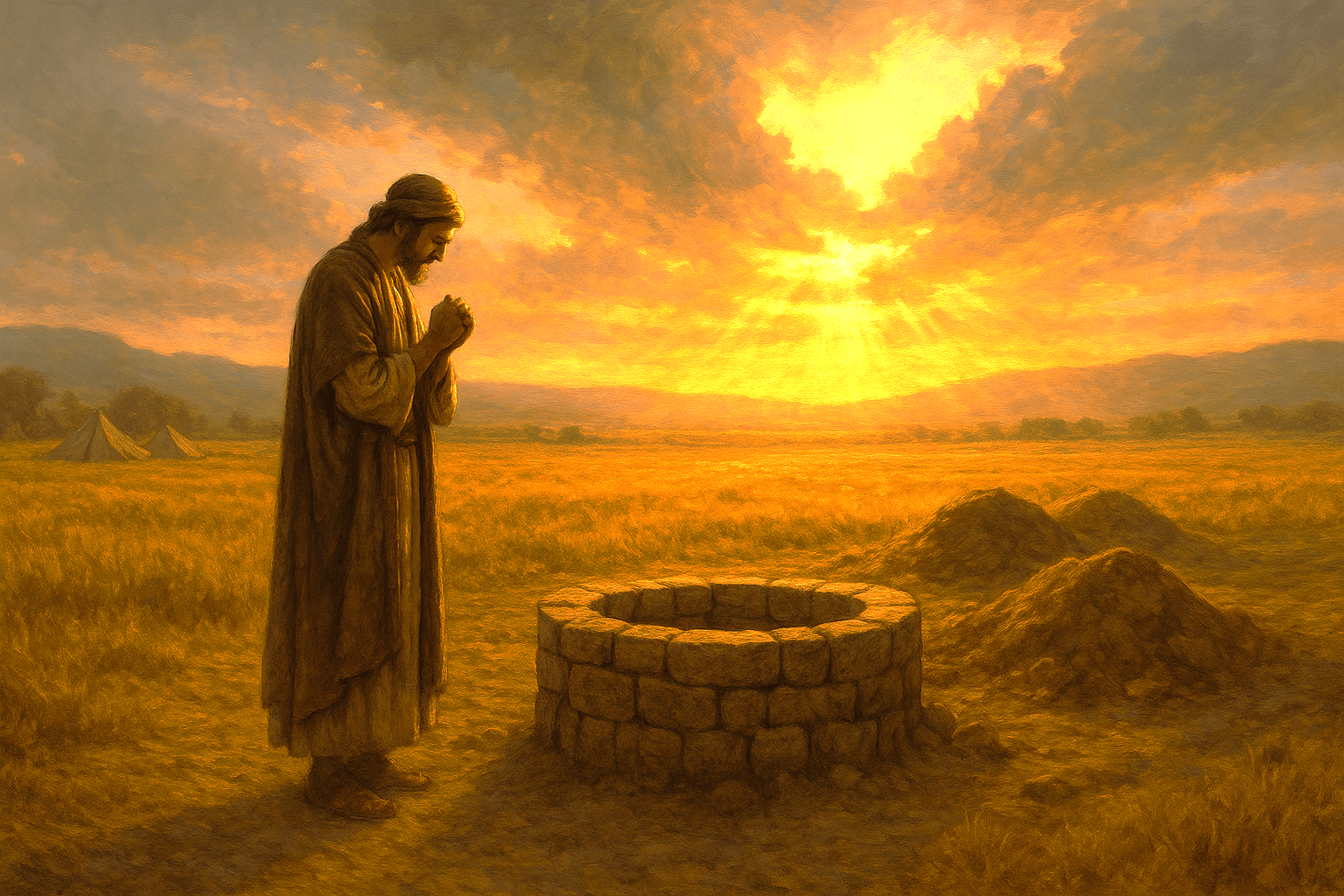
Terah just looked up for a moment before returning his gaze to the rocks piled on the earth covering the graves. Terah was broken, defeated. It just wasn’t fair.
“You know,” Abram started again, “we are a stench to the Joktans now. They will never leave us alone.”
Terah sighed. Finally, reluctantly, he spoke, “It will be OK. We have prominent standing in Ur. The Chaldeans will protect us.”
Abram’s face was etched and stony. “Maybe. But are we to take husbands from them for Sarai and Milcah? Because we certainly cannot trust that the Joktans will be the kind of people that continue to follow Adonai. They are too busy trying to make a name for themselves.” Abram took a deep breath and sighed heavily. “And what about Haran? Does he just disappear into the past, his name forgotten? He never had a son.”
This got Terah’s attention. “OK, Abram. You have made your point. What, then? You are right, the Chaldeans are worse than the Joktans. I swear on the truth of Adonai, that the people He saved in the Flood are no different than before. Most have forgotten about Adonai completely. They don’t care about the rainbow. They seem to hate anything good. And that is just from the line of Shem. I could not even tell you what Ham or Japheth are up to.”
“I know,” Abram agreed. “We have tried to be family, tried to be a positive influence. But Adonai has kept us from becoming a huge clan. Our family is, well, small. We have some wealth, some influence, but they don’t want to buy what we’re selling.”
“I’m tired,” Terah replied. “We can talk more. We have chores and it will be dark soon.”
“Fine,” Abram said. “But consider this. Allow Nahor and me to provide an inheritance for Haran. Nahor will marry Milcah, and I will marry Sarai. The first male child born will receive Haran’s inheritance and name.”
“Wait, what?” Nahor said, finally taking an interest in the conversation. The wails of Sarai and Milcah had also given way to strong looks of consternation.
Abram turned to Nahor. “Is that not right? Can you think of a better way to reverse the breaking of the cycle of building a name for self? And Sarai and Milcah,” Abram said, turning to them, “He was your father. Surely, you two want his name to be remembered?”
Terah started moving, stopped, and then turned to face everyone. “What Abram has said is right. I will pray to Adonai, as you all should as well. Tomorrow, we will move toward the north, away from Joktans. We will make a new settlement.”
☼ ☼ ☼
Terah was good to his word. Abram and Nahor married Sarai and Milcah, respectively, in a double wedding. It was Nahor and Milcah who were, in fact, first to have a son. They named him Lot, and Lot was now considered the firstborn of Haran. As a result, Lot would receive a double portion of Terah’s inheritance. That means Lot would receive half of Terah’s wealth; Abram would receive a quarter, and Nahor would receive a quarter.
Soon after Lot was born, Terah resettled into the far northern part of Mesopotamia. He called the settlement Haran to honor his son, and Lot was raised to follow Adonai by Terah—to be a symbol of truth over self. It turned out that Nahor and Milcah would fill the settlement of Haran with many families, and everyone who lived in the region prospered because of Haran—except for Abram and Sarai, who were barren.
Used with permission by the author. Find the author’s complete works online: Complete Works of Mack Samuels