
Parashah Terumah: Why a Dwelling for God?
A parable in Exodus Rabbah (33:1) explains why God asked Moses to build a Tabernacle. A king’s daughter marries another king; the bride’s father cannot bear to be parted from her, yet he cannot keep her from her husband. He asks the groom to prepare a chamber for him wherever they live, so he can remain near his daughter.
So too, HaShem gave Israel the Torah—from which He would not depart—and would not send Israel away from it. Therefore He said: make Me a house so I may dwell among you wherever you go.
What Is the Mishkan?
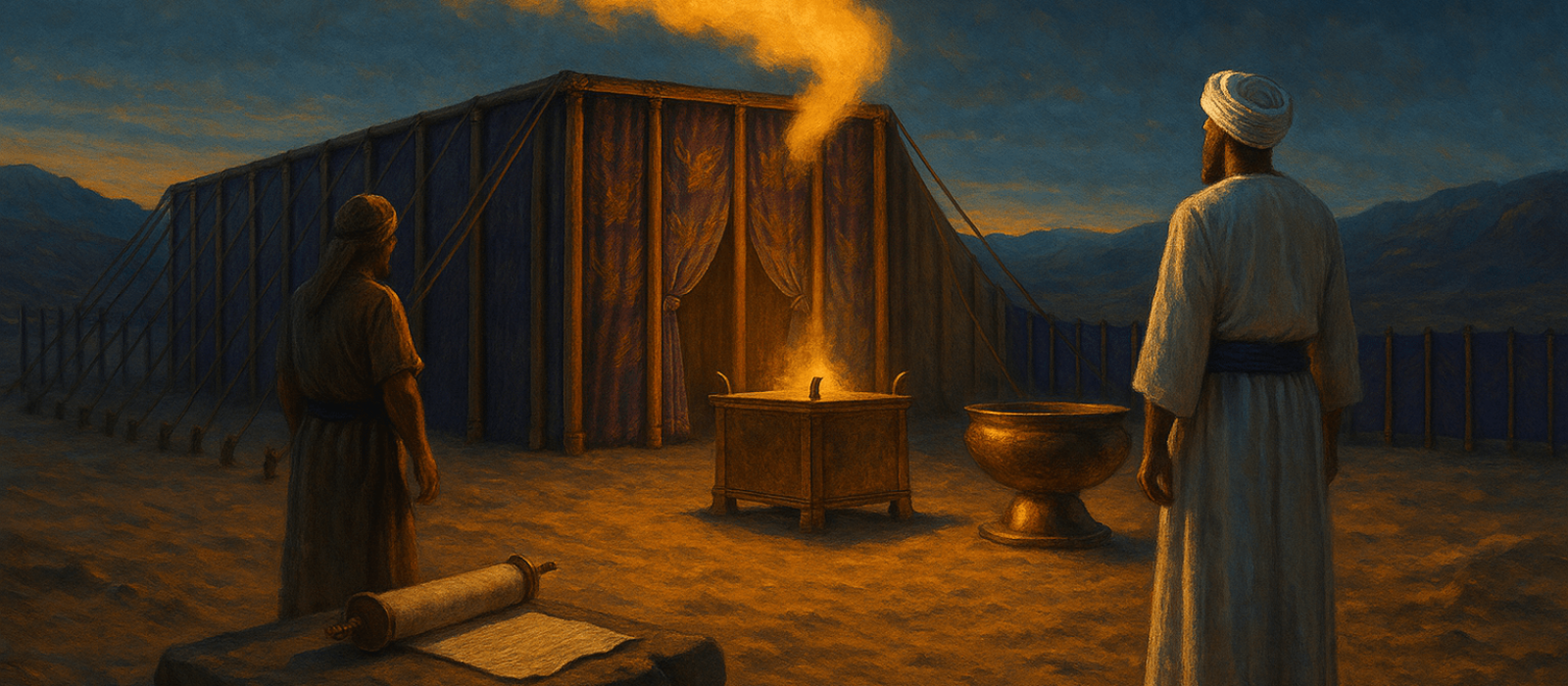
From Exodus 25 onward (except for the Golden Calf episode), the narrative turns to the building of the Mishkan (Tabernacle) and its service. “Mishkan” names the dwelling God bids the Israelites to build for Him.
The Plaut Chumash preserves an old interpretation: the Mishkan is a mashkon—a pledge. Israel is told, “Grant Me a pledge so that if you sin, it shall be forfeited.” (Plaut Chumash, p. 615, “The Pledge”).
Some see the Mishkan as anticlimax after Sinai. Others (e.g., Rosenzweig via Rabbi Plaut) see it as the epitome of deliverance: in Egypt, Hebrews built for Pharaoh; now, they freely build for HaShem. As God created the world, Israel now “creates” a sanctuary—an act of redeemed craftsmanship that solidifies freedom.
The Mishkan and the Presence
Another view: Sinai’s revelation was momentary; the Mishkan made nearness continual. It became a concrete declaration of God’s Presence until the Temple replaced it in Solomon’s day.
After Solomon, the kingdom split: the Northern Kingdom (Israel/Ephraim) and the Southern Kingdom (Judah and Benjamin). The Temple stood in Jerusalem—in Judah. Northern kings placed worship centers in Samaria and elsewhere; Scripture says none of them “did what was right” before Adonai.
This geographic separation from the Shechinah deepened division—civil strife (see 2 Samuel 19:40–43) and parallel festivals (Jeroboam’s festival a month after Sukkot matched the North’s later agricultural cycle). Pilgrimage to Jerusalem for the Shalosh Regalim—Passover, Shavuot, Sukkot—became less convenient.
Priestly integrity eroded when non-Levitical priests replaced Levites in the North.
The Good Samaritan and True Nearness
Against this history, Yeshua’s parable of the Good Samaritan (Luke 10:25–37) stings. The outcast Samaritan—lowest cultural standing—embodies covenant mercy when priest and Levite pass by. James (Ya’akov), “the Just,” echoes: faith without works is dead.
(For context, see Luke 10:25–37 and James 2:14–17.)
“Take for Me a Terumah” — Tzedakah at the Heart
Chasidic commentary (Plaut Chumash, p. 614) calls this verse “the heart and substance of the Torah: tzedakah and good deeds.” Tzedakah is not mere charity—impulse generosity—but covenant righteousness: an ethical obligation to do what is right and just. Acts of tzedakah and gemilut chasadim (good deeds) participate in chesed (loving-kindness) and tikkun olam (repair of the world).
Doing God’s will—distributing goodness—draws us into His ways, growing empathy for God and His people and moving us toward holiness.
“I Will Dwell Among Them” — Mishkan in the Heart
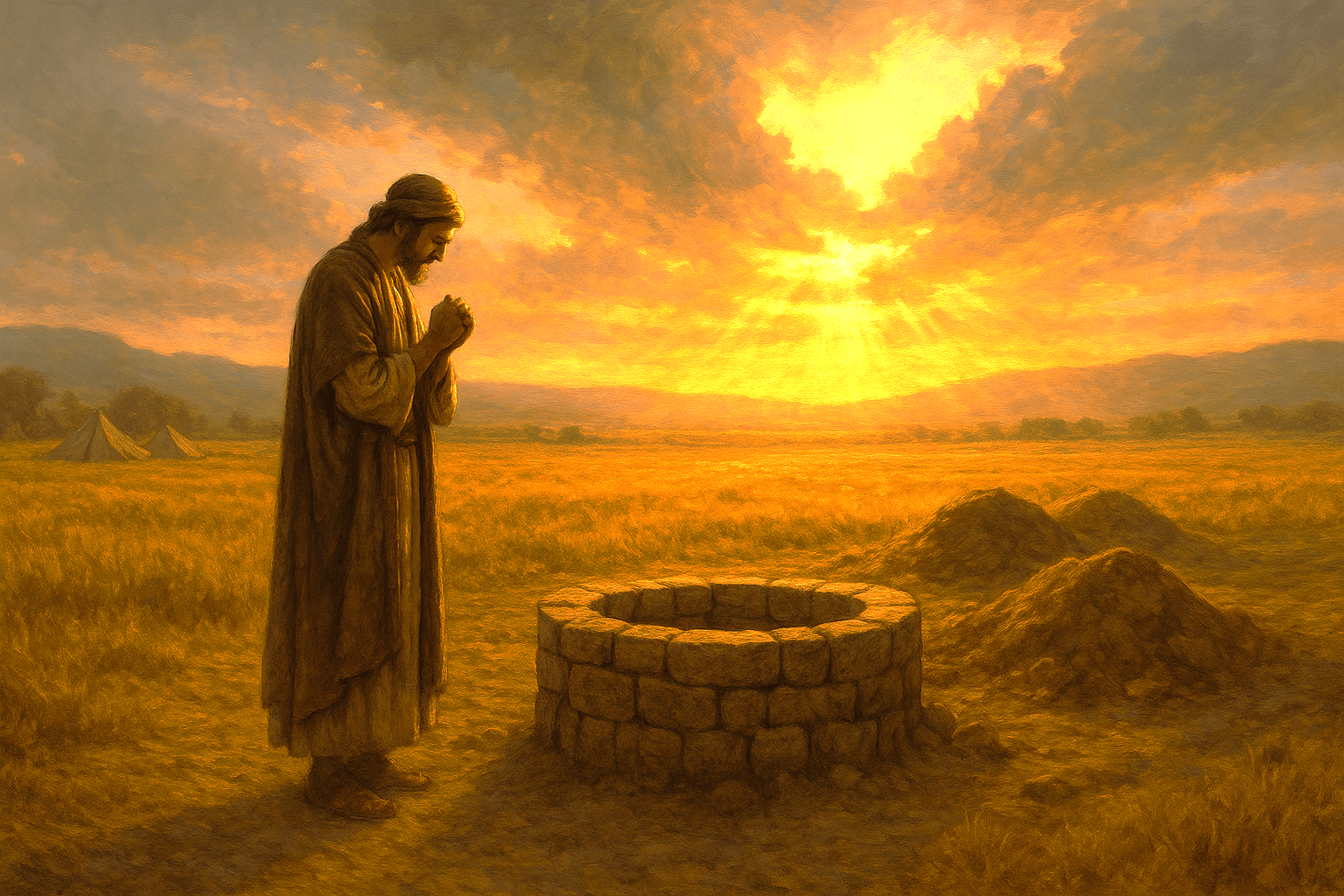
The Malbim (Rabbi Meir Loeb ben Yehiel Michal) notes the wording of Exodus 25:8: “that I may dwell among them”—in the people, not merely in the structure. Each person is to build a Tabernacle in the heart, a dwelling for God’s Presence.
Terumah invites us to holiness: set apart for God and for those He loves, a light to the nations. Through willing gifts and righteous deeds, the Mishkan takes shape—first in the wilderness, then within us.
Wholehearted Giving
“Accept a contribution from anyone who wholeheartedly wants to give.” The beauty of the Mishkan—its woods and woven fabrics, dyes and stones, iron, copper, bronze, and gold—evoked self-giving love. Craft, wisdom, and skill became visible gratitude and surrender to God’s will.
May we receive the privilege to do and be in His will. Amen.
Study Links: Exodus 25 (Sefaria) · Exodus Rabbah 33 · 1 Kings 12:28–33 · 2 Chronicles 13:9