

Acharei Mot – Comments (2024)
Leviticus 16:1 (TLV)
Then Adonai spoke to Moses after the death of the two sons of Aaron, when they approached the presence of Adonai and died.
In the Tree of Life Version (TLV), Parashat Acharei Mot opens with the sobering memory of Nadav and Avihu. The portion then gives Moses detailed instructions for Aaron, the Kohen Gadol (High Priest), on the service of the Day of Atonement—Yom Kippur. It also addresses prohibitions against deviant sexual practices, child sacrifice, eating blood, Egypto-Canaanite customs, and the requirement that offerings be brought only at the Tabernacle.
Leviticus 16:8–10 (TLV)
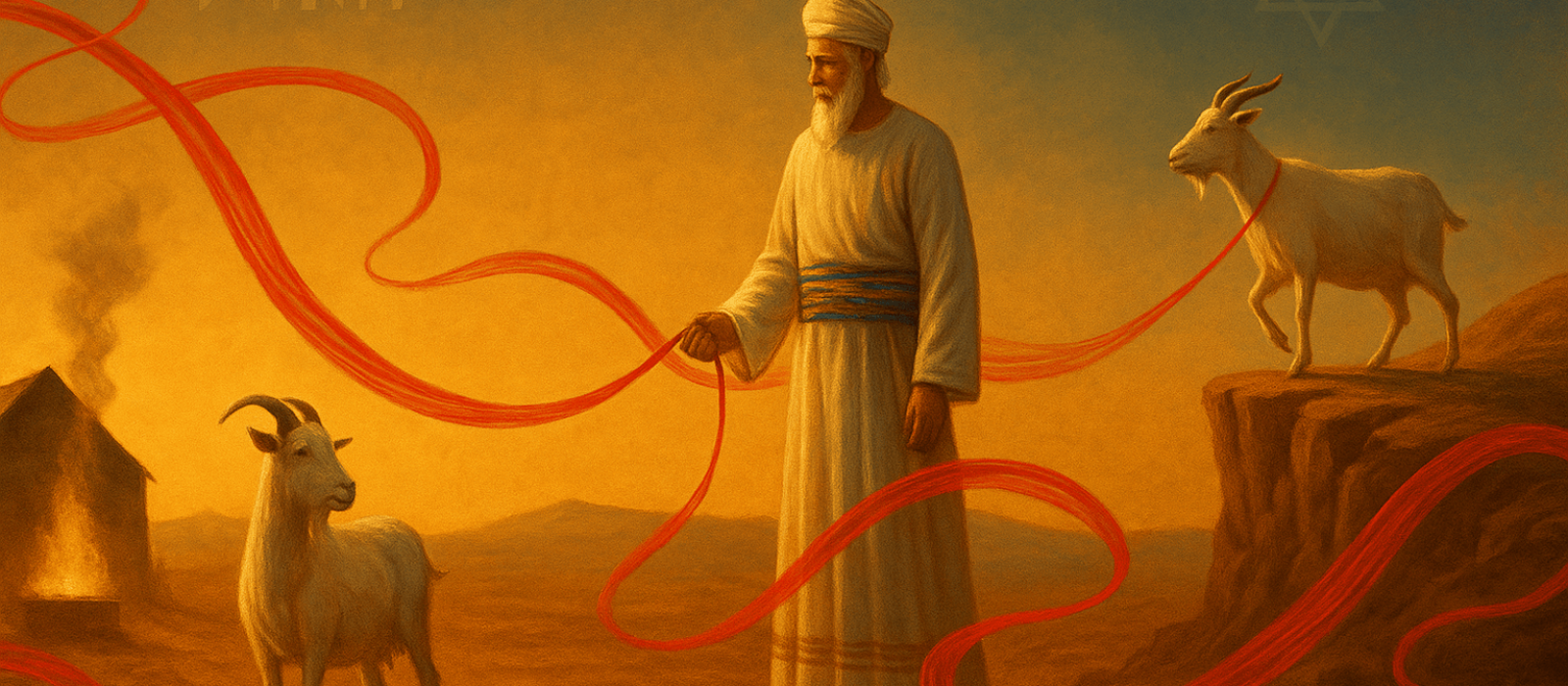
8 Aaron will then cast lots for the two goats—one lot for Adonai, and the other lot for the scapegoat. 9 Aaron is to present the goat on which the lot for Adonai fell and make it a sin offering. 10 But the goat upon which the lot for the scapegoat fell is to be presented alive before Adonai, to make atonement upon it, by sending it away as the scapegoat into the wilderness.
Focus: Offerings and the Enigmatic “Azazel”
This commentary highlights the offerings and sacrifices connected with ‘Az’azel. Because the term appears in the Hebrew text, it deserves attention. English translations vary: some avoid the word and render it simply as “scapegoat” or “emissary goat”; others hint at “the desert,” “wilderness,” or even “demon Azazel.” The TLV footnote on Leviticus 16:10 notes the possible sense “for removal,” which captures the ritual’s goal: corporate sins are carried away.
Classical Jewish sources help frame the discussion. The Talmud states:
Yoma 67b
“The school of Rabbi Ishmael explained it is called Azazel because it atones for the acts of the fallen angels Uzza and Azael.”
Ramban (Nachmanides) and Ibn Ezra also understood “Azazel” as the proper name associated with the goat. Whether “Azazel” refers to a being, a place of desolation, or functions as a ritual label, the Torah’s emphasis is clear: the people’s iniquities are removed from the camp.
The Two Goats: One for Adonai, One for Azazel
The ritual requires two indistinguishable goats. Aaron casts lots—one “for Adonai,” offered as a chatat (sin offering), and one “for Azazel,” kept alive and presented before Adonai. Over the live goat, Aaron lays both hands and confesses “all the iniquities of the children of Israel, and all their transgressions, all their sins” (cf. Lev 16:21). Symbolically bearing them, the goat is sent into the wilderness—away from the people—enacting visible, covenantal removal.
This dramatic pairing holds several truths together:
Substitution and Approach: The goat for Adonai is sacrificed so the High Priest may safely approach with blood into the Holy of Holies.
Removal and Purity: The goat for Azazel removes defilement from Israel’s midst, carrying confessed sins beyond the camp.
Public Witness: The congregation sees sin transferred and carried off—atonement is not abstract but embodied.
Why “For Removal” Matters
The TLV footnote’s “for removal” succinctly captures the telos of Yom Kippur: cleansing the sanctuary, the priesthood, and the people (Lev 16:16–20). Whether one reads “Azazel” as a proper noun or functional term, the effect is the same—Israel’s guilt is borne away. The wilderness imagery underscores both separation from impurity and trust in Adonai’s appointed means.
Messianic Reflection
From a Messianic perspective, Acharei Mot foreshadows the greater atonement accomplished by Messiah. The blood that grants access and the removal that purifies the camp find their fulfillment in Him—both the offering “for Adonai” and the One who “bears away” iniquity (cf. Isaiah 53; Hebrews 9–10). The two goats, then, are not allegory so much as prophetic pattern—showing how God deals decisively with sin: by cleansing and by removal.
Further Reading:
Leviticus 16 (entire chapter)
Leviticus 17–18 (related holiness instructions)