
Toldot Comments (2013): An Introduction to Hamartiology
This week’s Haftarah repeats the comparison God makes between His acceptance of Jacob and His rejection of Esau. The form of the book is almost like a trial where God speaks to the nation of Israel and the people respond. God takes issue with their spiritual apathy. They bring sacrifices and want to know why they are rejected—so He tells them: they are indifferent. They disrespect Him by sacrificing animals that fall below the acceptable standard.
Then He rebukes the priests and says they, too, have not paid attention, contrasting them with their ancestors from the tribe of Levi and the house of Aaron who upheld His standards. In speaking of Levi, God says through Malachi:
Malachi 2:5–7
“My covenant with him was one of life and peace, and I gave him these things. It was also one of fear, and he feared Me; he was in awe of My Name. The true Torah was in his mouth, and no dishonesty was found on his lips; he walked with Me in peace and uprightness and turned many away from sin. A cohen’s lips should safeguard knowledge, and people should seek Torah from his mouth, because he is the messenger of Adonai-Tzva’ot.”
None of them held HaShem in awe. They missed the mark.
What Is “Hamartiology”?
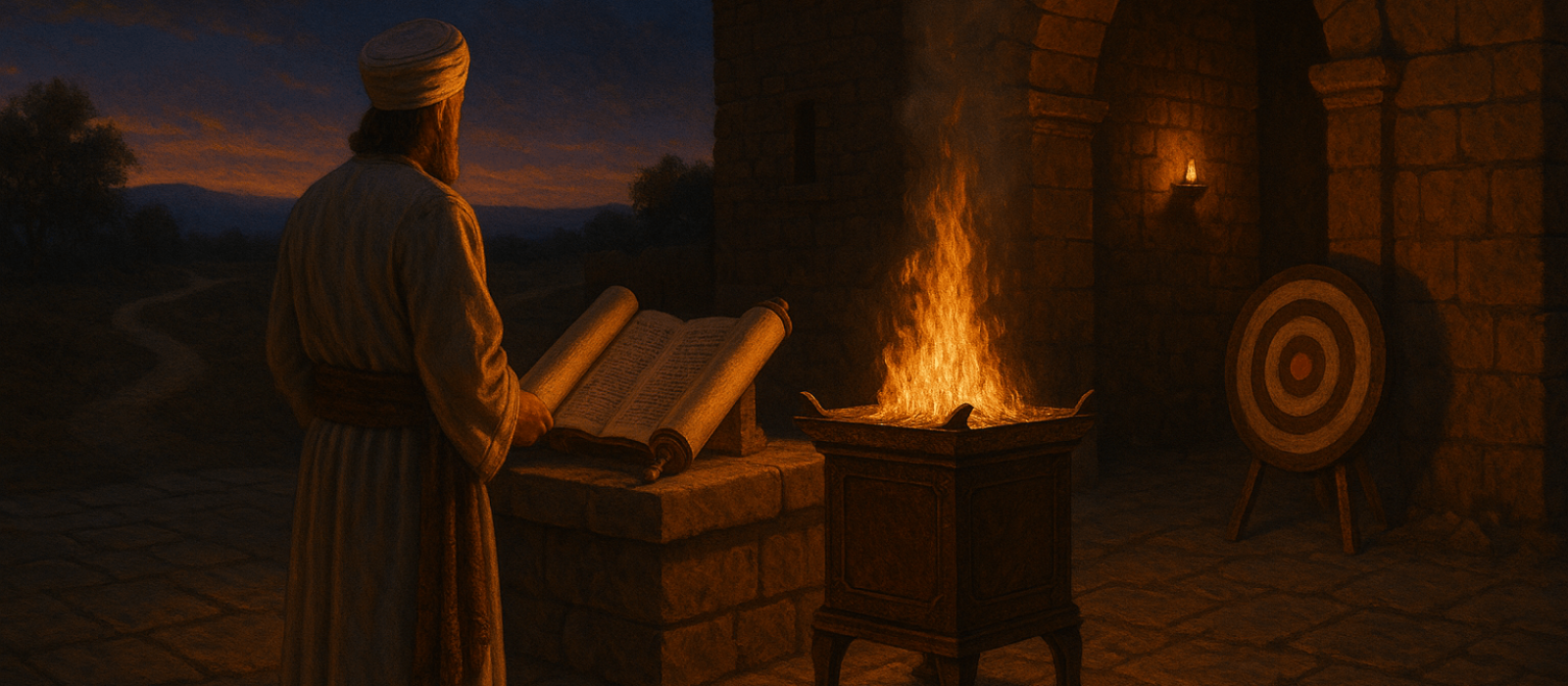
Hamartia is a Greek word meaning “missing the mark.” Hamartiology is the study of missing the mark—God’s standard for physical, spiritual, intellectual, and emotional behavior, established both for His pleasure and for our well-being. To fall short, go astray, or miss the mark is to act contrary to the will of God. Even when our actions seem to affect “only ourselves,” we still stand rightly accused. The general term for this class of conduct is sin.
Rav Sha’ul (Paul) says in Romans that we all fall short of God’s standards. The sins of Adam and Chava (Eve) reveal our potential to disobey and the weakness common to us all. Yeshua was tempted by the adversary too; the difference is that He never yielded.
Jeremiah 17:9 — “The heart is deceitful above all things and beyond cure.”
Whether disobedience is active or passive, Scripture holds us responsible.
Proverbs 24:11–12 — “Rescue those being led away to death…” and we are accountable when we do not.
Jewish tradition acknowledges the yetzer hatov and yetzer hara—inclinations toward good and evil. Our conscience should restrain the evil inclination, but our selfishness can rationalize wrongdoing until we fail in our walk with God. In those moments, the world of immediate desire triumphs over the world to come.
Sin and Human Choice
Sin is disobedience to God—like children’s bad behavior in the eyes of loving parents. How did we get this way? God gave us free will. He told us what is permitted and what is forbidden. Our forbidden choices reveal immaturity. Some call it “human nature.” Did Adam and Eve transmit a “sin nature”? I view their transgression as descriptive of the human condition: we choose. We are all God’s children—just youngsters of differing ages from a heavenly point of view.
We learn from older siblings, friends, and parents—good and bad. We learn from what we witness in others’ lives and from God’s Torah, if we are open. Still, we must choose throughout our days. The more we apply God’s instruction to our choices, the more we enhance our well-being and please Him. The more we ignore His instruction and “do it our way,” the more we risk sinning and creating a harder path. Our sin also touches others: the adulterer fractures a family; the swindler impoverishes a neighbor. Sin erodes God’s world a piece at a time.
Corporate and Individual Sin
The Tenach often addresses corporate or national sin. Israel sinned repeatedly and experienced consequences. Other nations did wrong in God’s eyes and faced judgment. The Brit Chadashah (New Testament) focuses more on individual sin. On both levels, sin brings punishment; repentance brings mercy and restoration.
2 Chronicles 7:14–15 — “If My people who are called by My Name humble themselves, pray, seek My face, and turn from their evil ways, then I will hear from heaven, forgive their sin, and heal their land.”
God sets before us life and death and urges us: choose life.
Deuteronomy 30:19–20
Our sin may not strike us dead instantly, but we are diminished each time we sin.
Romans 6:23 — “The wages of sin is death…”
Yet God is merciful. He has provided a way to reverse the decay: the way of HaMashiach—Yeshua.
From Yom Kippur to Messiah’s Atonement
The Older Testament established a temporary system removing the barrier of sin: Yom Kippur called every Jewish adult to atone and reconcile annually with God and neighbor. The Newer Testament proclaims that the Father sent His Son to make atonement for the sins of the world and, by this atonement, opened the way for eternal reconciliation—once for all.
We may choose to be with God or without God, life or death. When we choose God—accepting Yeshua and His sacrificial gift—we acknowledge our sin and walk through the torn curtain into God’s presence.
Mark 15:38–39 — The Temple curtain is torn, signaling access to the Holy of Holies.
Living as Children of God
As parents, we long for our children to grow strong, healthy, trustworthy, respectful, and loving. Disobedience grieves us. When children fall short, they draw away; when they do what is right, they draw near. Now put the shoe on the other foot: you are a child of God, and all His children are your brothers and sisters.
Matthew 7:3–5 — “First take the plank out of your own eye…”
Luke 6:41–42 — “…then you will see clearly to remove the speck from your brother’s eye.”
Always remember: the “speck” you see in others may be a “plank” in your own eye. To avoid displeasing your Father in heaven, be the best child you can be. And recognizing the plank in your life makes you responsible to help your brother or sister with their speck—humbly and in love.
Practical Reflections on Missing the Mark
In short, the Messianic view is that from Adam onward we are all sinners who miss God’s standard. We begin to avoid destructive consequences by recognizing our sinfulness and accepting Yeshua’s gift of forgiveness and fellowship through His payment of the penalty we incurred.
- We sin when we miss the mark—sometimes out of ignorance.
- We sin when we tell “white lies.”
- We sin when we do wrong and then deny it.
- We sin when we harm ourselves (overindulgence, neglect, etc.).
- We sin when we harm others—stealing, assault, teaching others to do evil.
- We sin when we fully understand another’s wrongdoing and do nothing to restrain it (twisting “judge not” into an excuse for inaction).
- The worst sin is rebellion—Satan’s sin, Korach’s sin, and the posture that culminates in blaspheming the Ruach HaKodesh (the unforgivable sin). This requires knowing God and rejecting Him. Not every monstrous evil (e.g., Hitler) equates to that specific, knowing blasphemy.
My prayer is that the crimson stain of all our transgressions—yours, mine, and all humanity’s—be made white as snow as we turn from sin and embrace God’s holiness through His Son, Yeshua HaMashiach. May God hear and fulfill this prayer. May it be in our lifetime.
Amen.