
Parashah Vayechi — “And He Lived”
This week we come to the end of the first book of Moses, Genesis. Our Parashah is Vayechi, which means “And He Lived.” In this portion, Jacob, in his old age, blesses his sons and sees into the future. As Isaac did before him, Jacob’s blessings carry prophetic weight and Messianic hope.
Parallels in the Blessings
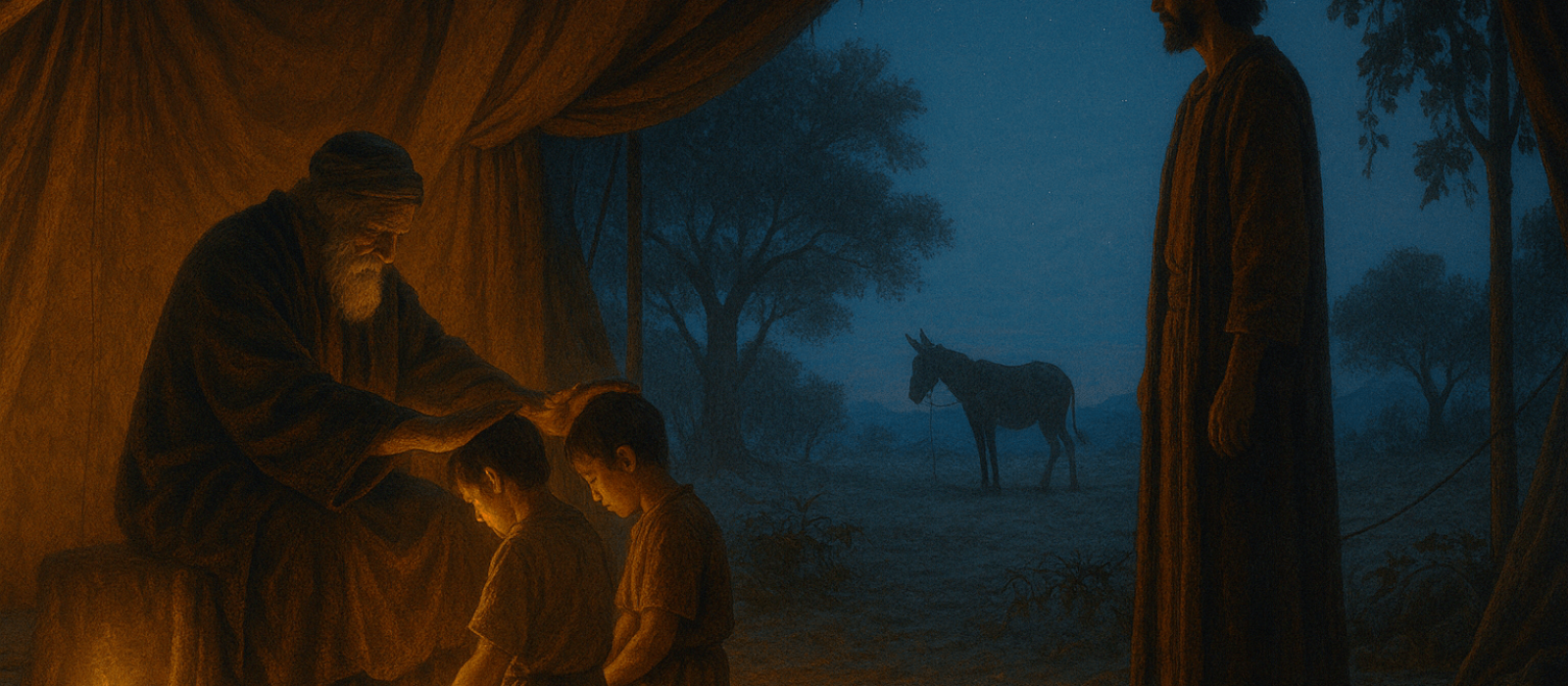
Both Isaac and Jacob blessed their sons when they were old and nearly blind; both embraced and kissed their sons before blessing them. As Isaac’s younger son, Jacob, received the greater blessing, so too Jacob “adopts” Joseph’s sons—Ephraim and Manasseh—and gives the younger, Ephraim, the greater blessing.
17 When Joseph saw his father placing his right hand on Ephraim’s head he was displeased…
19 But his father refused and said, “I know, my son, I know… Nevertheless, his younger brother will be greater than he… ”
20 He blessed them that day and said, “In your name will Israel pronounce this blessing: ‘May God make you like Ephraim and Manasseh.’” So he put Ephraim ahead of Manasseh.
In doing this, Jacob favored Joseph with a “double portion,” conferring firstborn rights to Joseph’s line through his two sons. Today, when we bless our sons with “May God make you like Ephraim and Manasseh,” we are not praying that their lives mirror those brothers, but that the covenantal blessing Jacob transmitted to them would rest on our children and households. Likewise, our daughters are blessed by invoking Sarah, Rebecca, Rachel, and Leah—the blessing is equivalent in dignity and promise.
“May my name be named upon them, and the names of my fathers Abraham and Isaac.”
Judah’s Scepter and the Messianic Thread
In Chapter 49 Jacob speaks words over each son and, with Judah, he unveils royal destiny and Messianic hope.
“Judah, you are he whom your brothers shall praise… The scepter shall not depart from Judah, nor a lawgiver from between his feet, until Shiloh comes; and to Him shall be the obedience of the peoples… He ties his donkey to the vine…”
Rabbi Shimon bar Yochai observed that Israel’s tribes come to be known by Judah’s name—Yehudi—“Jew.” Jacob’s lion imagery echoes forward to the Messiah:
“Behold, the Lion of the tribe of Judah, the Root of David, has overcome…”
“Shiloh”—“the one to whom it belongs”—points to the rightful King. The donkey imagery connects to Zechariah’s prophecy and Yeshua’s entry into Jerusalem.
“See, your King comes to you… lowly and riding on a donkey, on a colt, the foal of a donkey.”
Yeshua enters Jerusalem as King, fulfilling the prophet’s words; the crowds cry, “Hosanna to the Son of David!”
“For Your Salvation I Wait, Adonai”
In the midst of these blessings, Jacob prays a central line of the Parashah:
“For Your salvation (yeshuah) I have waited, Adonai.”
This longing saturates Jewish prayer. In the Amidah, we await the Branch of David and God’s salvation every day—an active, yearning hope, not passive waiting. Jacob anchors his burial request in that hope, trusting resurrection and covenant fidelity.
Joseph’s Blessing: Shepherd and Stone
When Jacob turns to Joseph, he names divine titles that later illuminate Messiah.
“By the hands of the Mighty One of Jacob (from there is the Shepherd, the Stone of Israel).”
“I am the good Shepherd…”
“The stone the builders rejected has become the chief cornerstone…”
Yeshua identifies Himself with the rejected Stone that becomes the cornerstone.
Adoption and the Family of God
Ephraim and Manasseh—Egypt-born, once estranged—are deliberately adopted into Jacob’s family. So too, Gentile believers, through the Firstborn Son, are adopted into the commonwealth of Israel, sharing in the inheritance with the natural branches, not replacing them but joining them.
“They are Israelites; to them belong the adoption, the glory, the covenants, the giving of the Torah, the worship, and the promises; to them belong the patriarchs, and from them, according to the flesh, Messiah…”
This challenges supersessionist assumptions and honors God’s irrevocable promises. In Messiah, the mishpachah—God’s family—expands without erasing Israel’s calling.
Promise of Redemption
Jacob “was gathered to his people,” but Scripture holds forth hope beyond the grave—resurrection life when King Messiah comes.
“The desert shall rejoice and blossom… Be strong, do not fear! Behold, your God will come… He will come and save you… The redeemed shall walk there… and come to Zion with singing.”
Chazak, Chazak, V’nit’chazek!
At the end of each book of the Torah, we proclaim: “Chazak, chazak, v’nit’chazek!” — Be strong, be strong, and let us be strengthened. May the words of Vayechi revive our faith in God’s unity, His love, and His desire to bring many sons and daughters to everlasting life in Yeshua the Messiah.
Closing Prayer
Heavenly Father, we have much to learn from the ancestors of our faith. Teach us to delight in the words of life, to walk in Your ways, and to receive the inheritance You promise to all true believers. In Yeshua’s name, amen.