

Parashah Tazria/Metzora Comments (2013)
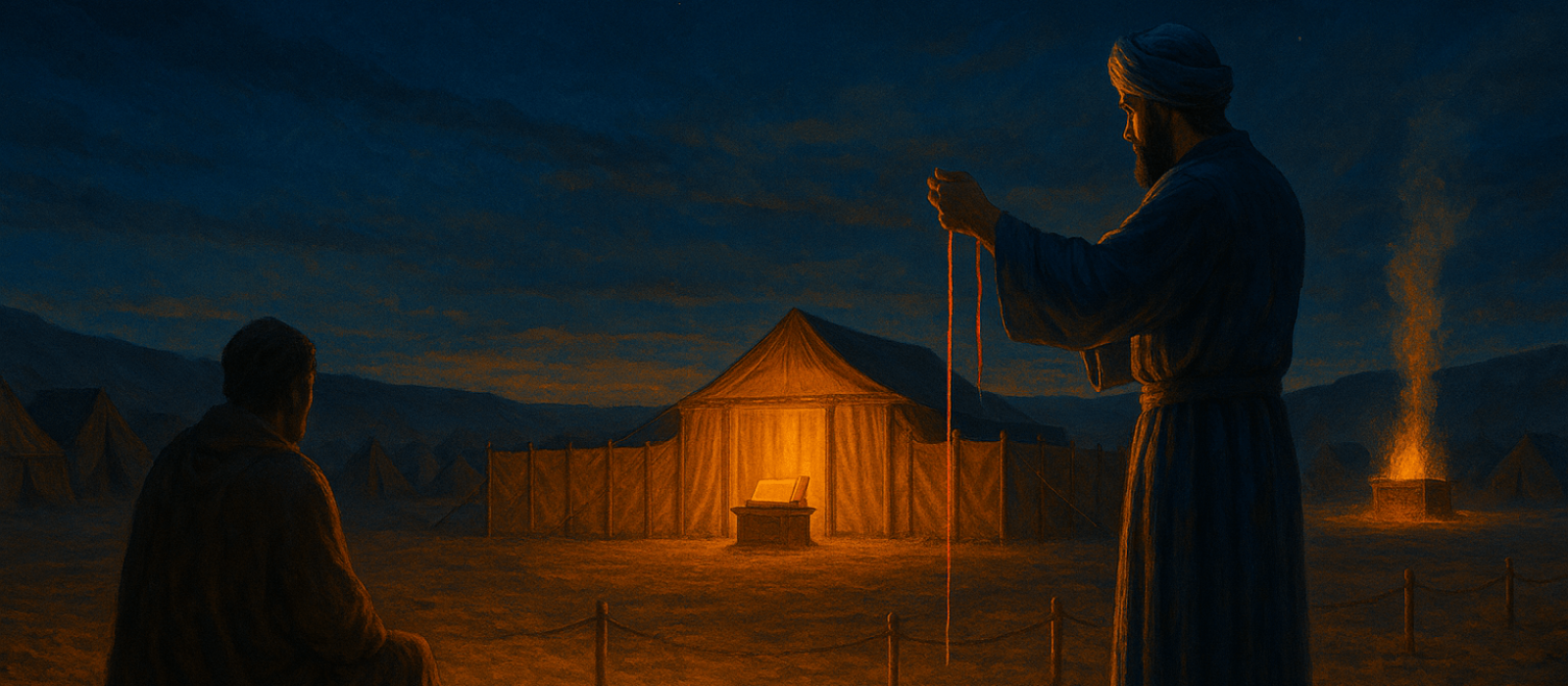
Our readings this week speak much about clean and unclean. It starts with the biblical requirement concerning a woman’s period. Essentially, God wants us to revere life. Anything that leads to death is not permitted in God’s presence. A woman’s menstrual discharge is an elimination of dead eggs. Therefore, during her “time of the month” she was not permitted to be in the vicinity of the Tabernacle.
In Sioux City, the Orthodox Jewish community declined an offer of assistance from the other synagogue in town. The other synagogue—a merging of two congregations that were not Orthodox—had offered to build a chapel on their grounds, since the Orthodox building was falling apart and much larger than necessary for the small Orthodox group. The offer was declined. The reason: the Orthodox congregation maintained the biblical proscription regarding the ritual uncleanness of women during their time, while the other congregation did not hold to the same belief.
The Orthodox congregation holds that the rule applied to the Tabernacle as described in Leviticus, and they see those Torah rules as applying to their present house of worship in the same way. The other congregation may hold that, since the destruction of the Temple in Jerusalem in 70 A.D., the requirements of separation do not apply. Their synagogue is neither the Tabernacle nor its successor in Jerusalem. For me, it highlights how sincere seekers can land on different sides of a question. No one is right or wrong here.
Tzara’at Is Not Leprosy
Other ritual uncleanness is described in these chapters as well, but the most prominent is the set of rules and requirements surrounding what Hebrew calls “tzara’at.” Leprosy (Hansen’s disease) and tzara’at are both gruesome skin ailments; however, this is where the similarity ends. It is understandable that mistranslations developed because there was no exact translation for the biblical ailment and leprosy seemed the closest fit. Here, we will call it by the original Hebrew: “tzara’at.”
So what is tzara’at if it is not leprosy? The Jewish sages understood it as a physical manifestation of a spiritual dysfunction—God’s condemnation of a serious trespass or sin. This understanding comes from Numbers 12, where Miriam is struck with tzara’at for speaking against her brother Moses. Tzara’at has thus come to mean a sign of God’s displeasure for negative speech—slander, tale-bearing, gossip, and libel.
The Power of Speech
Slander (a malicious, false, or defamatory oral statement) is denounced throughout Jewish writings. Messianic Rabbi Richard Chaimberlin of Petah Tikvah Congregation in Rochester, New York, quotes Leviticus 19:16:
“You shall not go about as a talebearer among your people; nor shall you take a stand against the life of your neighbor: I am the Lord.” (Leviticus 19:16)
He then asks: what does slander have to do with murder? Judaism sees character assassination as a sin equal to murder. Words can and do kill reputations, livelihoods, and sometimes even lives. The “blood libel” centuries ago falsely claimed Jews kidnapped and killed Christian children to use their blood in making matzah—an obvious fabrication to anyone who knows the Bible’s commands to refrain from blood and to eat only permitted meats.
Words are very powerful. God spoke creation into existence. “And God said…” echoes through Genesis. If we are made in God’s image, we must not lose sight of the power of our words. We often get into trouble when we speak to inflate ourselves rather than to communicate truth in love.
Lashon Hara and Its Relatives
Lashon hara, literally “the evil tongue,” describes true statements used to denigrate another. Hotza’at shem ra means “spreading a bad name” and is best translated as “slander”—worse than lashon hara because it spreads lies. While there are moments we must name wrongdoing, we are given a process to address offenses with restraint and integrity.
“If your brother commits a sin against you, go and show him his fault—but privately… If he doesn’t listen, take one or two others… If he refuses… tell the congregation.” (Matthew 18:15–17)
“One witness alone will not be sufficient… the matter will be established only by two or three witnesses.” (Deuteronomy 19:15)
“Depart from evil and do good; seek peace and pursue it.” (Psalm 34:14)
Seeking Peace and Making Space
As you would prefer a private approach when someone has an issue with you, so too we should first address others privately. This aligns with the Jewish imperative to seek peace—even at the cost of our personal “right.” Abraham gave Lot first choice to avoid strife; Isaac yielded regarding his father’s wells to preserve peace. We should be humble about symbols and practices that others may view differently—whether a cross or a Magen David. If you feel strongly, worship where your convictions are shared, but don’t assume your view alone expresses the mind of God.
Exposing Wolves—With Pure Motives
Exposing wolves in sheep’s clothing, false shepherds, and false prophets is necessary when done for the right reasons—to protect others from harm and to promote clarity, not to settle scores. Silence in such cases can become complicity.
Haftarah: Tzara’at as a Doorway to Faith
In this week’s Haftarah (2 Kings 7), God uses the tzara’at of the Aramean commander to draw him to faith in the God of Israel—an example of divine mercy turning “lemons into lemonade.”
Guarding the Tongue
Rabbi Yisrael Meir Kagan, the Chafetz Chaim (“Desirer of Life”), wrote classic works on guarding speech (Sh’mirat HaLashon). According to rabbinic tradition, baseless hatred and lashon hara contributed to the Second Temple’s destruction. Whatever our historical conclusions, the call remains: guard the tongue.
“Set a guard, Adonai, over my mouth; keep watch at the door of my lips.” (Psalm 141:3)
“Let the words of my mouth and the meditation of my heart be acceptable in Your sight.” (Psalm 19:14)
Ya’akov (James) on the Tongue
“See how a little fire sets a whole forest ablaze… with it we bless Adonai… and with it we curse people made in God’s image… Out of the same mouth come blessing and cursing! Brothers, it isn’t right for things to be this way.” (James 3:1–18, excerpt)
We are all at different points in our journey. Growth comes through humility—listening more than speaking.
Yeshua’s Hyperbole—And Our Tongues
“If your hand makes you sin, cut it off… If your foot makes you sin, cut it off… If your eye makes you sin, pluck it out…” (Mark 9:43–47)
Yeshua uses hyperbole to underscore the seriousness of sin. If such language arrests our attention regarding hands, feet, and eyes, how much more should we consider our tongues?
Isolation, Reflection, and Teshuvah
The person with tzara’at was isolated for seven days, giving space for reflection and repentance. Miriam repented and was healed. The pattern remains instructive: pause, reflect, return.
“Who is the man who desires life… Keep your tongue from evil… seek peace and pursue it.” (Psalm 34:12–14)
Go and Do Likewise
“Which of these three proved a neighbor?… ‘The one who showed mercy.’ Yeshua said, ‘Go and do likewise.’” (Luke 10:36–37)
Let us speak ill of no one, focus on the good HaShem has given through His Son, Yeshua, and strive for unity by guarding our tongues.
Closing Prayer
Father in Heaven, may the Holy Spirit help us be discerning in word and thought. Teach us to focus on the goodness You yearn to share with each of us. Please mold us and make us worthy of Your gifts. Amen.