
Parashah Bo Comments
I wish I had more time to share all the research for this week’s teaching, but I pray these notes stir us to keep learning what God wants to teach us. Much of this reflection is inspired by Dr. Brant Pitre’s work (via Lighthouse Catholic Media), considered here through a Messianic lens.
Passover Instructions and the First Exodus
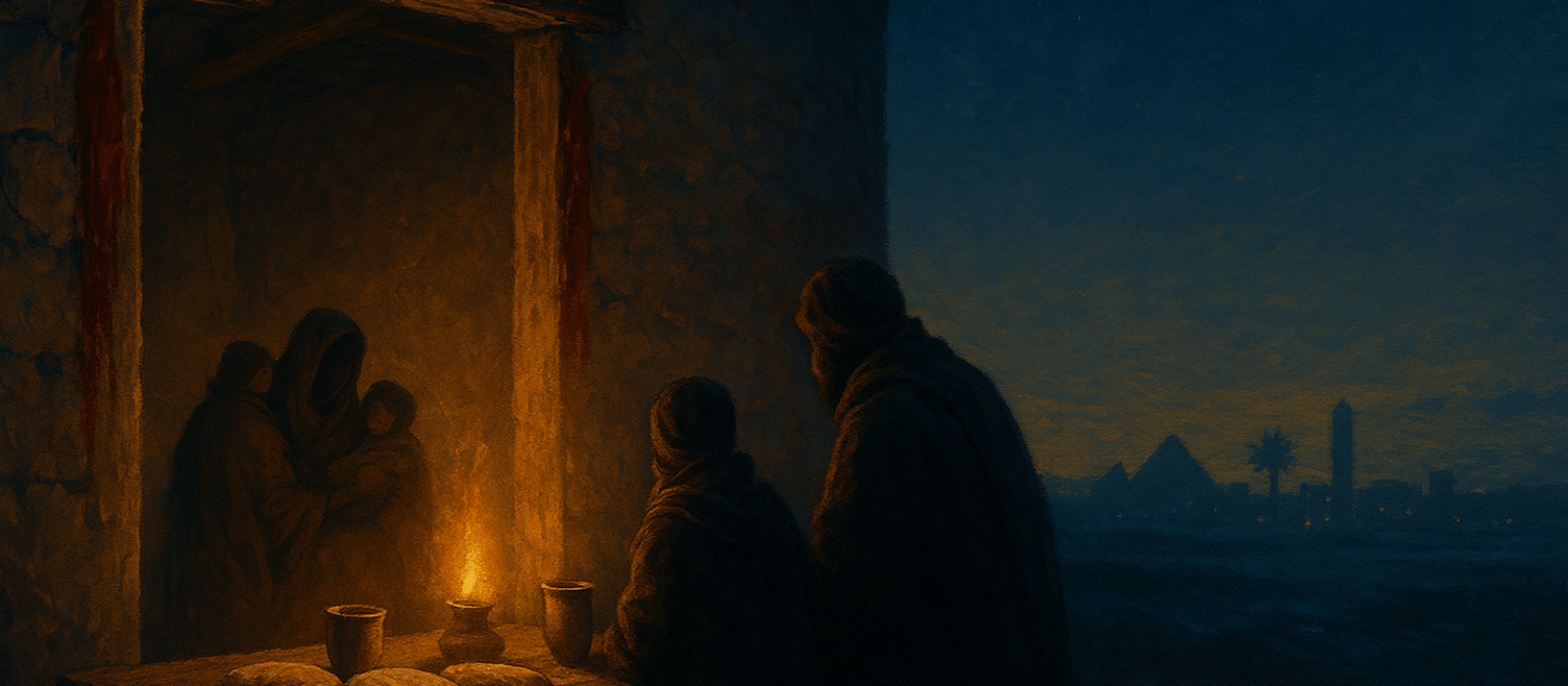
This week’s Torah portion, Parashah Bo, culminates in the tenth plague and the first Passover. God commands the head of each household to slaughter a perfect, unblemished lamb, pour out its blood, and paint it on the doorposts. The lamb is to be completely consumed or burned so none remains by morning.
The Israelites then depart Egypt and eat unleavened bread for seven days. These commands are to be observed “for the generations to come.” Once in the Land, Israel is told to recount the meaning of the feast to their children.
Seder, Tradition, and Messianic Expectation
By Yeshua’s day, Israel was in the Land and kept the annual Seder (“order”), including blessings over bread and wine—frameworks echoed in the Gospels’ account of the Last Supper. First-century Jewish hopes included varied pictures of Messiah: a political deliverer, a suffering Messiah (Messiah ben Joseph, often linked to Isaiah 53), and a royal redeemer (Messiah ben David) inaugurating God’s Kingdom. All these hopes converged in the longing for a “new Exodus” that would rescue Jew and Gentile alike from slavery to sin and death and lead into the Kingdom—Eden restored.
Messianic Caution About Tradition
Messianic Jews are rightly cautious about traditions that could drift into supersessionism or pagan coloring. Yet the Lord’s Supper itself is biblically grounded and early-Jewish in texture.
In Corinth, Paul corrects abuses around “the Lord’s Supper,” and in Troas he “breaks bread” with believers. Far from a later invention, this practice grows from Torah patterns and Jewish expectation.
Manna, “Daily” Bread, and the Bread of the Presence
The Mishnah teaches that we celebrate Passover as though God saved us personally. After the unleavened bread came manna—described as tasting like honey, a foretaste of the Land “flowing with milk and honey.” In the New Exodus, Yeshua identifies Himself as the true “Bread from Heaven,” sustaining His people in their wilderness journey.
Even the phrase “Give us this day our daily bread” is suggestive. The rare Greek word epiousios is often translated “daily,” yet many note it can mean “super-substantial.” Read this way, the prayer asks for the “supersubstantial bread”—heavenly sustenance that prefigures the messianic banquet and recalls manna.
Inside the Tabernacle stood the Ark, the Menorah, and the Bread of the Presence—HaLechem HaPanim, literally “Bread of the Face (Presence) [of God].” Traditions speak of accompanying flagons of wine. The pattern—bread and wine before God’s Face—frames how early Jewish believers understood Yeshua’s gift.
Where Is the Lamb at the Last Supper?
Notably, the Gospel accounts of the Last Supper do not feature an actual lamb at the table. In the first Exodus, the sacrificed lamb initiated deliverance; in the New Exodus, Yeshua Himself is the Lamb who would be offered the next day. He calls Himself the Bread from Heaven and says that whereas the fathers ate manna and died, those who partake in Him—His body and blood—will have eternal life.
Yes, Torah forbids consuming blood. The shock of Yeshua’s words drives home that His once-for-all sacrifice and risen life provide covenantal life from God, not a violation of Torah ethics.
The Lord’s Supper as Past, Present, and Future
For early Jewish disciples, “breaking bread” remembered the Passover deliverance achieved in Yeshua’s crucifixion (past), nourished their wilderness walk by His living presence (present), and pointed toward the Messianic banquet and resurrection (future). As Messiah ben Joseph, He suffers to remove the sting of death and reconcile us to the Father; as Messiah ben David, He will reign in the fully restored Eden—the New Jerusalem.
Hold Fast to Scripture; Weigh Tradition Wisely
The Bible is our authority. Tradition, weighed carefully, can illuminate how God calls us to live. Let’s respect each other’s practices, test all things by Scripture, and keep learning with humility.
Prayer
Father in Heaven, grant us time and resources to search Your word and consider the wisdom of others, so we may walk in the truth You reveal. Amen.