
Yom Kippur Comments 2024: Azazel, the Scapegoat, and Atonement
In Leviticus 16, we encounter the profound Yom Kippur ritual of two goats—one “for Adonai” and one “for ‘Az’azel.” This teaching reflects on the meaning of ‘Az’azel, the wilderness rite, and how the ceremony pictures the atonement and resurrection fulfilled in Yeshua.
The Two Goats and the Casting of Lots
Leviticus 16:8–10
8 Then Aharon is to cast lots for the two goats—one lot for Adonai and the other for ‘Az’azel. 9 Aharon is to present the goat whose lot fell to Adonai and offer it as a sin offering. 10 But the goat whose lot fell to ‘Az’azel is to be presented alive before Adonai to make atonement over it, by sending it away into the desert for ‘Az’azel.
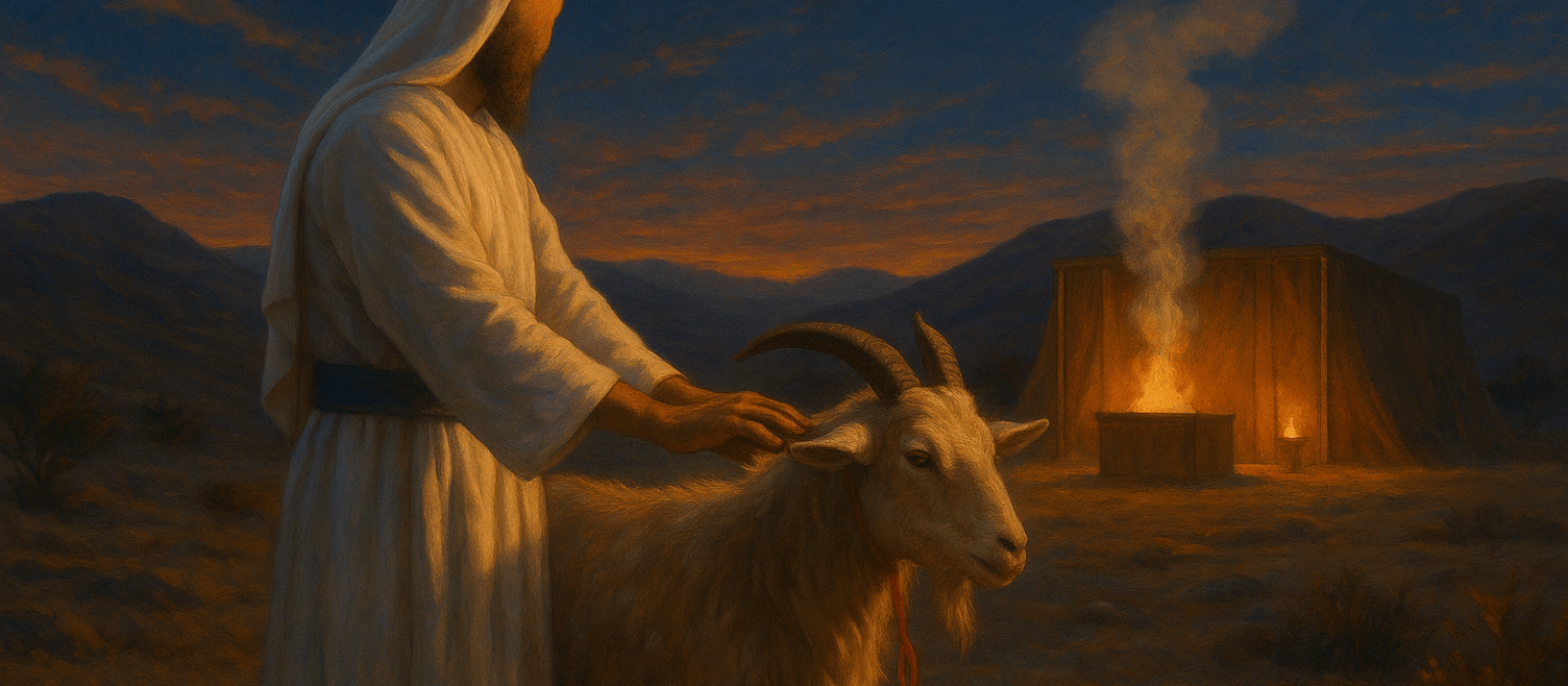
The ritual requires two goats. The High Priest casts lots to discern HaShem’s will: one goat is offered to Adonai as a chatat (sin offering); the other is presented alive “for ‘Az’azel.” Aharon (Aaron) lays hands on the living goat, confessing the sins of Israel and symbolically transferring iniquity to it. The goat is then led away so that those sins will not return to the camp. Mishnah Yoma 6:4 preserves Second Temple details of the rite.
What Is ‘Az’azel?
Because the Hebrew term appears in the text itself, many avoid flattening it into “scapegoat” or “emissary goat” alone. Translations and commentators vary: some renderings hint at “removal” (as in the Tree of Life Version note), others toward a wilderness place, and still others reference a spiritual being. The Talmud relates: “The school of Rabbi Ishmael explained it is called ‘Azazel’ because it atones for the acts of the fallen angels Uzza and Azael” (Yoma 67b). Medieval commentators such as Ramban (Nachmanides) and Ibn Ezra discuss ‘Az’azel as a proper name, while still upholding the Torah’s clear focus: atonement directed by Adonai.
The Wilderness Rite and Its Safeguards
Leviticus 16:22
Thus the goat shall carry on it all their iniquities to an inaccessible region; and the goat shall be set free in the wilderness.
To ensure the goat—and the sins borne with it—would not return, a designated man escorted it to the wilderness along a staged route with rest stations. In the Second Temple period, the goat was taken to a steep cliff, turned with its back to the precipice, and pushed over, making its return impossible. Importantly, the Torah’s requirement is that the goat be removed; the Temple practice emphasized certainty that sin would not come back to the camp.
A Picture of Atonement and Resurrection in Yeshua
The ceremony is a spiritual cleansing. Only one goat is sacrificed; the other is released alive. Because the distinction is decided by lots, the entire scene reveals HaShem’s sovereign will. In this, we see a picture of Yeshua’s atoning death and victorious rising.
1 Peter 2:24
He took our sins on Himself, giving His body to be nailed on the tree, so that we, being dead to sin, might live to righteousness. By His wounds we are healed.
Isaiah 53:5
But He was wounded for our transgressions, bruised for our iniquities; the chastisement for our peace was upon Him, and by His stripes we are healed.
Psalm 103:11–12
For as high as the heavens are above the earth, so great is His love for those who fear Him. As far as the east is from the west, so far has He removed our transgressions from us.
The goat “for ‘Az’azel” that “carries all their iniquities” mirrors Messiah bearing our sins away. What Yeshua received from humanity—our sin—becomes, through HaShem’s grace, our healing and reconciliation.
The Goat for Adonai and the Obedience of the Son
The goat “for Adonai,” offered as a sin offering, points to Yeshua’s complete obedience to the Father, fulfilling the promises of eternal life embedded throughout the Tanakh and affirmed in the Brit Chadashah.
Jeremiah 42:5–6
They said to Yirmeyahu, “May Adonai be a true and faithful witness against us if we fail to do any part of what Adonai our God gives you to tell us. Whether it be good or bad, we will listen to what Adonai our God says….”
Matthew 25:46b
…those who have done what God wants will go to eternal life.
John 3:16
For God so loved the world that He gave His one and only Son, that whoever believes in Him shall not perish but have eternal life.
Closing Blessing
May all who believe in the God of Israel behold His provision in both Testaments—the sacrifice ordained by HaShem and the obedience of His Messiah—and may we hasten the promised reconciliation to come. Amen.