

Parashah Vayeshev (Gen. 37:1–40:23) • Haftarah: Amos 2:6–3:8 • Gospel: Matthew 1:18–25
Vayeshev (“He settled”) opens the Joseph narratives: a gifted but naive dreamer, a fractured family, and a providence that hides in plain sight. Betrayal, false accusation, and imprisonment become the unlikely path by which HaShem preserves life. The prophetic reading from Amos rebukes injustice among God’s people, while the Gospel reading reveals the birth of Messiah through Yosef’s righteousness and Miriam’s miraculous conception—God’s faithfulness arriving precisely when the story seems most fragile.
Torah Reading Outline
Bereisheet (Genesis) 37:1–11 — Ya’akov’s favored son, Yosef, receives the striped cloak and shares two dreams that inflame his brothers’ jealousy.
Bereisheet (Genesis) 37:12–22 — Sent to seek his brothers, Yosef is conspired against; Re’uven plans to rescue him later.
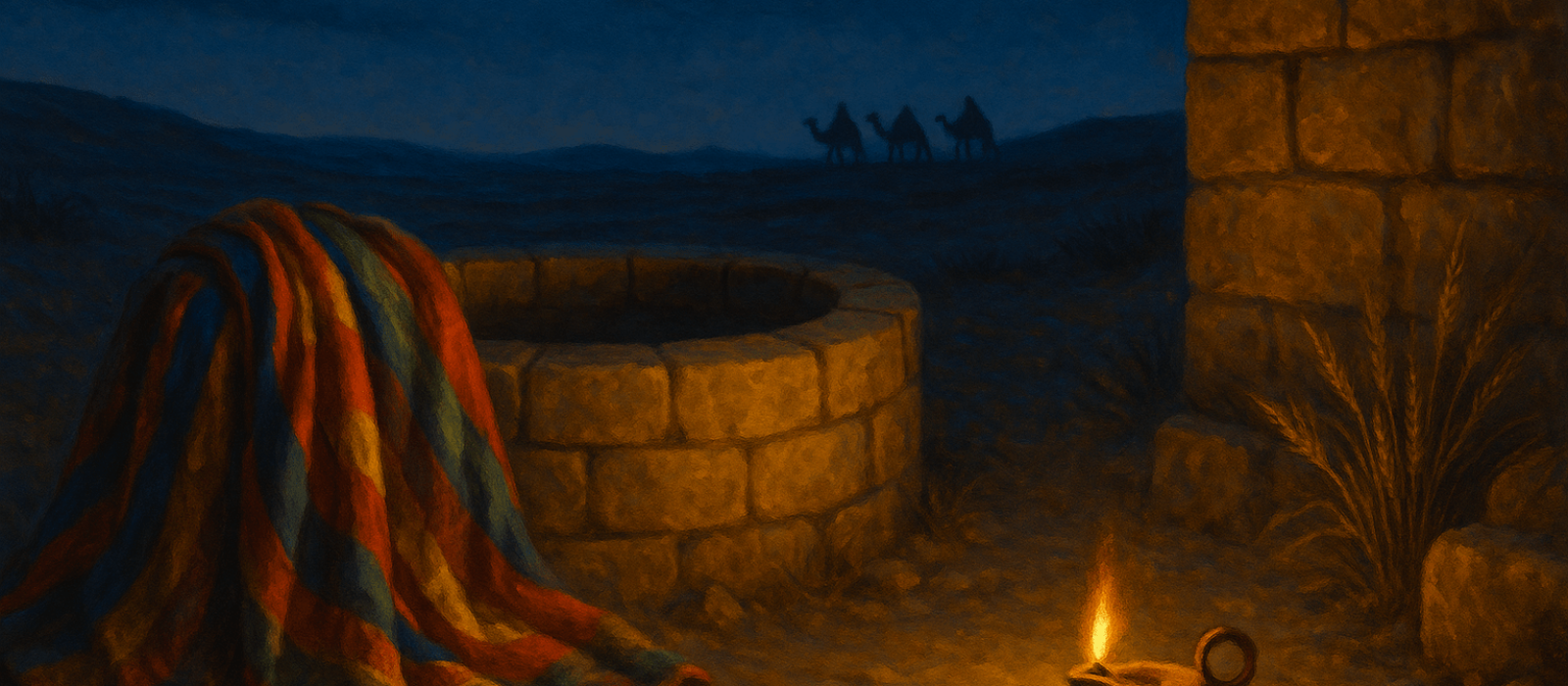
Bereisheet (Genesis) 37:23–36 — Stripped of his cloak and cast into a pit, Yosef is sold to Ishmaelite/Midianite traders; Ya’akov mourns.
Bereisheet (Genesis) 38:1–30 — The Yehudah–Tamar narrative: a story of failure, courage, and righteous deception that leads to the line of Mashiach (Peretz).
Bereisheet (Genesis) 39:1–6 — In Egypt, Yosef prospers in Potiphar’s house; HaShem is with him.
Bereisheet (Genesis) 39:7–23 — Falsely accused by Potiphar’s wife, Yosef is imprisoned, yet God grants him favor even there.
Bereisheet (Genesis) 40:1–23 — Yosef interprets the dreams of Pharaoh’s cupbearer and baker; the cupbearer forgets him—for now.
Haftarah: Amos 2:6–3:8
Amos confronts Israel’s sins—selling the righteous for silver, trampling the poor, profaning the Name. The prophet insists that covenant closeness increases accountability: “You only have I known… therefore I will punish you” (3:2). Justice is not optional; it is worship lived out.
Gospel: Matthew 1:18–25
Yosef the tzaddik receives a heavenly assurance: Miriam’s child is from the Ruach HaKodesh. He names the child Yeshua—“He will save His people from their sins”—fulfilling the promise of “Immanuel.” Righteous obedience quietly guards the mystery of redemption.
Messianic Threads & Reflections
Providence in disguise: Yosef’s descent (pit → slavery → prison) is not a detour but the hidden road to deliverance. What humans intend for harm, HaShem bends toward life.
Judah and Tamar: Peretz’s birth emerges from a scandal transformed by God’s mercy—ultimately leading to David and Yeshua. The messianic line runs through unexpected faithfulness.
Amos’s charge: Without justice, worship is noise. Vayeshev challenges us to resist favoritism, exploitation, and false witness.
Yosef the righteous: Like his namesake, the Yosef of Matthew shelters the promise with quiet obedience. Redemption arrives through integrity in the ordinary.
Questions for Study & Discussion
• Where have “detours” in your life become doorways for God’s purpose?
• How does Amos sharpen our understanding of righteousness in business, family, and community?
• What does Yosef’s restraint (Genesis 39) teach about holiness in a compromising culture?
• How do Yehudah and Tamar’s story and Matthew 1 together shape a Messianic view of lineage and grace?