
Parashat Va’etchanan/Shabbat Nachamu: Comfort at a Time of Hardship
SAN DIEGO — Wow! Talk about a special Shabbat. First, this is Shabbat Nachamu, the Sabbath of Comfort, based on the first verse of the Haftarah reading that says, “Console, console my people, says your G-d.” This, of course, follows Tisha B’Av in which we deeply re-experienced a litany of tragedies that have occurred throughout our history. Then this week’s Torah portion, called Va’etchanan, contains words of prayers with which we are all familiar, the Sh’ma and V’ahavta. As we learn in Sifrei D’varim 26:7, the name of our Torah reading, chanan, means “to plead,” and this fuels our journey into the power of prayer. Finally, we celebrate Tu B’Av, a day of love and of meaningful relationships—often labeled the “Jewish Valentine’s Day.”
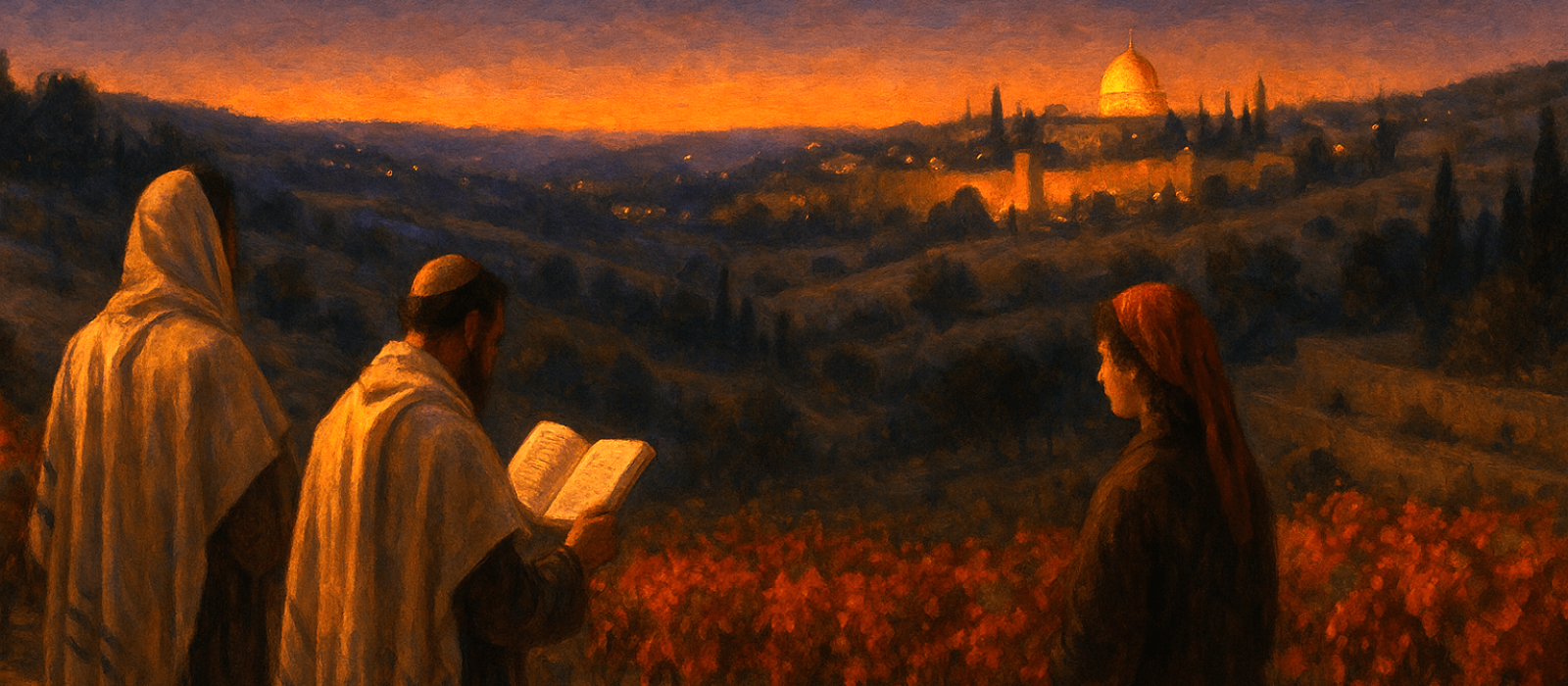
Rabban Shimon ben Gamliel said: There were no days as happy for the Jewish people as the 15th of Av and as Yom Kippur. According to the Mishnah (Ta’anit 26b) on Tu B’Av “the daughters of Yerushalayim would go out in borrowed white dresses so as not to embarrass someone who did not have a white dress and dance in a circle in the vineyards.”
“Young man, please lift up your eyes and see what you choose for yourself for a wife. Do not set your eyes toward beauty, but set your eyes toward a good family, as the verse states: ‘Grace is deceitful and beauty is vain, but a woman who fears the Lord, she shall be praised’ (Proverbs 31:30), and it further says: ‘Give her the fruit of her hands, and let her works praise her in the gates’ (Proverbs 31:31). And similarly, it is written, ‘Go out, daughters of Zion, and see King Solomon, in the crown with which his mother crowned him on his wedding day and on the day of his heart’s rejoicing’ (Song of Songs 3:11). ‘His wedding day’—this is the Giving of the Torah; ‘the day of his heart’s rejoicing’—this is the building of the Holy Temple, which shall be rebuilt speedily in our days.”
We learn from our sages that “Whoever celebrates with a bride and groom it is as if he rebuilt one of the ruins of Jerusalem.” When we rejoice with others together—bringing a sense of authentic, non-judgmental oneness to our daily lives—when we unite our souls, we elevate the world and help heal its fragmented relationship with Hashem.
On this Shabbat Nachamu we are reminded that in just seven weeks we’ll be celebrating Rosh Hashanah. This “Sabbath of comforting,” from the haftarah in the Book of Isaiah—Nachamu, nachamu ami, “Comfort, comfort my people”—begins the first of the seven haftarot of consolation helping us prepare psychologically and spiritually for Rosh Hashanah.
Inside of this week’s Torah portion, Va’etchanan, we also read additional comforting passages that provide reassurance that Hashem is quite present in our awareness and our lives. Moshe retells the story of receiving the Ten Commandments and shares the first line of the Sh’ma and the words of the V’ahavta. During destruction, in the midst of anxiety and fearfulness, in a contemporary society that is increasingly chaotic and divisive, we find consolation and solace knowing that our protector and our source of strength is always with us.
Interestingly, there are 144 verses altogether in the seven haftarot of comfort, and 143 verses contained in the so-called four portions of admonition in the Torah found in Bechukotai, Ki Tavo, Nitzavim, and Ha’azinu—144 verses of consolation and 143 of admonition. Thus, our consolation outdoes admonition.
Seven: A Pattern of Consolation
The number seven is significant: seven weeks between Tisha B’Av and Rosh Hashanah; seven days of creation; seven days in a week; seven years from one Sabbatical year to the next; seven weeks between Pesach and Shavuot; seven laws of Noah; seven pairs of animals brought by Noah; seven Patriarchs and Matriarchs. Fields in Israel lie fallow one in seven years; the menorah has seven branches; there are seven wedding blessings with the chassan circling the kallah seven times; and there are seven days of shiva. We wrap tefillin straps seven times and welcome the seventh day—Shabbat. This number calls us to perfection and holiness. That is what we see in the parashah: Hashem’s true love for His people, for us.
Shabbat Nachamu Like a Festival
Shabbat Nachamu is not just another Shabbat. There is a long tradition of treating it almost like a Yom Tov. The Ritva, commenting on Ta’anit 30a, says that the food we eat on this Shabbat should be extra special—like that of a chag, a festival. This is the first of seven Shabbatot of consolation, emphasizing Hashem’s compassion and ability to forgive, and the only one that has this status. Soon we will spend a full month, Elul, rousing ourselves through the sound of the shofar. When we say Selichot we again focus on Hashem’s readiness to forgive our transgressions.
Hearing and Speaking: Two Pathways to Comfort
I was struck by the notion in the Torah reading that comfort comes to us through both listening—“Hear O Israel…”—and through speaking, through the words of the Prophet Isaiah giving us consolation.
Sh’ma & V’ahavta: “Hear, O Israel: the Lord is our God, the Lord is One… And you shall love the Lord your God with all your heart, with all your soul, and with all your might.”
The Sh’ma directs us to listen, to focus on our actions and behaviors, while in the words of nachamu, we see the value of Hashem’s spoken language. Indeed, true consolation for others comes in our ability to first hear what another is saying and seeking. What we don’t say can be as powerful as what we do say at times of hardship. When we remove barriers and join in prayer, eliminate derision, genuinely support one another, and are present enough to listen, we build community and are not alone. That is nechama. When we replace “I” with “We,” that mindset takes us from illness to WEllness. That is nechama.
When Hashem Says “No”
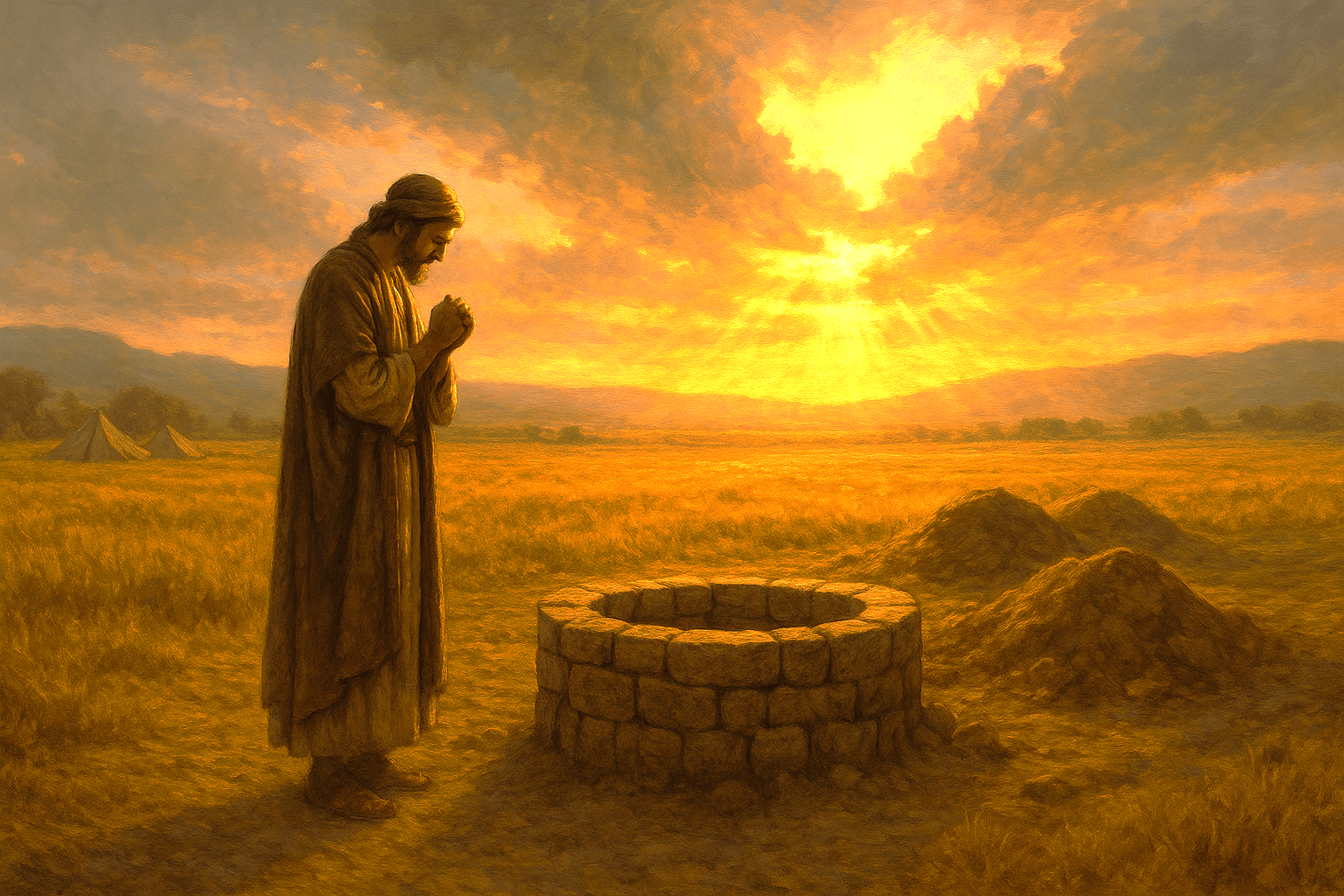
The first word of this week’s parasha, Va’etchanan, means “I pleaded.” Moshe pleaded with Hashem to see the Land of Israel. Hashem heard his pleas, and the answer was “No.” How many times do we plead, pray, even beg Hashem for an outcome and it doesn’t go the way we wanted? The illness continues, finances dwindle, a job fails, or a relationship ends. Hashem hears our pleading, and sometimes His answer is “No.”
It isn’t easy to accept our powerlessness over circumstances. We may complain that Hashem “didn’t answer our prayers,” but “No” is an answer. Whining only magnifies our pain. Trusting in Hashem—His wisdom and love—doesn’t come easy. We can become demanding, angry, bitter, even turn away from Him and from Judaism. Yet a “positivity bias,” understanding “this, too, is for my good,” and recognizing that everything He does is for us, not to us, transforms our experience (see Likkutei Sichot, vol. 19). Unconditional acceptance—aligning our will with His—is Moshe’s lesson here. With bitachon, one sees not problems but opportunities for wellbeing.
His directions are for our welfare. What a dignified, peaceful way to live: accepting His hand in our lives, even when outcomes differ from our plans. This is especially vital in these seven weeks between Tisha B’Av and Rosh Hashanah as we contemplate our spiritual lives, pursue self-improvement, and become better versions of ourselves.
Faith That Heals
Lived correctly, a life infused with Hashem and Torah is good for our mental health. Our religious and spiritual ideals support us in our most challenging times and guide us toward more optimal, happier, meaningful lives.
We can find emotional comfort in knowing that through acknowledging His love we can create communities, build mikdash me’at through our behaviors and mitzvot, despite distress and anguish. A powerful mashal in Masechet Makot 24a shows us how to reframe hardship—proving that “the link is what you think.”
Rabbi Akiva’s Consolation (Makot 24a): After the destruction, the sages saw a fox on the site of the Holy of Holies and wept. Rabbi Akiva laughed, explaining: Just as the prophecy of destruction was fulfilled, so too will the prophecy of renewal—“There shall yet old men and old women sit in the broad places of Jerusalem” (Zechariah 8:4). “Akiva, you have comforted us.”
We can rip our garments, or we can rejoice. We can focus on anguish, or we can look up and see beyond. We can be like Rabbi Akiva and reframe life toward positive renewal and emotional reawakening. We are a people of eternal hope: “Im Eshkacheich Yerushalayim tishkach yemini—I will never forget you, O Jerusalem.”
May this Shabbat bring true nechama and allow us to move forward in peace, love, comfort, and health—united as one, fulfilling Isaiah’s hopeful vision even in the face of apparent doom, seeing beyond history’s vista to consolation on this Shabbat Nachamu.
Shabbat Shalom…
—Dr. Michael Mantell, Ph.D. • Original article: San Diego Jewish World