
Parashah Vayigash Comments 2021
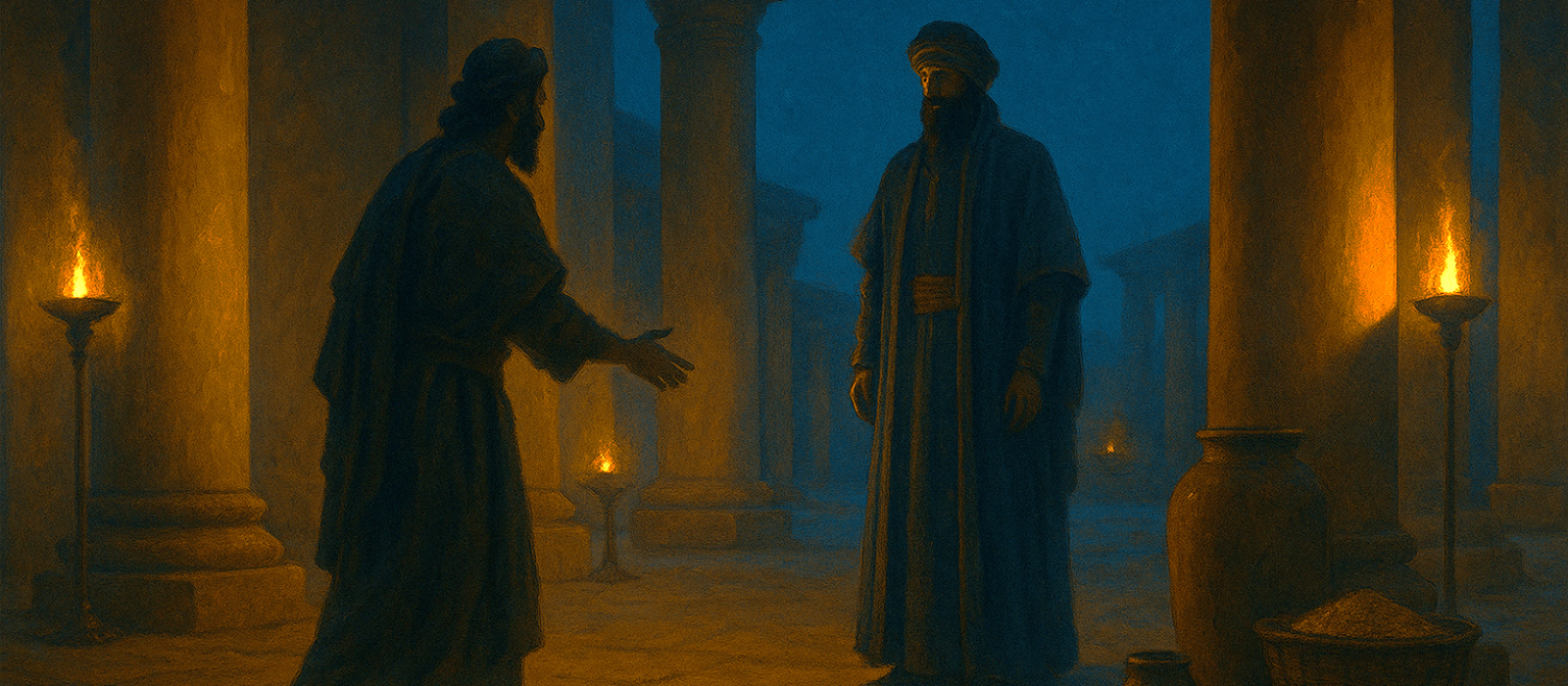
In Parashah Vayigash (“He approached”), Jacob’s fourth son, Y’hudah (Judah), approaches Joseph and asks to speak with him privately. In the previous chapter, to allay Jacob’s fears concerning Joseph’s requirement that the sons of Israel bring their youngest brother, Benjamin, if they wanted more food, Y’hudah makes a personal pledge to his father. Benjamin is Joseph’s younger brother, both sons of Rachel—Jacob’s first love. Fearing the loss of another son of Rachel, Jacob hesitates, and Y’hudah guarantees Benjamin’s safe return. To fulfill his vow, Y’hudah offers himself as a slave so Benjamin can go free.
Joseph had been sold into slavery by his brothers at 17, was taken from prison 13 years later, and raised to second-in-command under Pharaoh. With that backdrop, selling grain to his brothers is deeply emotional. Joseph weeps three times. Twice he hides it, but when Y’hudah pleads to take Benjamin’s place, demonstrating sacrificial love and fidelity to his word, Joseph can no longer restrain himself and reveals his identity.
This revelation shocks his brothers. Terror rises as they realize their past evil is exposed and the one they wronged now holds power to judge. I imagine the revelation of Messiah’s return—following His first sacrificial coming—will be just as profound for the whole world as Joseph’s revelation was for the sons of Israel after Y’hudah’s near-sacrifice.
Judah’s Plea and Joseph’s Revelation
“Please! Come closer.” And they came closer. He said, “I am Yosef, your brother, whom you sold into Egypt. But don’t be sad that you sold me into slavery here or angry at yourselves, because it was God who sent me ahead of you to preserve life.”
“God sent me ahead of you to ensure that you will have descendants on earth and to save your lives in a great deliverance. So it was not you who sent me here, but God.”
Later, when Jacob dies, the brothers again fear Joseph’s wrath. But Joseph reframes their sin inside God’s providence.
“You meant to do me harm, but God meant it for good — so that it would come about as it is today, with many people’s lives being saved.”
Messianic Foreshadowing
Joseph is a picture of the Messiah—the suffering servant of Isaiah 53. While many traditionally observant Jews interpret Isaiah 53 corporately of Israel, the parallels remain striking. The very name Y’hudah embeds the Holy Name (YHVH), and Yeshua comes from the tribe of Y’hudah. As Yeshua (God’s presence in flesh) offered Himself for us, so His ancestor Y’hudah was willing to offer himself. The incident carries a distinctly Messianic aroma.
Application to Our Times
Joseph’s early arrogance, his father’s favoritism, and the infamous coat bred hatred. Our nation, too, has known pride. Now we face different forms of bondage—cultural, moral, and spiritual. We once aspired to live by “In God We Trust.” Taking freedom for granted, we now feel the cost of negligence, especially toward religious liberty and the responsibilities that come with being a sovereign people under God.
Joseph suffered unjustly—kidnapped, enslaved, falsely accused, and forgotten in prison. Yet instead of bitterness, he clung to the God of his fathers, and God exalted him. His words in Genesis 45 and 50 guide us: God is sovereign over human evil and can bend it toward salvation.
Lift Up Your Eyes
“If I raise my eyes to the hills, from where will my help come? My help comes from Adonai, maker of heaven and earth. He will not let your foot slip — your guardian is not asleep.”
Paul echoes this truth: God weaves all things for good to those who love Him and are called according to His purpose.
“Furthermore, we know that God causes everything to work together for the good of those who love God and are called in accordance with his purpose.”
God is testing, disciplining, and preparing us. Some will not endure—not for lack of ability but by choice. Culture drifts, families fragment, and the war for truth intensifies. Yet our motto remains: “In God We Trust.” If we are capable of standing and remain silent, we are accountable.
“Yes, rescue those being dragged off to death — won’t you save those about to be killed? If you say, ‘We knew nothing about it,’ won’t He who weighs hearts discern it? Yes, He who guards you will know it and repay each one as his deeds deserve.”
Doers of the Word
It is not enough to hear; we must do.
“Don’t deceive yourselves by only hearing what the Word says, but do it!”
Yeshua’s parable of the sower reminds us to cultivate deep, receptive soil.
“A farmer went out to sow his seed… Some fell along the path… some on rocky ground… some among thorns… but others fell on good soil and produced a hundred, sixty, or thirtyfold. He who has ears, let him hear.”
God was with Joseph, and Joseph walked with God. Revelation warns of falling away yet promises a faithful remnant. The Tenach and the Brit Chadashah teach that the Torah’s heart is love of God and love of neighbor; the rest is instruction for living that love.
“The person who blesses others will prosper; he who satisfies others will be satisfied himself.”
Patience, Providence, and Hope
When the road is unclear, our default must be patience. God still works. Consider Yeshua’s lament and promise over Jerusalem:
“Yerushalayim, Yerushalayim… How often I wanted to gather your children… but you refused!… You will not see me again until you say, ‘Blessed is He who comes in the name of Adonai.’”
Paul urges a life of gentle reasonableness, prayer, gratitude, and disciplined thought, guarded by Messiah’s shalom.
“Rejoice in union with the Lord always… Don’t worry about anything… and the God who gives shalom will be with you.”
The pleasures of this world do not satisfy. True satisfaction comes from trusting that God loves us beyond measure, surrendering to His will, and waiting patiently for His purposes to ripen.
“Don’t be afraid, for I am with you; don’t be distressed, for I am your God. I give you strength, I give you help, I support you with my victorious right hand.”
Immanuel in Every Season
Truth is under attack, but we must not be distracted. God is with us—Immanuel. From Genesis to Revelation, He invites us to return our will to Him. The patriarchs, the prophets, the Judges, Y’hudah, Joseph, and Yeshua all point the way. Yeshua is the culmination; Joseph is the precursor.
As the world’s hypocrisy shakes foundations, lift your eyes. Remember Who reigns, Who owns us, Who cares for us, and Who guards our steps.
“I lift my eyes to the hills… My help comes from Adonai… He will guard your coming and going from now on and forever.”
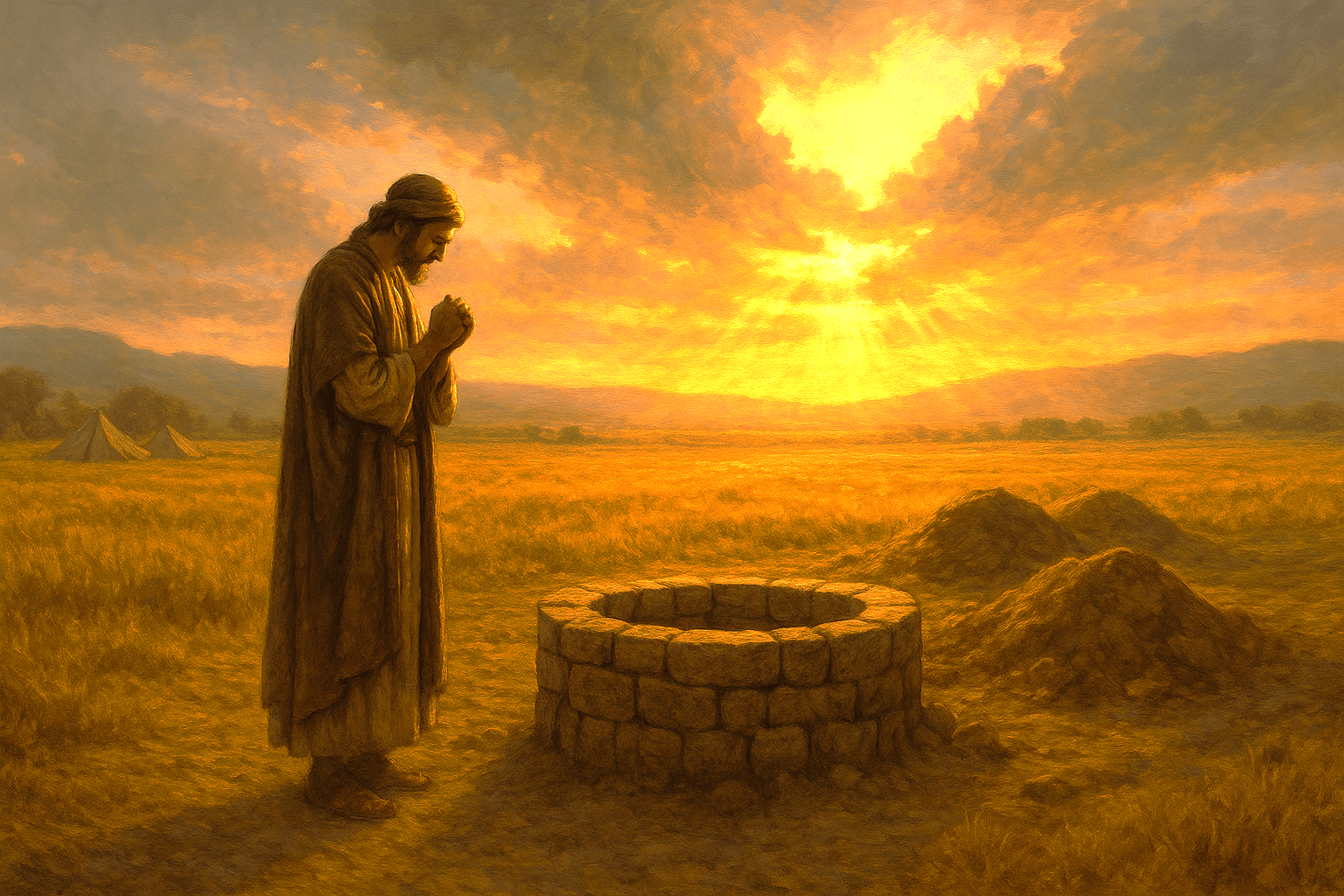
Prayer
Father in heaven, prepare us. Make us worthy to be “sent ahead” like Joseph—to preserve life, the life You created each of us to live and enjoy. Teach us to rest in Your goodness and to obey Your instructions with faithful patience and hope. Amen.