
3199 AM (561 BCE) – Shaloshah b’Tishrei – 3rd of Tishrei — Gedaliah’s Last Breath: Forgiveness Amid Betrayal
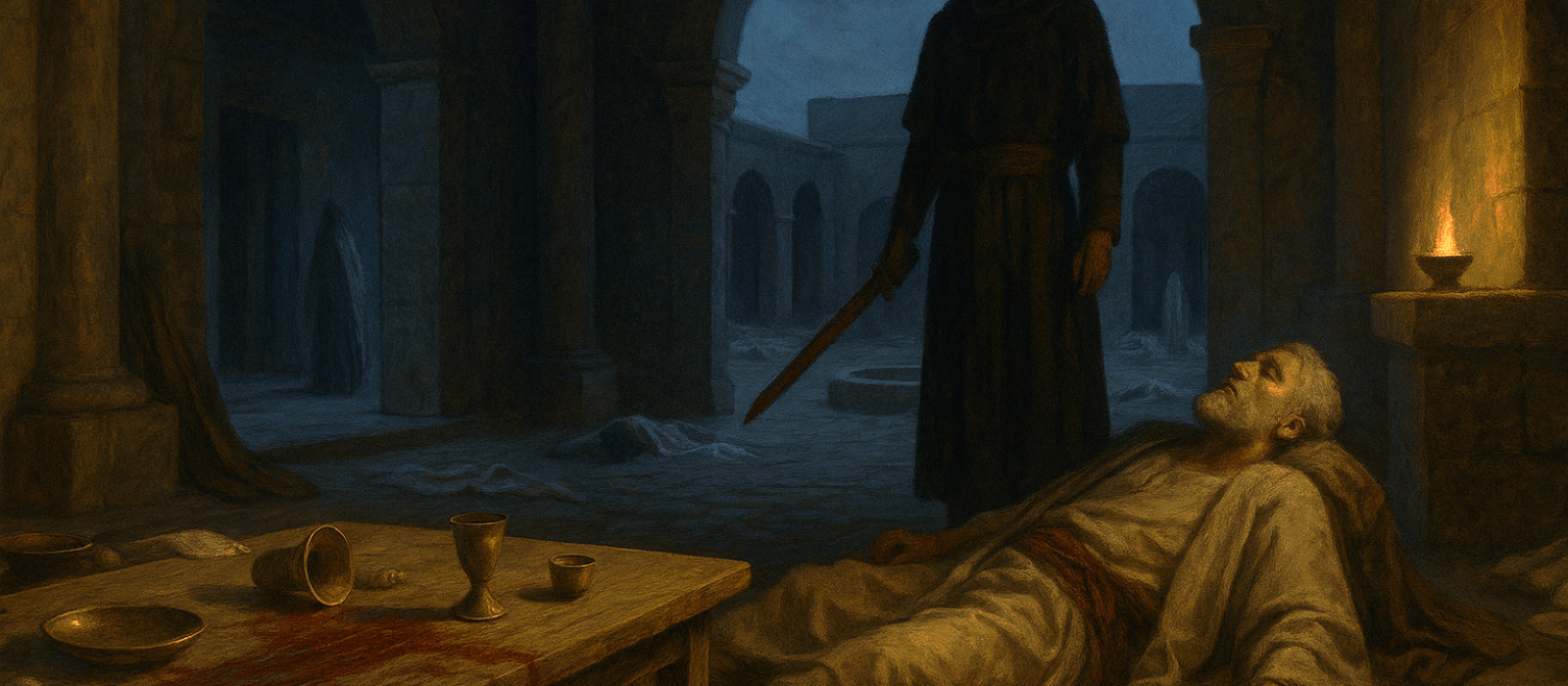
Gedaliah collapsed. Ishmael’s blade had nicked something important, and he could feel his pulse racing. Chaos surrounded him as all the friends with him were mercilessly slain. Gedaliah lay still, watching, leaning against the table. He could just make out those he considered brothers killing their brothers.
In the space between heartbeats, time stopped, granting Gedaliah sight to see everything. In a very real sense, his demise was sealed when Nebuzaradan, the General, appointed him something like a king over Judah, even though he was just a nobleman. For whatever reason it had pleased him to leave a remnant of repentant Jews in Judah.
Was that Adonai’s doing as well?
Gedaliah’s mind wandered to the last few years of governing Judah as a majesty pro tem. So many Jews from outlying regions were coming back. Their numbers were not substantial, but they were significant. And they included his friend Johanan ben Kareah … what a friend, what a brother. If only he had listened to his warnings about Ishmael.
But Gedaliah’s mind was playing tricks on him. He did not know it was Ishmael until just now. They only knew it was a possibility, and how could they suspect one of their own brothers?
His thoughts seemed random. He was reliving the story of Joseph and how his brothers betrayed him. Gedaliah found himself in a pit, looking up. His brothers were looking down, laughing. If only they could learn to get along, not have so much strife between them. But then his brothers were gone.
Then Ishmael was there, throwing him a rope and pulling him out. “Time to go to Babylon!” he said, hoisting Gedaliah up. But when Gedaliah reached the top, it was no longer Ishmael—it was a caravan of Ishmaelite traders. He was a slave being taken not to Babylon, but to Egypt.
Then Gedaliah was standing before Pharaoh, made second to the king and given the name Zaphenath-Paneah. His wife, Asenath, stood beside him smiling, holding his hand. But then it was not Pharaoh standing there, but General Nebuzaradan, the destroyer of cities.
Gedaliah shouted to the General, “We need to save two-fifths! We need to save two-fifths!”
“Don’t worry,” Nebuzaradan reassured, “your Adonai has things in hand. All is not lost. But you are right: the Jews need to learn to get along better. Once Adonai is done with the idolatry, He will work on the baseless hatred, intrigue, and subversion.”
Then Asenath, his beautiful wife, kissed Gedaliah on the cheek and said, “You boys need to just learn to get along. Come find me when you are ready. I’ll be waiting!” Then Asenath disappeared, and then the General as well. Everything disappeared. All Gedaliah could see was white.
☼ ☼ ☼
Gedaliah opened his eyes. He was lying on the floor next to the table where he and Ishmael had been feasting moments ago. He looked down, his shaking hands trying desperately to cover his wounds. There was so much blood. Ishmael stood above him, watching the last moments of life slip from his nemesis.
Gedaliah looked up. Not only did he see Ishmael standing above him, but he also saw Reuben, Simeon, Levi, Judah, Dan, Naphtali, Gad, Asher, Issachar, and Zebulun, all standing above him as well. Blackness encroached on the edges of his vision, and they all seemed to drift farther and farther away.
With his heart racing like a galloping camel, Gedaliah spoke his last words to his murderers: “Brothers, I forgive you. I forgive you all.”
Then his camel stopped its frantic galloping.
☼ ☼ ☼
Gedaliah’s last words inflamed Ishmael. He did not want his forgiveness. His men didn’t care either. They weren’t seeking it. They didn’t need it. They were merely righting an injustice in the simplest way possible. They had finished off Gedaliah and his inner circle. Next: his loyal subjects.
Ishmael did not kill Gedaliah for any performance-related reason. Honestly, Ishmael felt Gedaliah had done an amazing job establishing a basic civilization from the ruins of Judah. And for so many to be returning? Ishmael did not think he could have done as well. But the fact that Nebuzaradan did not choose him—he, Ishmael, rightful heir to the throne of Judah—that just could not stand.
☼ ☼ ☼
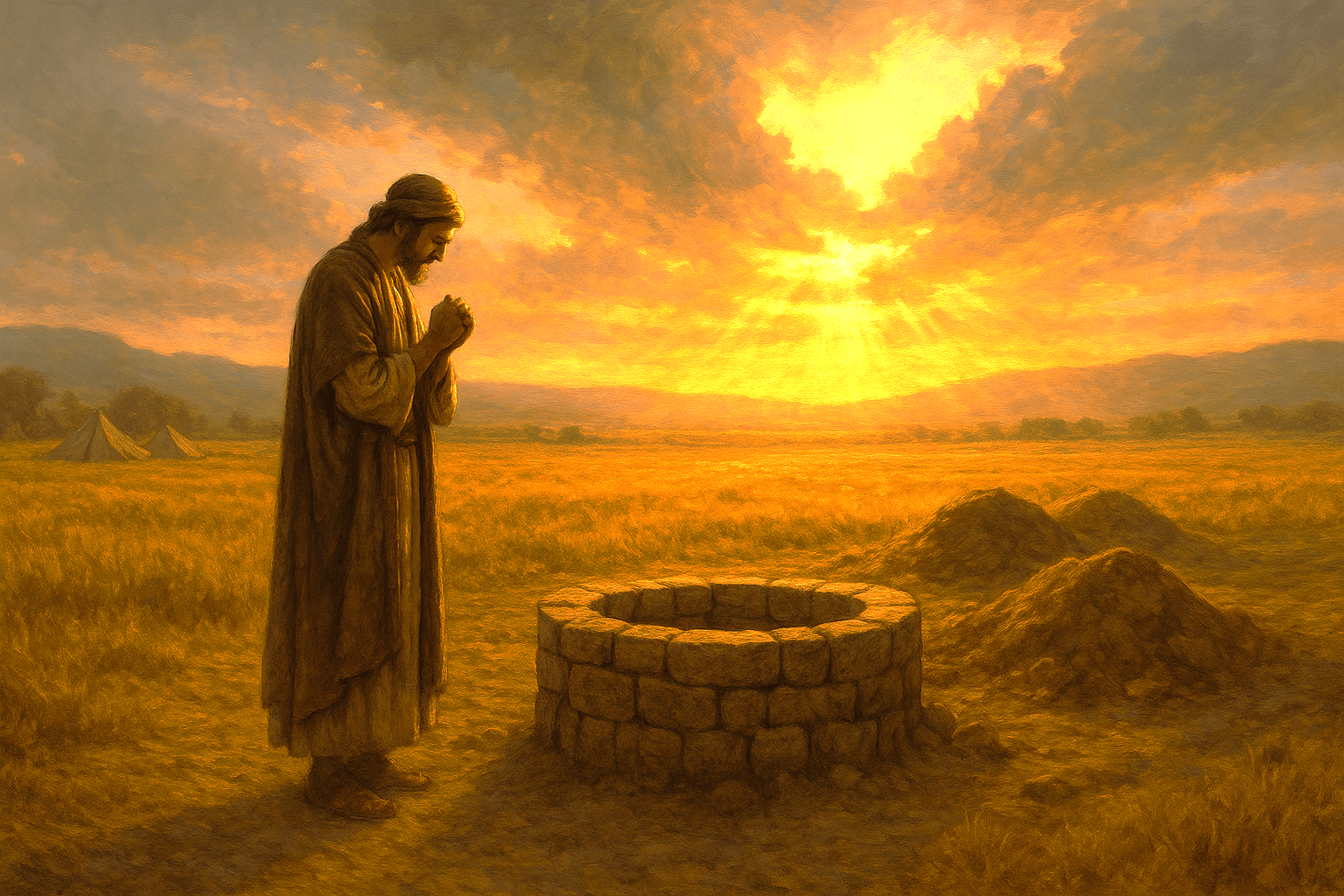
The next day, Ishmael and his men were weeping and wailing over the death of Gedaliah. They were, in fact, crocodile tears—fresh from the Nile, so to speak. But they had the desired effect. Many mourners joined them. They led them to view the body of Gedaliah. When they had them isolated, they, too, were slaughtered. As with the body of Gedaliah and the bodies of his inner circle, the bodies of all these were callously discarded into a nearby cistern.
☼ ☼ ☼
Despite Ishmael’s careful attempts at hiding his villainy, he was ultimately discovered, as his bloodlust led him to devastate several nearby villages. He and his men fled to Ammon. Once word reached Ammon about what had happened, the treachery could not be ignored by the Ammonites, and Ishmael and his men were pursued and captured.
And while nobody really knows exactly what the end was for Ishmael and his men, the Ammonites were not known for benevolent leniency toward murderous gangs of thugs, and the end of Ishmael and his men was certainly fulfilled at its divine appointment.
For the remaining Jews, now leaderless in every sense of the word, they fled south to Egypt, led by the weeping prophet, their very own Jeremiah, leaving behind the ashes of Jerusalem and the Temple. It would be another seventy years before a settlement of Jews would once again exist in Judah. But that is a story for another time.
Used with permission by the author. Find the author’s complete works online: Complete Works of Mack Samuels