
3173 AM (585 BCE) – ASARA B’TEVET – 10TH OF TEVET — Final Siege of Jerusalem
With the same indignant spirit of King Hezekiah, or so he presumed, King Zedekiah looked out and saw the massive sea of Babylonians. He figured this had been what King Hezekiah saw with the Assyrians surrounding Jerusalem all those many years ago. Would it be like before? Would Adonai step in with a messenger and kill them all? That had to be the case. Zedekiah was a righteous king, so he thought, a direct descendant of Josiah. He embodied everything good about Josiah. Right? Heck, even his name meant “Righteous One of Adonai.”
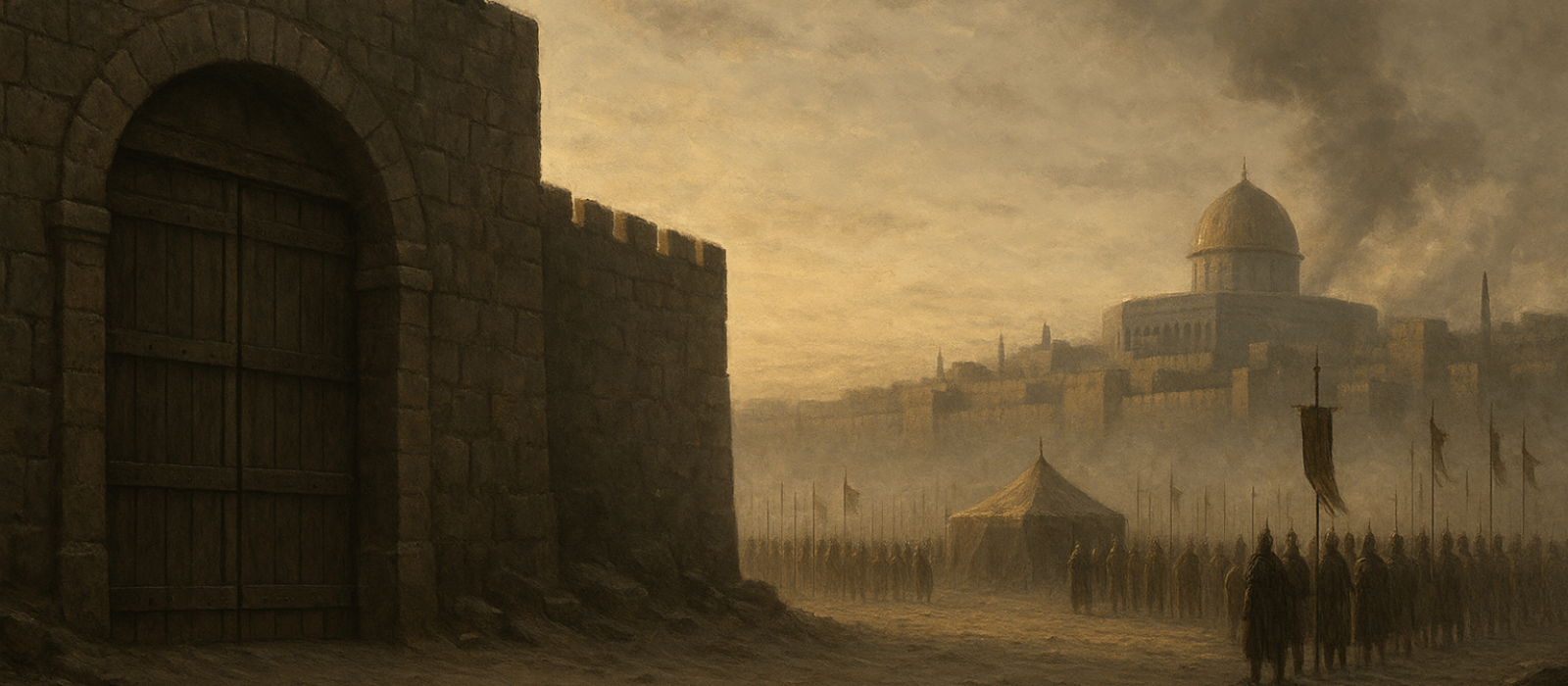
Every day, Zedekiah came to the walls and looked out. He could see the command tent, and he even caught sight of the General coming and going, inspecting his men. The General did not appear terribly large or vicious. He might easily be mistaken for someone’s nice, old grandpa looking to tell his grandkids stories of his ancient conquests. Except, this General commanded extreme respect. Even if he was not addressing them or looking at them, if he was in line of sight, the soldiers would stop what they were doing and stand at attention.
Zedekiah was jealous … to garner that kind of respect? But it was a righteous jealousy, he told himself. After all, the siege had been going on long enough that food and water were scarce. He told himself that his soldiers were merely hangry at him. It would pass. Adonai would deliver them and this, too, shall pass. But Zedekiah could not wait for it to pass.
Zedekiah thought about Jehoiachin, who became king after Jehoiakim, but when the General, the nice one, came back as promised, Jehoiakim was pleased to go with the people, and he did not want to stand against Nebuchadnezzar, or was it that he did? Hunger gnawed at Zedekiah, and his own thoughts were not very clear.
What was clear was that the fool Nebuchadnezzar put Zedekiah in power, thinking that he would be a pawn, a pushover. Zedekiah rebuilt the walls, fortified Jerusalem, and got ready for this moment. He would defy Nebuchadnezzar, the good General, and even Nebuzaradan, the destroyer of cities.
“Let him try…” Zedekiah whispered to himself.
☼ ☼ ☼
The siege lasted nearly two years. Zedekiah continued his daily perch at the city gates. The routine was unbearable. Word of some minor cannibalism—if there is such a thing—filtered up to him. The king was lost in thought, daydreaming, contemplating… starving.
Then the unthinkable happened. He heard the gates of the city open. He looked down helplessly as a large group of women and children, some men, and even some of the guards simply walked out of the city and toward the destroyer of cities. The people leaving said nothing. There was no sound, save for the blowing of sand. Thousands just walked out.
The General took one look at them, and then at the gate left wide open, and signaled to one of his officers, who led the group peacefully away. No words were exchanged, just knowing looks. The king glanced down at the open gates, but there was no one around to close them. He wanted to rush down and do it himself, but fear paralyzed the king. All he could do was watch Nebuzaradan and his vast army utterly ignore the open gates and go about their business.
Hours went by, and Zedekiah finally got the gates of the city resecured, but the destroyer of cities paid little regard to the gates, the king, or his city.
Used with permission by the author. Find the author’s complete works online: Complete Works of Mack Samuels