

Made-Up Minds
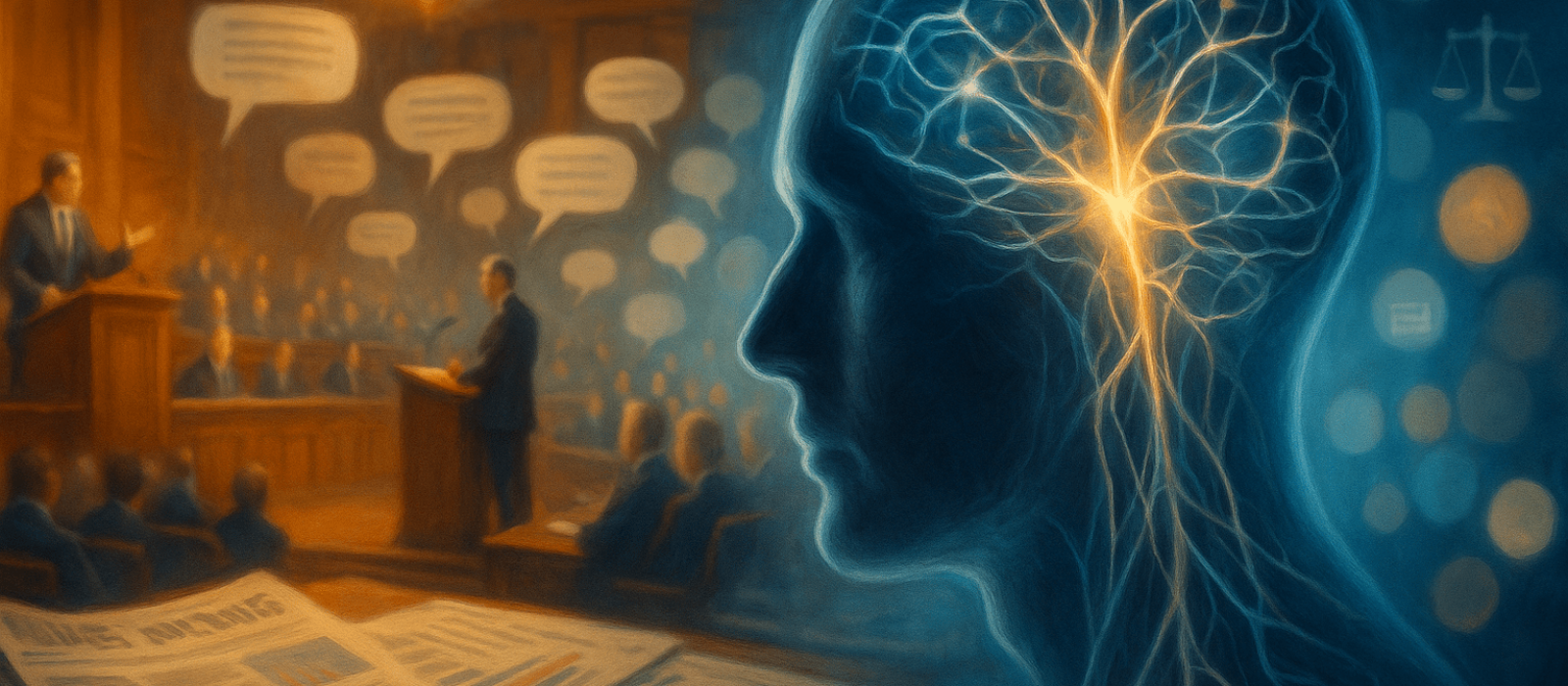
Since political beliefs are rooted in emotions, says Chris Mooney, the facts are often irrelevant.
“A man with a conviction is a hard man to change. Tell him you disagree and he turns away. Show him facts or figures and he questions your sources. Appeal to logic and he fails to see your point.” —Leon Festinger
When Prophecy Fails (and Belief Hardens)
In the 1950s, Stanford psychologist Leon Festinger embedded with a small Chicago UFO group known as the Seekers. Their leader predicted the world would end on December 21, 1954. When nothing happened, the believers didn’t abandon the prophecy; they reframed it. A “new message” explained that their vigil had spread so much light that God spared the world. Shaken but energized, the group began to proselytize with renewed urgency. The collapse of evidence strengthened commitment.
Motivated Reasoning: Why Feelings Lead, Facts Follow
Modern neuroscience shows that reasoning is suffused with emotion (“affect”). Our brains register positive/negative reactions to information in milliseconds—well before conscious thought. As a result, by the time we think we’re “being rational,” we’re often defending earlier emotional commitments. Classic biases kick in:
Confirmation bias: we seek/support evidence that agrees with us.
Disconfirmation bias: we expend extra energy refuting contrary views.
The Expert I “See” Depends on the Values I Hold
Yale’s Dan Kahan found that our cultural identities—individualist vs. communitarian, hierarchical vs. egalitarian—shape which experts we trust and where we perceive consensus. People aren’t “anti-science” in their own minds; rather, “science” becomes the authority figures and narratives aligned with their values.
When Facts Backfire
Head-on persuasion can provoke defensiveness. In one study, citing both the 9/11 Commission and President George W. Bush’s own words did little to change Republicans who believed Saddam Hussein and al-Qaeda collaborated; most participants resisted or rationalized instead of revising beliefs.
Climate Change: Knowledge Without Movement
Climate change illustrates the pattern: party identity predicts attitudes more than education does. Among some groups, greater sophistication can fuel stronger counter-arguing, making minds harder to change. The better someone is at finding reasons, the more reasons they can generate to defend their starting point.
Vaccines & Autism: A Left-Leaning Mirror
There is a left-side analogue in the debunked link between vaccines and autism. Despite multiple large studies and the retraction of Andrew Wakefield’s 1998 paper, committed communities maintain parallel media ecosystems and counter every new piece of evidence, preserving the belief.
Giving Facts a Fighting Chance: Lead With Values
So what helps? Frame evidence within the audience’s values. In experiments, identical climate science was received differently depending on the solution framed (e.g., nuclear innovation vs. anti-pollution regulation). When information resonates with identity, defenses lower and facts can land.
Adapted from a longer article by Chris Mooney that originally appeared in Mother Jones and is available at MotherJones.com. ©2011 Foundation for National Progress.